

GetApp offers objective, independent research and verified user reviews. We may earn a referral fee when you visit a vendor through our links.
Our commitment
Independent research methodology
Our researchers use a mix of verified reviews, independent research, and objective methodologies to bring you selection and ranking information you can trust. While we may earn a referral fee when you visit a provider through our links or speak to an advisor, this has no influence on our research or methodology.
Verified user reviews
GetApp maintains a proprietary database of millions of in-depth, verified user reviews across thousands of products in hundreds of software categories. Our data scientists apply advanced modeling techniques to identify key insights about products based on those reviews. We may also share aggregated ratings and select excerpts from those reviews throughout our site.
Our human moderators verify that reviewers are real people and that reviews are authentic. They use leading tech to analyze text quality and to detect plagiarism and generative AI.
How GetApp ensures transparency
GetApp lists all providers across its website—not just those that pay us—so that users can make informed purchase decisions. GetApp is free for users. Software providers pay us for sponsored profiles to receive web traffic and sales opportunities. Sponsored profiles include a link-out icon that takes users to the provider’s website.
Angels and Devils: 6 Data Quality Problems That Drive Your Business Down
Data quality problems are the bane of today's business leaders. Learn about these 6 data quality issues that prevent businesses from getting value from business intelligence (BI) and data analytics.

Has your business gone to a fiery inferno? Not yet? Let’s keep it that way. I’m about to conjure up advice on one business pain point you might be agonizing over: data quality problems.
Today’s companies are vying to become data-driven using business intelligence (BI) software to analyze data insights to make better decisions. According to Forbes Insights, 84 percent of CEOs are concerned about the quality of the data they’re basing their decisions on. When the lights dim on your data integrity, who knows what records or variables have been tampered with, duplicated, deleted, or forgotten about.
Bad data leads to bad decisions.
Small business leaders need to ensure the data they are basing their decisions on is accurate, legitimate, and pure, or risk some $15 million per year in damages caused by poor data quality (as measured by Gartner). To avoid anguish caused by data quality problems, two spirits have volunteered to sit atop your shoulders to give some much needed guidance. A devil on one side; an angel on the other:
6 data quality problems:
Incomplete or inconsistent data
Regulatory noncompliance
Lack of access
Duplicate and obsolete
Security breaches and exposure
Systems upgrade
1. Incomplete or inconsistent data
Data entry is often ground zero for mistakes that diminish data quality. When data is not submitted to systems correctly (e.g., misfiled customer forms, unclear fields, human error) the information record leftover may have absent variables.
Imagine the difficulty of locating a customer’s email address if the domain (e.g., @gmail) were incomplete. In addition, inconsistent formatting of data entries (e.g., mm/yyyy vs yyyy/mm) may cause data to be misinterpreted by key systems, processes, and cross-functional teams.
2. Regulatory noncompliance
Who has permission to access a particular data asset, and how should you store it? What are the guidelines for managing this data through its life cycle? These are key questions that, depending on jurisdiction or industry, require answers in accordance with data privacy laws such as HIPAA or the GDPR.
Noncompliant data is emblematic of poor quality. Related problems can boil over into bigger problems, such as levied fines and irrevocably damaged customer trust caused by a haphazard data governance strategy.

3. Lack of access
Sharing data access beyond the IT department or data scientist is a problem for many small businesses. Distributing information often devolves into a game of telephone: each new recipient degrades the quality of the message, or in the case of shared information, a bit more data is shaved off at each juncture. Often this negatively affects data quality, as teams are interacting with outdated or varying versions of the same data-never able to view the full picture.
4. Duplicate and obsolete
Data is almost never at rest. It moves from place to place, passing hands a dozen times. Duplicated or outdated data is inevitable in the shuffle. Erroneous copies of the same data asset can muddle up search and distort data analysis. Moreover, since it very easily evades cursory detection, outdated data badly misleads unsuspecting data scientists. Together, these data quality problems hollow out an otherwise viable source of data for BI and data analytics.
5. Security breaches and exposure
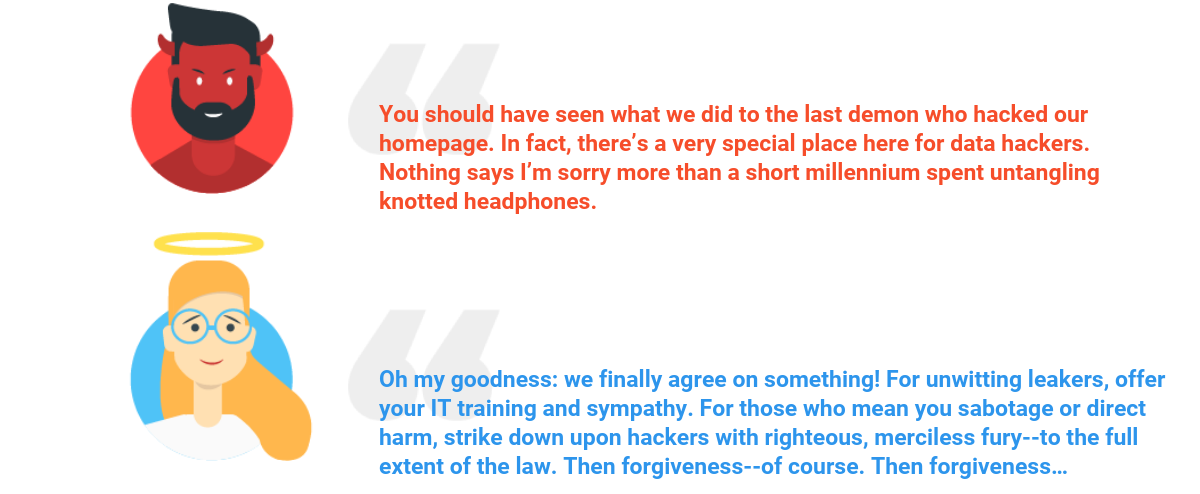
An obvious threat to data quality is a security breach via an overt cyberattack by a hacker. In 2016, Verizon found that 61 percent of small businesses suffered a security breach. Expectedly, data that is exposed could be corrupted, altered, or compromised with malware or viruses without your knowledge.
But what often surprises business leaders is that internal hires are often an immediate risk: More than 90 percent of all cyberattacks are committed with information stolen from employees who unwittingly gave away sensitive data.
6. Systems upgrade
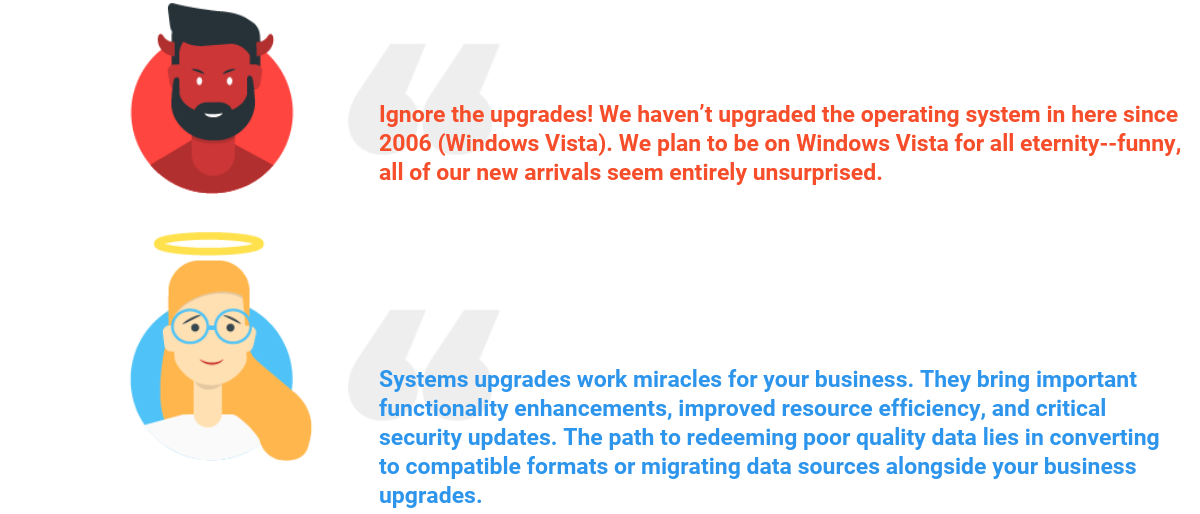
An overlooked threat to data quality is a systems upgrade. A key system and source of data may be uprooted and replaced, causing an integration crisis for legacy content. Or perhaps your business’s primary data management system, file structure, or format requires a switch. Migrating or restoring data needs to be carried out with a reliably repeatable strategy and from verified sources.
Recommended resources:
More on Business Intelligence


May 03, 2024




Dec 22, 2023