

GetApp offers objective, independent research and verified user reviews. We may earn a referral fee when you visit a vendor through our links.
Our commitment
Independent research methodology
Our researchers use a mix of verified reviews, independent research, and objective methodologies to bring you selection and ranking information you can trust. While we may earn a referral fee when you visit a provider through our links or speak to an advisor, this has no influence on our research or methodology.
Verified user reviews
GetApp maintains a proprietary database of millions of in-depth, verified user reviews across thousands of products in hundreds of software categories. Our data scientists apply advanced modeling techniques to identify key insights about products based on those reviews. We may also share aggregated ratings and select excerpts from those reviews throughout our site.
Our human moderators verify that reviewers are real people and that reviews are authentic. They use leading tech to analyze text quality and to detect plagiarism and generative AI.
How GetApp ensures transparency
GetApp lists all providers across its website—not just those that pay us—so that users can make informed purchase decisions. GetApp is free for users. Software providers pay us for sponsored profiles to receive web traffic and sales opportunities. Sponsored profiles include a link-out icon that takes users to the provider’s website.
What is Data Storytelling, and How Can it Help Your Business Grow?
What is data storytelling? It might sound like a contradiction in terms, but it could actually be transformational for your business decision-making.

What is data storytelling? The term might seem contradictory when you first hear it.
“Data” evokes images of lines of code, ones and zeroes, and impenetrable spreadsheets full of arcane numbers that can only be decoded with powerful technology used by skilled data scientists. “Storytelling,” on the other hand, conjures images of a wise old sage sitting by a fire passing down lore through colorful tales.
So what does this “contradiction” really mean?
Imagine if you could take all that valuable data that your business collects and analyzes and turn it into a compelling story that you can use to share valuable insights with stakeholders and shed light on solutions to difficult business decisions.
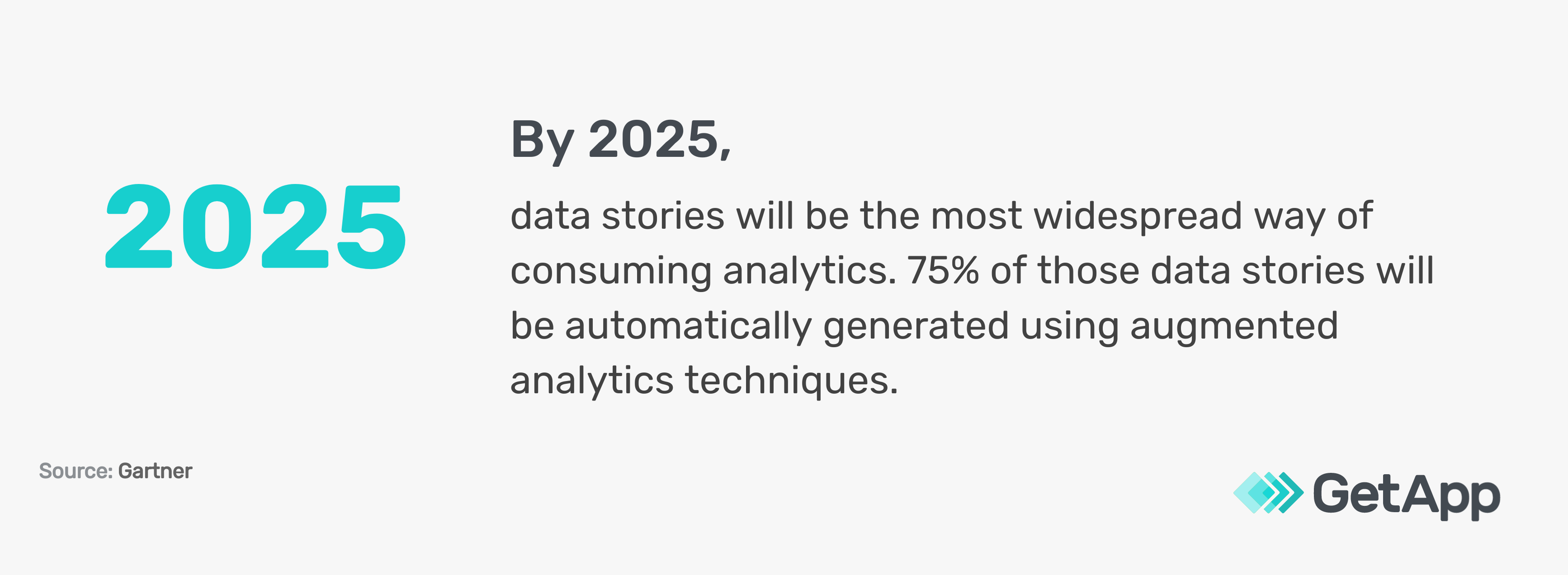
That’s the idea behind data storytelling, and it can help business leaders and data analysts communicate important information to the decision-makers who need to understand it. Gartner predicts that data storytelling will be the most popular method of consuming data analytics by as early as 2025 (full report available to clients).
What does this mean for you as a small-business leader? It means that in order to effectively communicate with your team and other stakeholders, you should familiarize yourself with data storytelling now. In this article, we’ll dig into data storytelling and provide tips so you can use it to grow your business. Let’s get started.
What is data storytelling?
Data storytelling is the practice of taking a dataset and using visuals and narrative structure to communicate the point of the dataset in an interesting and understandable format.
So why should you care about data storytelling? Because you could have the most definitive data possible to prove a business case but it’s worthless if you don’t know how to present it in a compelling way. On the flip side, you could be the most charismatic business leader in the world, but if you don’t have data to back up your gut feeling, you won’t be able to make a strong case to your fellow business leaders.
How to use data storytelling to grow your small business
It’s important to remember that you can’t tell a good data story without good data. In other words, there is no degree of storytelling prowess that can cover up a lack of compelling data. Good data storytelling starts with good data analytics. (Here’s an article on basic data analytics if you need a refresher.)
Once you have interesting data–for example, if you uncover a trend that your customers are gravitating toward a specific competitor’s unique subscription plan–you’re ready to turn it into a compelling data story.
Some business intelligence tools have even started to incorporate data storytelling features into their software. This will involve presentation, visualization, and good narrative structure. A good data visualization tool can take a lot of the hard work out of this.
Want to learn more about data visualization tools? Check out our complete guide here.
But just finding good data and visualizing it isn’t enough. That can help you make a good presentation, but it won’t necessarily give you a good data story.
A story has a beginning, middle, and end. Because this is real life, the end of your data story won’t always be a happy ending. Instead, says Gartner senior director analyst James Richardson, it should be more like a “Choose Your Own Adventure” fork in the road that leads to the next chapter of your business’s story.
“The end should never be a fixed event, but rather a set of options or questions to trigger an action from the audience,” Richardson says. “Never forget that the goal of data storytelling is to encourage and energize critical thinking for business decisions.”
In other words, the goal of your data storytelling shouldn’t be to tell the audience what to do next but instead to present the data in a clear, concise, and compelling format and use it as a starting point for discussion among decision-makers.
In this way, your data storytelling might present several options with supporting data (e.g., the costs and benefits of opening a new storefront in several different locations) rather than railroading the audience toward one predetermined option. Another way to think about this dynamic is the difference between a brainstorming session and an edict. Data storytelling is used to aid the decision-making process, not to tell people what to do.
Next steps to grow your business with data storytelling
As we went over in this article, good data storytelling involves these three steps:
Uncover valuable data insights using business intelligence software.
Create compelling data visualizations with data visualization software.
Use your data and visualizations to form a narrative with a beginning, middle, and end.
Ready to get started with data analytics at your business? Here’s a short video to help you get started on the right foot:
The right software can help with a lot of the hard work of uncovering valuable data and packaging it into clear visuals. Then all you have to do is tell an interesting story with it.
Ready to use data analytics and visualization to become a data storyteller? GetApp has you covered. Our Business Intelligence Buyers Guide has all the information you need before starting your BI software buying journey. Our Category Leaders in Business Intelligence highlights 15 top options in BI software based on verified user reviews so that you can become an effective data storyteller and use data storytelling to guide your business in the right direction.
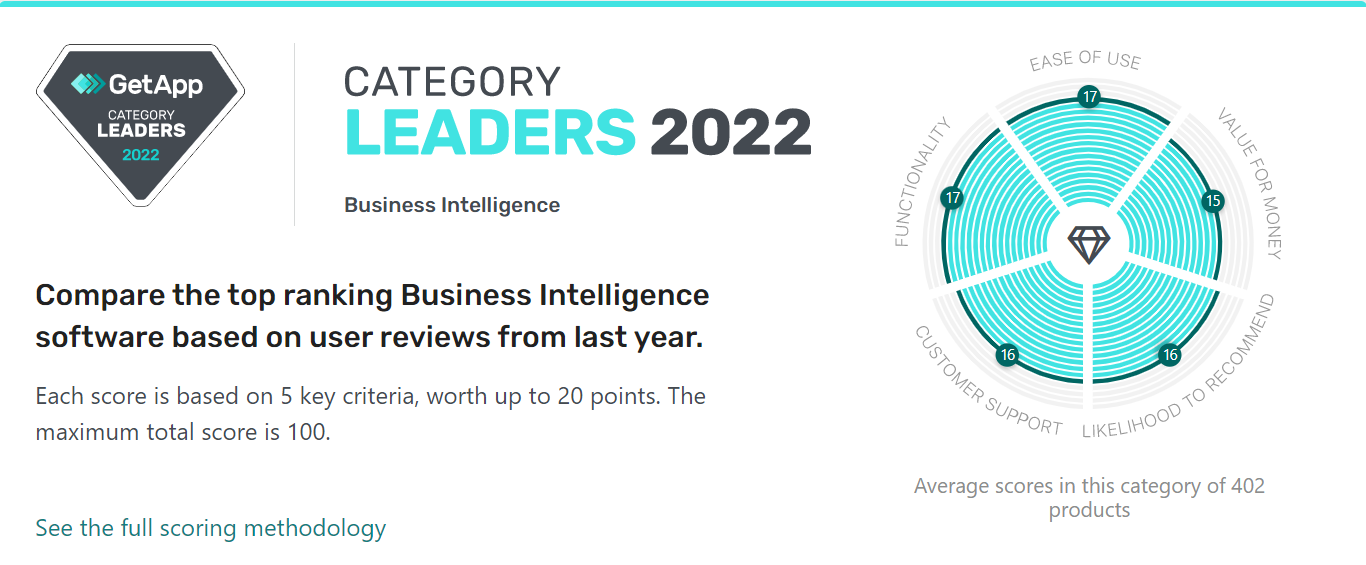
GetApp’s Category Leaders in Business Intelligence (Source)
As a seven-time award winner in the Maryland, Delaware, D.C. and Suburban Newspapers of America editorial contests, Andrew’s work has been featured in the Baltimore Sun and PSFK. He lives in Austin with his wife, son, and their rescue dog, Piper.
More on Business Intelligence


May 03, 2024




Dec 22, 2023