

GetApp offers objective, independent research and verified user reviews. We may earn a referral fee when you visit a vendor through our links.
Our commitment
Independent research methodology
Our researchers use a mix of verified reviews, independent research, and objective methodologies to bring you selection and ranking information you can trust. While we may earn a referral fee when you visit a provider through our links or speak to an advisor, this has no influence on our research or methodology.
Verified user reviews
GetApp maintains a proprietary database of millions of in-depth, verified user reviews across thousands of products in hundreds of software categories. Our data scientists apply advanced modeling techniques to identify key insights about products based on those reviews. We may also share aggregated ratings and select excerpts from those reviews throughout our site.
Our human moderators verify that reviewers are real people and that reviews are authentic. They use leading tech to analyze text quality and to detect plagiarism and generative AI.
How GetApp ensures transparency
GetApp lists all providers across its website—not just those that pay us—so that users can make informed purchase decisions. GetApp is free for users. Software providers pay us for sponsored profiles to receive web traffic and sales opportunities. Sponsored profiles include a link-out icon that takes users to the provider’s website.
What’s the Difference Between Business Intelligence and Predictive Analytics?
Knowing the difference between business intelligence and predictive analytics is key to understanding the data and trends driving your business. Learn the basics in this article.


Business intelligence (BI) tools are designed to simplify data analytics for business leaders who don’t have the time to moonlight as a data scientist. But sometimes, just understanding the terminology of business analytics can present a roadblock to using BI to grow your business in a strategic way.
A small business that uses business intelligence tools without understanding which metrics to track or what to do with the data they’re tracking will end up with a powerful tool but no way to harness it.
Similarly, a business that has a clear goal for their data analysis–such as making a critical business decision or plotting a course for their business over the next several years–but lacks understanding of the basic concepts that inform that data analysis will likely struggle to connect the dots.
That’s why it’s important to gain a basic understanding of data analytics terminology before attempting to use data analysis to inform business decisions.
For example, what is the difference between business intelligence and predictive analytics?
While business intelligence and predictive analytics have some similarities and overlap, grasping the differences between the two terms is important to understanding the overall concepts behind them, and how to use them to improve your business decisions.
In this article we’ll look at the significance of the two terms along with their key differences.
Business intelligence vs. predictive analytics
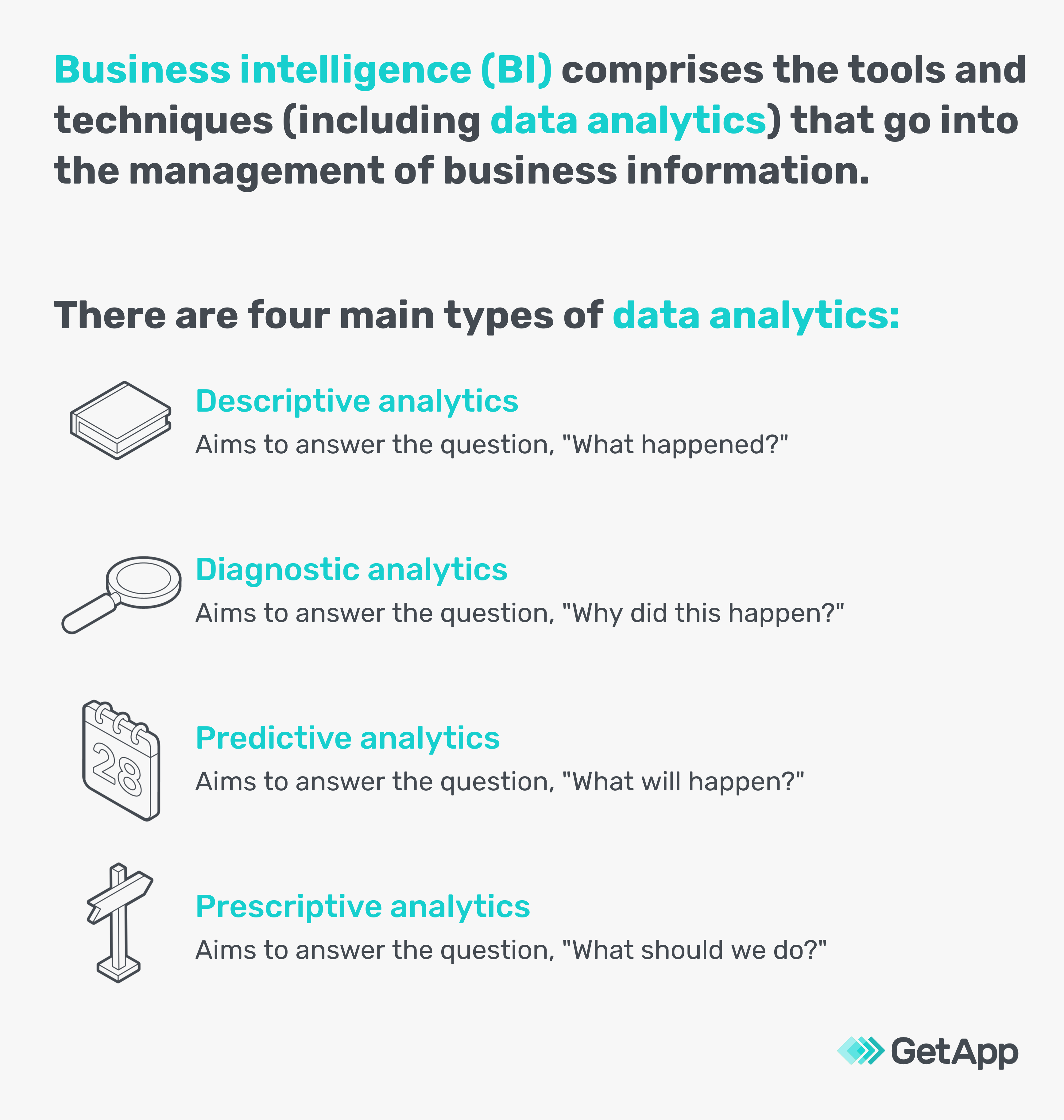
Business intelligence is an umbrella term that includes data analytics, and predictive analytics is a type of data analytics (along with descriptive analytics, diagnostic analytics, and prescriptive analytics.) In other words, predictive analytics is a type of business intelligence in the same way that trigonometry is a type of mathematics.
If you’re performing predictive analytics, you’re engaged in business intelligence. But just because you’re using business intelligence tools doesn’t necessarily mean that you’re performing predictive analytics.
To further explore and clarify the difference between business intelligence and predictive analytics, let’s have a quick refresher on each term.
Business intelligence is a blanket term for all of the tools and techniques that go into analyzing data for the purpose of improving business decisions and performance.
Predictive analytics is a type of data analytics–along with descriptive analytics, diagnostic analytics, and prescriptive analytics–that analyzes big data with the goal of answering the question “What will happen next?”
Essential characteristics of predictive analytics, according to Gartner, include:
A focus on prediction, as opposed to description or strategy.
Rapid analysis (hours or days instead of weeks or months of data mining).
An emphasis on the business relevance of the data analysis results.
Ease of use, making the tools useful for business leaders and not just professional data analysts.
Common predictive analytics tools and techniques include graph analysis, data modeling, simulation, complex event processing, neural networks, recommendation engines, heuristics, and machine learning.
Want to see some real world examples of predictive analytics? Check out our article here.
Here is a graphic to further illustrate the difference between business intelligence and predictive analytics.
How to use predictive analytics as part of your business intelligence
Now that we understand the difference between predictive analytics and business intelligence, let's look at how you can best use predictive analytics to help guide your business in the right direction.
Every business, whether it’s a solopreneur or large corporation, should be using some form of business intelligence to make decisions. This business intelligence could be as simple as tracking month-over-month revenue on a spreadsheet, or as complicated as using enterprise resource planning software along with a powerful BI system.
Luckily, you don’t need enterprise-level software to run some simple predictive analytics functions. But because predictive analytics relies on artificial intelligence and machine learning algorithms and models (unlike basic descriptive analytics), you will need business intelligence software to effectively perform predictive analytics. Advanced data science isn't the kind of thing you want to try with a calculator or spreadsheet.
Ready to get started with data analytics at your business? Here’s a short video to help you get started on the right foot:
The good news is that business intelligence software comes in different shapes and sizes, and is designed to be accessible for businesses of any size. There’s even free BI software for small businesses on a very limited budget, or businesses that want to test drive a BI system before investing in it.
Because predictive analytics is advanced analytics, it’s also helpful to hire a full-time data analyst to take on this task. You may already have a citizen data scientist in your organization who can pivot to take on this role, even if it’s not in their job description right now.
Once you have your BI tool up and running, and someone to manage it, here are a few examples of how various business units can benefit from predictive analytics:
A sales team can use predictive analytics to predict which region is primed for the biggest growth and then expand staffing resources for that region.
A retailer can use predictive analytics to take the guesswork out of deciding which products to stock for the next quarter.
A customer service department can use predictive analytics to predict when and why customers decide to leave, and what to do to change those outcomes.
A project management team can use predictive analytics to forecast which projects are in danger of failing, missing deadlines, or going over budget and take corrective actions to avoid those outcomes.
Tips to scale your business with BI and predictive analytics
Now that you understand the difference between business intelligence and predictive analytics, you’re ready to use these powerful tools to grow your business. But you’ll likely find that as your business grows, your data analysis needs and capabilities will also change. Here are some tips to scale your data analytics efforts as your business evolves.
Start tracking data as soon as possible. You can’t analyze data that you don’t have, so it’s imperative to begin collecting data as soon as possible. Pick a few metrics that are important to your business goals (month-over-month revenue, new customers acquired, customer satisfaction, etc.) and start tracking them, even if you’re just using a spreadsheet to do so.
Gather your BI tools and familiarize yourself with them. You can perform some basic data analytics using just a spreadsheet, but to effectively use predictive analytics you need the right software. As your business grows, you’ll be using this tool a lot, so take the time to try several platforms and pick something that you and your team are comfortable with. Here’s a software selection template to help you make the right choice for your business.
Start with descriptive analytics before attempting predictive analytics. While it’s natural to want to skip ahead to the “predicting the future” phase of business intelligence, you can’t get there without building a solid foundation first. Start with a few basics like annual sales and average revenue per sale before trying to use more advanced techniques like regression analysis.
Next steps to learn more about business intelligence tools
Ready to gain new insight into your business using business intelligence and predictive analytics? GetApp has you covered. Our Business Intelligence Buyers Guide has all the information you need before starting your BI software buying journey, and our Category Leaders in Business Intelligence highlights 15 top options in BI software based on verified user reviews.
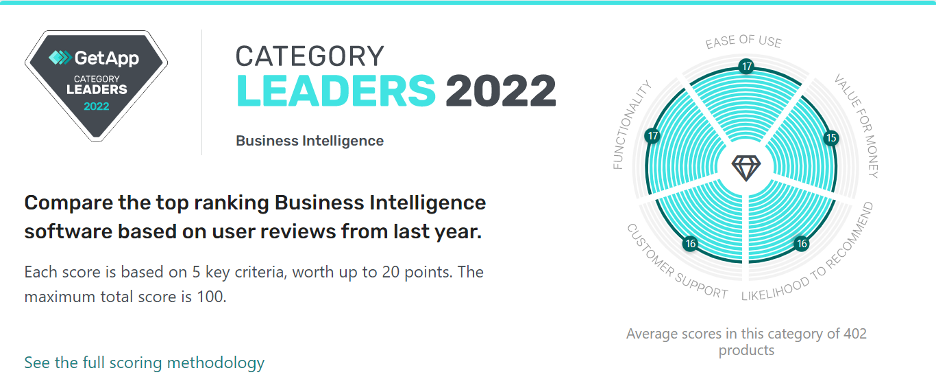
GetApp’s Category Leaders in Business Intelligence (Source)
As a seven-time award winner in the Maryland, Delaware, D.C. and Suburban Newspapers of America editorial contests, Andrew’s work has been featured in the Baltimore Sun and PSFK. He lives in Austin with his wife, son, and their rescue dog, Piper.
More on Business Intelligence


May 03, 2024




Dec 22, 2023