GetApp offers objective, independent research and verified user reviews. We may earn a referral fee when you visit a vendor through our links.
Our commitment
Independent research methodology
Our researchers use a mix of verified reviews, independent research, and objective methodologies to bring you selection and ranking information you can trust. While we may earn a referral fee when you visit a provider through our links or speak to an advisor, this has no influence on our research or methodology.
Verified user reviews
GetApp maintains a proprietary database of millions of in-depth, verified user reviews across thousands of products in hundreds of software categories. Our data scientists apply advanced modeling techniques to identify key insights about products based on those reviews. We may also share aggregated ratings and select excerpts from those reviews throughout our site.
Our human moderators verify that reviewers are real people and that reviews are authentic. They use leading tech to analyze text quality and to detect plagiarism and generative AI.
How GetApp ensures transparency
GetApp lists all providers across its website—not just those that pay us—so that users can make informed purchase decisions. GetApp is free for users. Software providers pay us for sponsored profiles to receive web traffic and sales opportunities. Sponsored profiles include a link-out icon that takes users to the provider’s website.
How To Tackle the Cybersecurity Skills Shortage
Understand the challenges of hiring qualified cybersecurity professionals, and learn how to bridge the cybersecurity skills gap.


With the increasing sophistication of cyber threats, it is important to have skilled security professionals on your team. If you’re finding it difficult to hire a cybersecurity expert, you’re not alone. The cybersecurity skills shortage is widespread [1], and like you, many others are facing this challenge.
According to an industry report [2], by 2025 , there’ll be 3.5 million available but unfulfilled cybersecurity jobs globally. And small businesses like yours are likely to be more affected by the skills shortage: Budget constraints may make it tougher for you to compete with big players in the race to attract the best cybersecurity talent.
In this article, we discuss the common challenges you may face when hiring a cybersecurity professional. We also offer tips to address those challenges and overcome the cybersecurity shortage at your small business.
Challenges you may face when hiring cybersecurity staff
Here are some common challenges you may face when recruiting skilled cybersecurity workers.
You have to compete with other companies
There are many companies looking to hire cybersecurity experts, but only a limited talent pool. This has increased market competition, with most companies vying for the same candidates. Large firms that can offer better salaries, perks, and other benefits often have a winning edge in such cases.
You have to pay more to hire qualified cybersecurity professionals
High market competition for hiring cybersecurity talent translates to high costs of recruitment. Spending such a large amount on a role that doesn’t directly translate into revenue is something you need to think about carefully before making any investment.
Your HR department might not understand your cybersecurity needs
According to ISACA’s 2020 State of Cybersecurity report [3], 72% of companies say their HR department doesn't understand their hiring needs. To avoid a similar situation, clearly communicate the job requirements to your HR staff, so they have a complete understanding of the cybersecurity skills they should be looking for in candidates.
It’s tough finding professionals with niche skills
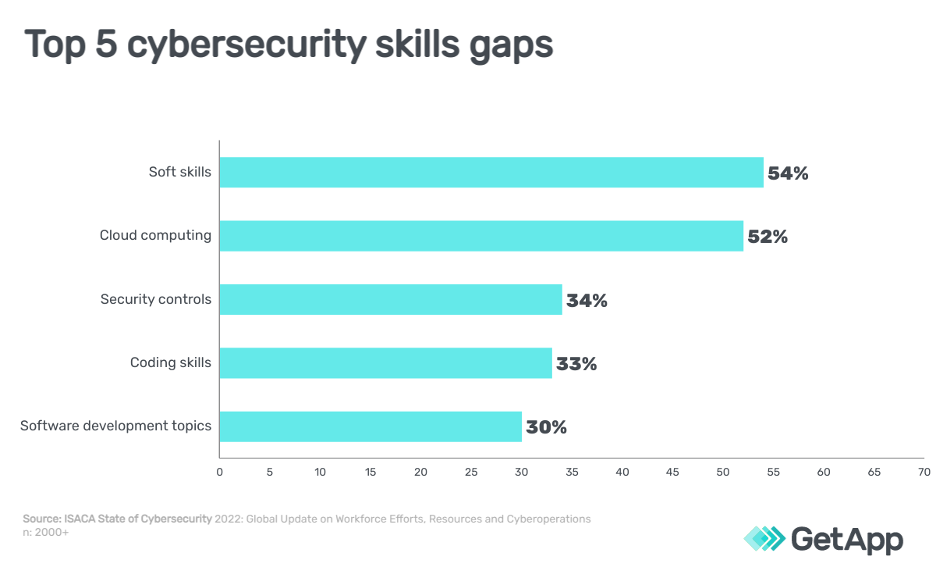
If hiring cybersecurity professionals is a challenge, hiring professionals with niche security skills is an even bigger challenge. There is an acute skills shortage in fields such as cloud security, application security, and security analysis and investigation. Hiring candidates with the right soft skills [4], such as emotional intelligence, interpersonal skills, communication, and creativity, is another challenge you may face.
(Source)
8 ways to tackle cybersecurity shortage
Here are eight effective tips to manage the cybersecurity talent crunch and get around the high competition in hiring cybersecurity staff.
1. Partner with universities to nurture talent
The cybersecurity industry is highly specialized, and skills shortage is at every stage—from entry-level positions to leadership ranks. It’s a good idea to partner with higher education institutions and hire talent right out of college. Conduct assessments and contests to identify students who have an aptitude for IT security, and nurture them by offering scholarships, internships, and apprenticeships. You’ll help them develop the required skills as well as encourage them to pursue a cybersecurity career with your organization.
2. Improve compensation by offering perks, ESOPs, and other benefits
Aim to offer compensation that matches industry standards, but candidate expectations can be high due to multiple offers. If you aren’t able to offer what large companies are offering, make up for it with employee stock option plans (ESOPs), health and insurance benefits, flexible work options, and other perks.
3. Hire retired hands and veterans
Another option to overcome cybersecurity workforce shortage is hiring retired professionals and veterans experienced in security technologies. Their salary demand will also likely be lower than those in the workforce currently. You can hire them as consultants or on a part-time or contractual basis, depending on what suits both parties.
4. Train your existing IT staff in cybersecurity
Check if any of your existing IT team members are interested in and have the aptitude to take up a cybersecurity role. Enroll qualifying members in Certification in Risk and Information Systems Control (CRISC), Certified Information Security Manager (CISM), and similar certifications [5] to help them gain the required qualification. This organic method of cybersecurity education and training will cost you less than hiring new talent.
5. Invest in your information security staff
For many cybersecurity professionals, the pressure of a regular job leaves little to no time to learn new skills or stay updated with the latest security technologies. Keep the skills of your cybersecurity workforce sharp by enrolling them in certifications and encouraging them to attend industry meets and tech seminars. This will keep them updated with the changing cyber risk landscape and evolving cyber technologies.
6. Keep your employees happy to reduce attrition
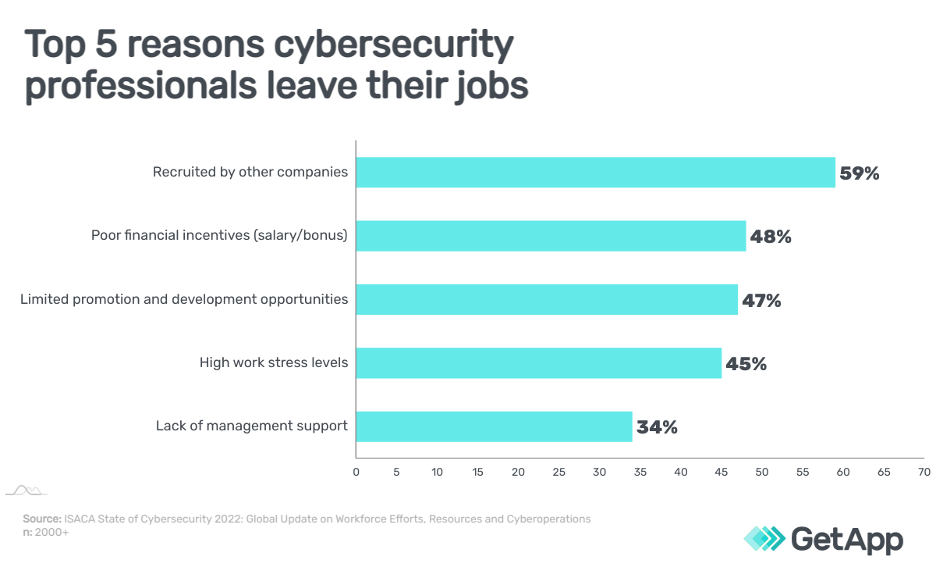
Finding cyber talent is a challenge, so losing your existing staff is the last thing you want. Burnout, stress, and better opportunities are some of the main reasons [6] cybersecurity professionals quit their jobs. Offer career development opportunities, work-life balance, and other perks and benefits to keep your cybersecurity workforce happy and make them stay longer with your company.
7. Standardize and automate security processes
Automating processes such as threat detection and mitigation can help if you’re short on security staff. Automation techniques also let you standardize security processes such as incident response, risk assessment, and security audits.
Here are some automation tools to help strengthen your company’s cyber defense:
Endpoint security and antivirus software automates the detection and mitigation of threats at network endpoints such as servers and computer systems.
Network monitoring software monitors network traffic to detect abnormalities such as traffic spikes that can be a sign of DDoS attacks.
Security information and event management (SIEM) software analyzes the security alerts generated by applications and network hardware in real time..
Security analytics software automates the analysis of network and application data to detect abnormalities such as network traffic spikes.
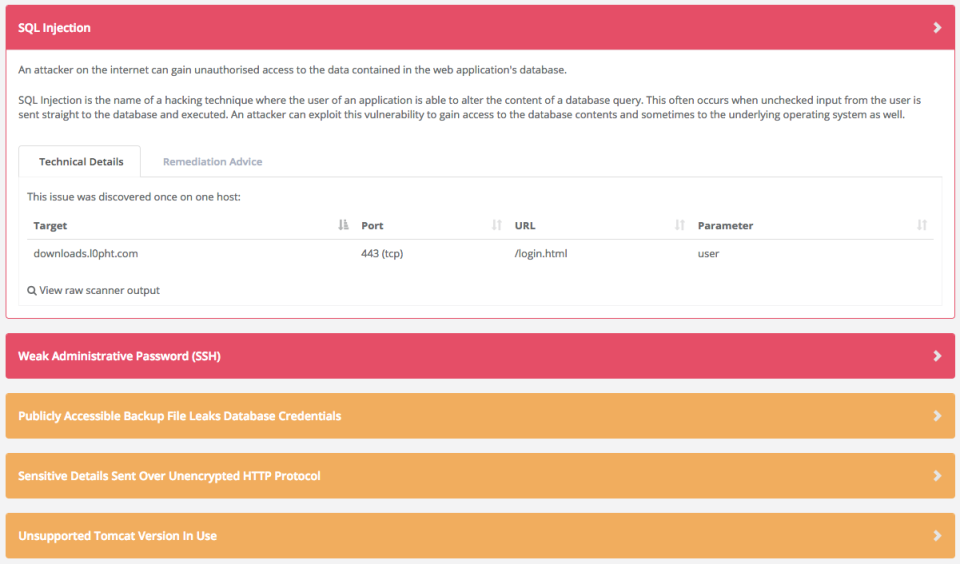
Penetration testing software simulates various cyberattack scenarios to test your defense against common security threats such as SQL injection or DDoS attacks.
8. Partner with MSSPs
If you’re not able to hire a dedicated cybersecurity practitioner, outsource to a managed security service provider (MSSP). MSSPs have all the required experience and resources to take care of your security needs, including threat monitoring, incident response, and security audits.
Choose any method, but don’t ignore cybersecurity
Depending on your budget and security goals, you can hire dedicated cybersecurity professionals, partner with MSSPs, or train your IT staff to take up security roles. Partnering with MSSPs will help meet your immediate security needs, while having a dedicated internal cybersecurity team will help in the long run, especially as your business grows in size. Any method works fine as long as you prioritize cybersecurity and don’t ignore it.
Interested in reading more about cybersecurity? Check out:
Sources
Faced With Growing Threats, Companies Need Cyber Skills at the Top, Marketplace
Cybersecurity Jobs Report: 3.5 Million Openings In 2025, Cybercrime Magazine
How to Work With HR Or Recruiters to Improve Your Cybersecurity Hiring Strategy, INFOSEC
10 Hot Cybersecurity Certifications For IT Professionals To Pursue In 2021, Cybercrime Magazine
Toby Cox