

GetApp offers objective, independent research and verified user reviews. We may earn a referral fee when you visit a vendor through our links.
Our commitment
Independent research methodology
Our researchers use a mix of verified reviews, independent research, and objective methodologies to bring you selection and ranking information you can trust. While we may earn a referral fee when you visit a provider through our links or speak to an advisor, this has no influence on our research or methodology.
Verified user reviews
GetApp maintains a proprietary database of millions of in-depth, verified user reviews across thousands of products in hundreds of software categories. Our data scientists apply advanced modeling techniques to identify key insights about products based on those reviews. We may also share aggregated ratings and select excerpts from those reviews throughout our site.
Our human moderators verify that reviewers are real people and that reviews are authentic. They use leading tech to analyze text quality and to detect plagiarism and generative AI.
How GetApp ensures transparency
GetApp lists all providers across its website—not just those that pay us—so that users can make informed purchase decisions. GetApp is free for users. Software providers pay us for sponsored profiles to receive web traffic and sales opportunities. Sponsored profiles include a link-out icon that takes users to the provider’s website.
What Is Data Quality, and Why Is It Important for Your Business?
Data analytics can be a game changer for your business growth. But data analytics without data quality can sink your business fast. Here’s how to avoid bad data.


Garbage in, garbage out. That’s an old computing adage that’s been around since the early days of vacuum tubes and magnetic drums, and it’s just as true now as it was half a century ago.
Data analytics and business intelligence tools can uncover insights and aid decision-making in ways that almost feel like magic. But unless your data is clean and accurate, your data analytics will be more like smoke and mirrors.
As a small-business leader trying to find data-backed insights to take your business to the next level of growth, you’ll be eager to get your data analytics gears turning as soon as possible. But if you use half-baked data to try to gain an edge on your competitors, you’ll be doing more harm than good because you’ll be making decisions based on unreliable information.
In this article, we’ll go over the importance of data quality along with some best practices for ensuring data quality in your data analysis. Let’s get started.
What is data quality, and why is it important?
High quality data is:
Accurate
Complete
Up to date, and
Contextual
For example, if you have a two-year data set of financial statements for your business, it can’t include any data entry errors, it can’t be missing any reports, and it needs to be up to date with the latest reports. It also needs to be relevant (don’t omit revenue from any side consulting work just because it makes your overall numbers look better or worse.)
On the flipside, poor data quality refers to data that is inaccurate, incomplete, outdated, or used out of context.
Using bad data is akin to filling a gas tank with watered-down fuel. In a best case scenario, you’ll get unreliable and misleading data insights as a result. In a worst case scenario, inaccurate data could cost you heavy fines and penalties and even the loss of your business.
In fact, you may be legally obligated to ensure good data quality and protect personal data. For example, you should familiarize yourself with the General Data Protection Regulation if you do business with Europe and the California Consumer Privacy Act in California.
Good data quality management starts with data collection and continues all the way through monitoring big data sets to ensure ongoing quality. In between, there is data entry, data profiling, data cleansing, data analysis—all touchpoints where data quality can become compromised and needs to be managed.
For more on the different stages of data quality management, check out this video:
So how do you make sure that you’re using only high quality data?
Ensure you’re only using high quality data
Ensuring data quality might not be the most exciting part of running your business, but data management and quality assurance is vital to the sustained success of your business.
According to Gartner senior director analyst Melody Chien, effective data quality management includes the day-to-day tactics of upholding processes, policies, roles, and responsibilities, along with the strategic effort of prioritizing data quality as a business objective and procuring data quality management technology (full report available to clients).
This, writes Chien, comes down to five crucial components:
Manage data scope to what can be reasonably monitored. The more data you have, the harder it is to uphold the highest level of information quality for that data. Imagine, for example, that you run a produce business, and you have 10 workers to ensure the quality of 500 boxes of fresh fruit per day. Then you up your production to 1,000 boxes of fresh fruit per day without increasing staff. As you can imagine, some low quality fruit is going to start slipping through. The same is true for data quality testing, and the solution is to keep the scope of your data set limited to what you can reasonably manage. It would be impossible to stay on top of data integrity for every aspect of your business, so focus on metrics that are most important to your business goals.
Establish a data governance point person for each data set. Data quality can easily become a “not my problem” scenario if someone isn’t explicitly in charge of data profiling and data quality management. Make sure that this role is clearly defined and that each point person has the resources and support they need to oversee all centralized (shared) data, ensure regulatory compliance, and promote best practices.
Draft and distribute essential practices and processes. Create data quality rules and standards, perform regular data cleansing based on those rules, and then constantly monitor your shared data to ensure that it is clean and meets internal and external (regulatory) standards.
Assign critical roles and develop data quality management skills. While it’s imperative to have a designated data governance point person, ensuring business-wide data quality and data accuracy will always be a team effort. Your data quality management owner must be empowered by leadership to oversee department level stewards who can monitor, investigate, and resolve data quality issues.
Leverage modern data quality technology. This may all sound like a major investment of time and resources, but the good news is that there is data quality software to lighten the load. In fact, Gartner predicts that by 2025, “60% of data quality processes will be autonomously embedded and integrated into critical business workflows as opposed to being individual and distinct tasks, up from less than 30% in 2022” (full report available to clients). In other words, most of the tedious, time-consuming data quality tasks such as data collection, auditing master data, flagging data errors, and data cleansing will be handled behind the scenes automatically by software.
Tips to scale your business with data quality management
You can’t go from no data quality management program to a fully staffed, organization-wide data quality management program overnight, so here are some tips for scaling your data quality management program as your business grows.
Identify and record all of your different data sources. You can’t monitor data that you’re not aware of, so the first step to data quality management should be to gather all of the different sources into a single clearing house for future monitoring. You can do this by asking different department leaders what data sources they’re using.
Assign department-level data managers and provide them with data quality processes and best practices. Depending on the size of your business, you might be able to oversee data quality management early on. But as your business grows, you’ll need proxies at the department level to uphold these data quality standards.
Establish a centralized master data management team and empower them with technology. Once your data analytics capabilities become powerful enough, you’ll need a team of data scientists to monitor and maintain your various data sets. By this point, you’ll also want technology to help this team work as effectively and efficiently as possible.
Start ensuring quality data now
We recommend a two-pronged approach for ensuring quality data in your data analytics efforts:
Data quality best practices, as outlined above, and
Data quality tools to lighten the load on manual tasks.
Here are some things you can do right now to get started:
Create a data quality checklist to distribute throughout your business. This can include items such as “double check data sources for accuracy,” and “make sure that data sets include the latest reports available.”
Use your data quality checklist to audit existing data sets. While doing this, you can also update and expand your checklist as needed.
Create new data quality management roles and responsibilities. Depending on staff resources, this could be as involved as hiring a new data quality manager, or as simple as assigning an employee to audit your data sets as a side project.
Once you have high quality data in place and a system for continued data quality, you’re ready to plug that accurate data into a business intelligence tool to get reliable and actionable insights. Our Business Intelligence Buyers Guide has all the information you need before starting your BI software buying journey, and our Category Leaders in Business Intelligence highlights 15 top options in BI software based on verified user reviews so that you can efficiently get the data insights to guide your business in the right direction.
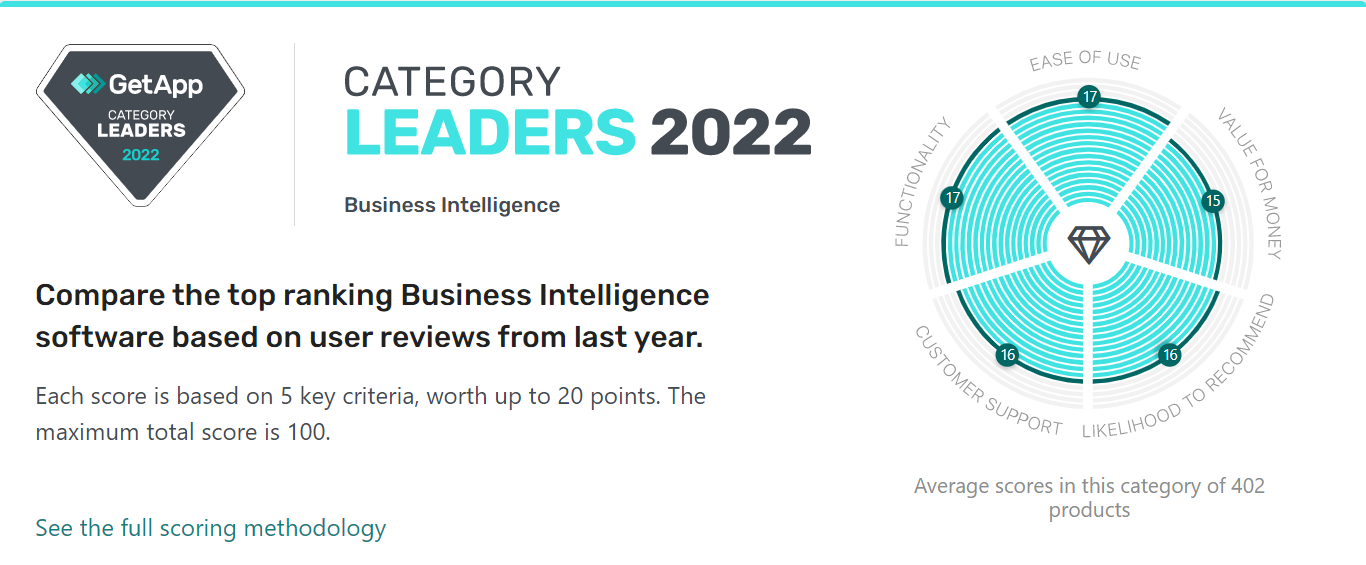
GetApp’s Category Leaders in Business Intelligence (Source)
As a seven-time award winner in the Maryland, Delaware, D.C. and Suburban Newspapers of America editorial contests, Andrew’s work has been featured in the Baltimore Sun and PSFK. He lives in Austin with his wife, son, and their rescue dog, Piper.
More on Business Intelligence


May 03, 2024




Dec 22, 2023