GetApp offers objective, independent research and verified user reviews. We may earn a referral fee when you visit a vendor through our links.
Our commitment
Independent research methodology
Our researchers use a mix of verified reviews, independent research, and objective methodologies to bring you selection and ranking information you can trust. While we may earn a referral fee when you visit a provider through our links or speak to an advisor, this has no influence on our research or methodology.
Verified user reviews
GetApp maintains a proprietary database of millions of in-depth, verified user reviews across thousands of products in hundreds of software categories. Our data scientists apply advanced modeling techniques to identify key insights about products based on those reviews. We may also share aggregated ratings and select excerpts from those reviews throughout our site.
Our human moderators verify that reviewers are real people and that reviews are authentic. They use leading tech to analyze text quality and to detect plagiarism and generative AI.
How GetApp ensures transparency
GetApp lists all providers across its website—not just those that pay us—so that users can make informed purchase decisions. GetApp is free for users. Software providers pay us for sponsored profiles to receive web traffic and sales opportunities. Sponsored profiles include a link-out icon that takes users to the provider’s website.
Search Engine Marketing Pros and Cons For Small Businesses
When it comes to searching engine marketing, the pros outweigh the cons. Read on to discover both sides of the equation and put your small business on the map.


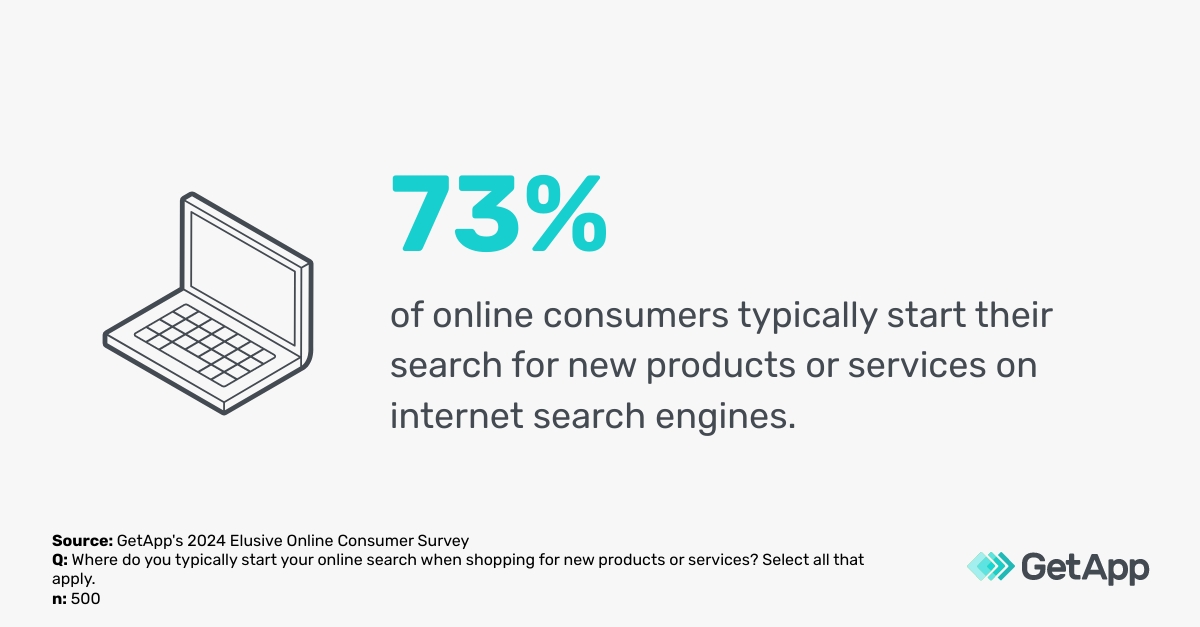
In an age where 73% of online consumers typically start their search for new products or services on internet search engines, the importance of SEM cannot be overstated. When 25% of these consumers consider internet search engines one of the most trustworthy sources for product reviews, it highlights the critical role search engines play in connecting businesses with potential customers.*
For software-savvy small and mid-size businesses, SEM offers a unique opportunity to level the playing field against larger competitors. It allows you to target specific audiences, increase visibility, and drive qualified traffic to your website. However, like any marketing strategy, SEM comes with its own set of advantages and challenges.
Below, we'll share some of the search engine marketing pros and cons we've identified through research and answer the question: is SEM something I should pursue for my small business?
What is search engine marketing (SEM)?
Search engine marketing is a digital marketing strategy that leverages paid tactics, such as pay-per-click (PPC) advertising, to increase a business's visibility on search engine results pages (SERPs). By bidding on keywords that potential customers are likely to use when searching for products or services, businesses can place their ads prominently on search engines like Google and Bing. This approach not only drives traffic to their websites but also targets users who are actively seeking what they offer.
SEM is particularly valuable for small and mid-size businesses because it provides a level playing field. Unlike traditional advertising methods that often require substantial budgets, SEM allows SMBs to compete with larger companies by targeting specific keywords and demographics. This precision ensures that marketing efforts are cost-effective and reach the right audience at the right time.
What is the difference between SEM and search engine optimization (SEO)?
While both SEM and SEO aim to increase a business's visibility on search engines, they employ different tactics:
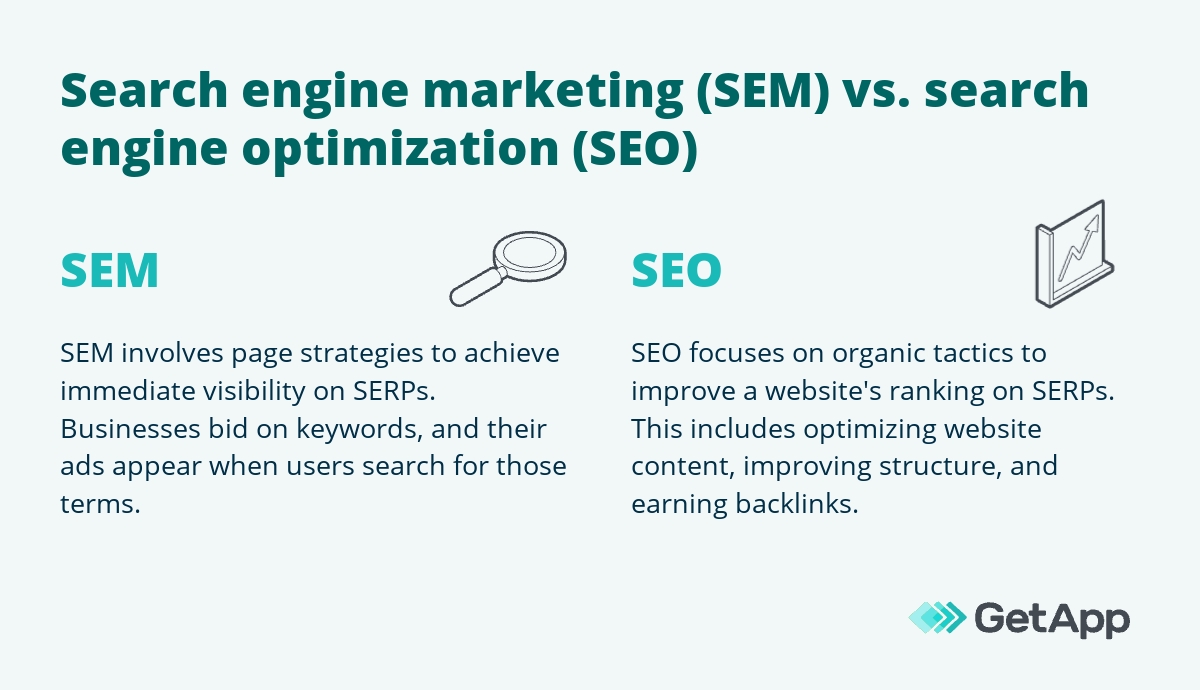
SEM involves page strategies, such as PPC advertising, to achieve immediate visibility on SERPs. Businesses bid on keywords, and their ads appear when users search for those terms. This approach provides quick results and allows for precision targeting and budget control.
SEO focuses on organic tactics to improve a website's ranking on SERPs. This includes optimizing website content, improving site structure, and earning backlinks. SEO is a long-term strategy that builds credibility and authority over time, resulting in sustained organic traffic.
Combining both SEM and SEO can be a powerful approach for SMBs. SEM offers immediate visibility on quick wins, while SEO builds a strong foundation for long-term success. The choice between the two depends on factors such as a business's growth stage, available resources, and overall marketing strategy.
Pros of search engine marketing
Here are some of the many benefits of search engine marketing for SMBs:
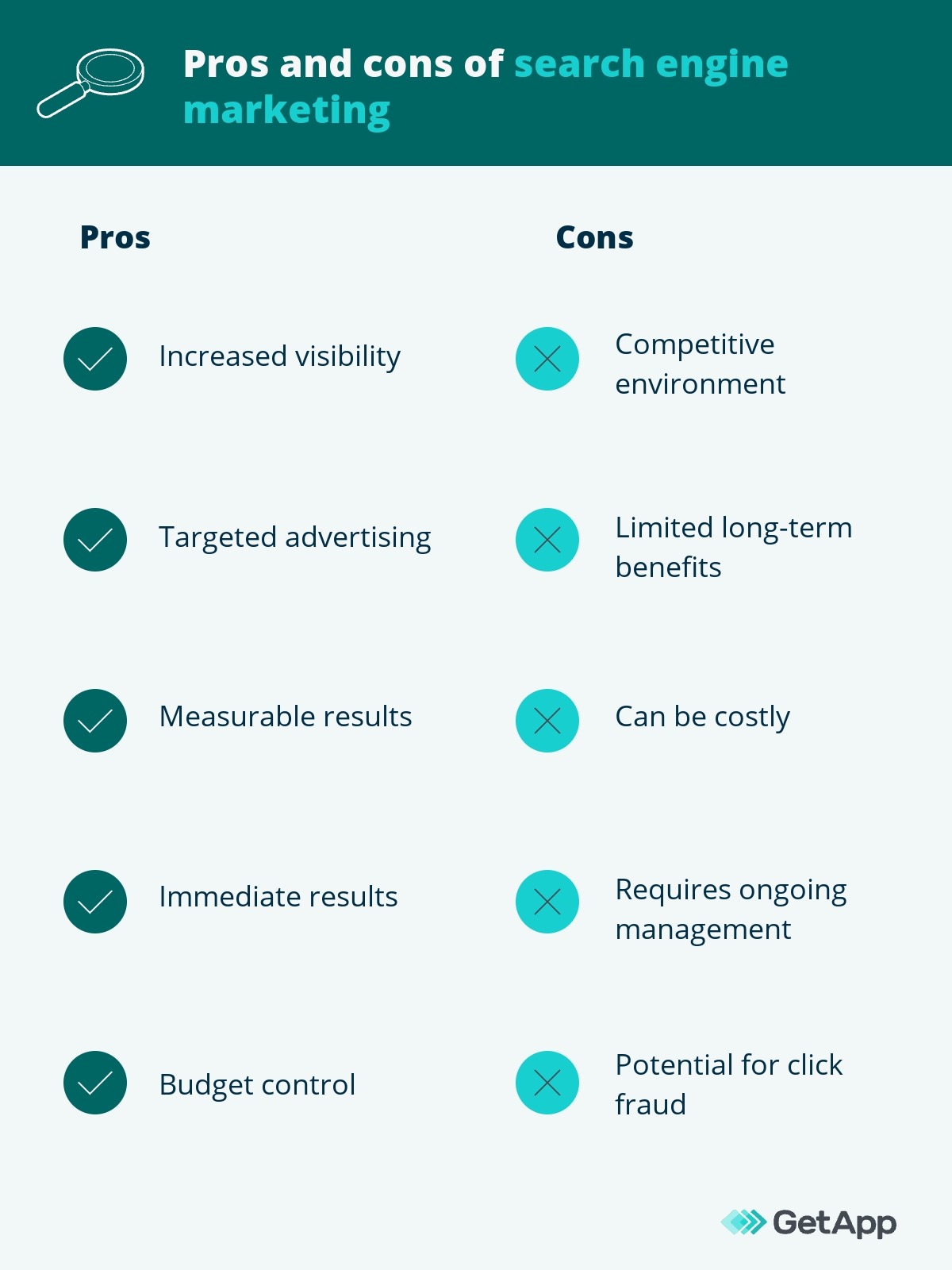
Increased visibility
One of the most significant advantages of search engine marketing is the immediate boost invisibility it provides. Through targeted paid ads and optimized organic content, your business can appear at the top of search results for relevant queries. This increased visibility is crucial, especially for small businesses looking to establish their online presence quickly.
For example, a local bakery using SEM could ensure their website appears prominently when someone searches for "best cupcakes near me," potentially drawing in new customers who might not have discovered the business otherwise.
Targeted advertising
One big advantage of search engine marketing is that it enables you to reach specific demographics, locations, and even times of day. This precision targeting means your marketing budget is spent on reaching the most relevant potential customers.
Consider a small B2B software company specializing in inventory management. Through SEM, they can target keywords like "inventory software for small retailers" and set their ads to appear only during business hours and specific geographic regions, ensuring their message reaches decision-makers when they are most likely to be searching for solutions.
Measurable results
"Search is a highly measurable medium. This ease of measurement between impression, click, and action is instrumental in showcasing search marketing's value within the digital portfolio," states Gartner. [1] Unlike traditional marketing, SEM provides detailed analytics on campaign performance. This data allows businesses to continually refine their strategies, optimizing for better results over time.
For instance, a small e-commerce business can track which keywords are driving the most sales, adjust their budget allocation accordingly, and even A/B test different ad copy to improve performance.
Immediate results
While organic SEO strategies can take months to show significant results, paid SEM tactics like PPC can drive traffic to your site quickly. This immediate impact is particularly valuable for new businesses, product launches, or time-sensitive promotions.
A seasonal business, such as a tax preparation service, can leverage SEM to quickly ramp up visibility as tax season approaches, capturing potential clients right when they search for their services.
Budget control
Sem offers flexible budget options, making it accessible to businesses of all sizes. With PPC ad platforms, you can set daily budgets and adjust them as needed, ensuring you never overspend. This control allows small businesses to compete with larger companies by focusing on niche keywords or local markets where they can maximize their budget's impact.
Cons of search engine marketing
For as many advantages as there are to search engine marketing, there are also some search engine marketing drawbacks that should be avoided, especially as a small business just starting out with this strategy.
Competitive environment
The popularity of SEM means that competition for keywords can be fierce, especially in certain industries. This competition can drive up cost per click (CPC) and make it challenging for smaller businesses with limited budgets to maintain visibility.
For example, a small law firm might find it prohibitively expensive to bid on broad keywords like "lawyer" or "attorney" due to the competition from larger firms with bigger marketing budgets.
Limited long-term benefits
While SEM strategies like PPC can provide immediate visibility, this visibility disappears once you stop paying for ads. Unlike organic SEO efforts, which can provide lasting benefits, the results of paid SEM are often temporary.
A small business relying solely on paid SEM might find itself in a cycle of continually spending to maintain its online presence, without building the long-term equity that comes from strong organic rankings.
Can be costly
According to Gartner, "Digital marketing leaders face two prominent challenges when managing search budgets: spend too little and miss out on impressions, click-throughs and, ultimately, conversions; or spend too much, and return on ad spend (ROAS) may sink." SEM can get expensive quickly. High-value keywords and competitive Industries can cost several dollars per click.
Consider a startup in the financial technology sector. Keywords related to "investment apps" or "online trading platforms" can be extremely costly due to competition from established players in the finance industry.
Requires ongoing management
Effective SEM requires constant monitoring and adjustment. Keywords, ad copy, and targeting strategies need to be regularly reviewed and optimized to maintain performance. For small businesses with limited resources, this ongoing management can be time-consuming and may require specialized skills or outside expertise.
Potential for click fraud
Unfortunately, click fraud—where competitors or bots click on your ads to deplete your budget without any intention of converting—is a concern in PPC advertising. While search engines have systems in place to detect and prevent click fraud, it remains a potential risk that can waste your advertising budget.
Technology to help you succeed with SEM
To navigate the complexities of search engine marketing effectively it's important to leverage the right technology. Here are two key categories of software that can significantly enhance your SEM efforts.
SEO/SEM software
SEO/SEM software provides a comprehensive suite of tools to help you plan, execute, and analyze your search marketing strategies. These platforms typically offer features such as:
Keyword research and tracking
Competitor analysis
Site audits for technical SEO issues
Backlink analysis and monitoring
Content optimization suggestions
Performance reporting and analytics
Tech tip
To find the right solution for your business, explore GetApp's SEO/SEM software directory. This resource offers a curated list of tools, complete with user reviews and detailed feature comparisons, helping you make an informed decision based on your business needs and budget.
Local SEO software
For small businesses targeting local customers, local SEO software can be a game-changer. These tools focus on improving your visibility and local search results and usually have features like:
Local keyword research
Google My Business optimization
Citation building and management
Review monitoring and management
Local competitor analysis
Tech tip
To explore solutions that can boost your local search presence, visit GetApp's local SEO software directory. Filter and sort the results by the features you need, price, user ratings, and more. Then, read the search engine marketing software reviews to find the perfect tool for your search marketing initiative.
Next steps: Crafting your SEM strategy
Throughout this article, we've explored the powerful potential of search engine marketing (SEM) for small and mid-size businesses. By leveraging SEM, you can enhance your online visibility, reach a targeted audience, and drive immediate results. We also looked at search engine marketing advantages and disadvantages to make sure you steer clear of some of SEM's drawbacks.
To get started on your SEM journey, consider the following steps:
Identify the keywords that your target audience is using to search for your products and services.
Determine what you want to achieve with your SEM campaigns, whether it's increasing website traffic, generating leads, or boosting sales.
Create ad copy that grabs attention and encourages clicks.
Determine how much you're willing to spend on your SEM campaigns and allocate your budget accordingly.
Check out GetApp's SEO/SEM software listings for tools that will help you manage and track your campaigns and improve your results over time.
To learn more about getting more visibility in search engine results pages, check out these resources:
Methodology
*GetApp's 2024 Elusive Online Consumer Survey was conducted online in April 2024 among 5,585 respondents in the U.S. (n=500), Canada (n=500), Brazil (n=497), Mexico (n=470), the U.K. (n=499), France (n=271), Italy (n=496), Germany (n=496), Spain (n=359), Australia (n=497), India (n=500), and Japan (n=500). The goal of the study was to learn about how today's online consumer shops. Respondents were screened to have shopped online several times a month or more often.
Sources
Stephan Miller