GetApp offers objective, independent research and verified user reviews. We may earn a referral fee when you visit a vendor through our links.
Our commitment
Independent research methodology
Our researchers use a mix of verified reviews, independent research, and objective methodologies to bring you selection and ranking information you can trust. While we may earn a referral fee when you visit a provider through our links or speak to an advisor, this has no influence on our research or methodology.
Verified user reviews
GetApp maintains a proprietary database of millions of in-depth, verified user reviews across thousands of products in hundreds of software categories. Our data scientists apply advanced modeling techniques to identify key insights about products based on those reviews. We may also share aggregated ratings and select excerpts from those reviews throughout our site.
Our human moderators verify that reviewers are real people and that reviews are authentic. They use leading tech to analyze text quality and to detect plagiarism and generative AI.
How GetApp ensures transparency
GetApp lists all providers across its website—not just those that pay us—so that users can make informed purchase decisions. GetApp is free for users. Software providers pay us for sponsored profiles to receive web traffic and sales opportunities. Sponsored profiles include a link-out icon that takes users to the provider’s website.
3 Sales Prospecting Insights To Inform Your Approach
B2B buyers don’t like you. But you can use this information to your advantage.


A sales prospect isn’t just a potential customer; they’re a challenge that new sales professionals and their managers need to prepare for. Research shows that 75% of B2B buyers prefer a rep-free experience [1] and that buyers spend an average of six months exploring options before meeting a seller [2]. Put simply, a potential buyer who has agreed to talk is doing so begrudgingly.
With this data in mind, let’s redefine your approach to sales prospecting. We share three insights from Gartner’s 2021 and 2022 B2B Buyer Surveys, which discuss responses from 725 and 771 B2B buyers globally [1][3]. Knowing what buyers do and don’t want from salespeople can help you fine-tune your prospecting tactics to boost your sales pipeline and gain satisfied customers.
1. 75% of B2B buyers prefer a rep-free experience
Step aside, sales reps: B2B sellers are no longer the primary or preferred method for buyers to make a purchase. In fact, 75% of B2B buyers say they prefer a rep-free experience [1]—a number that has increased from 43% in a 2020 survey [2]. And a whopping 40% of buyers didn’t involve reps at all in their most recent significant purchase [1].
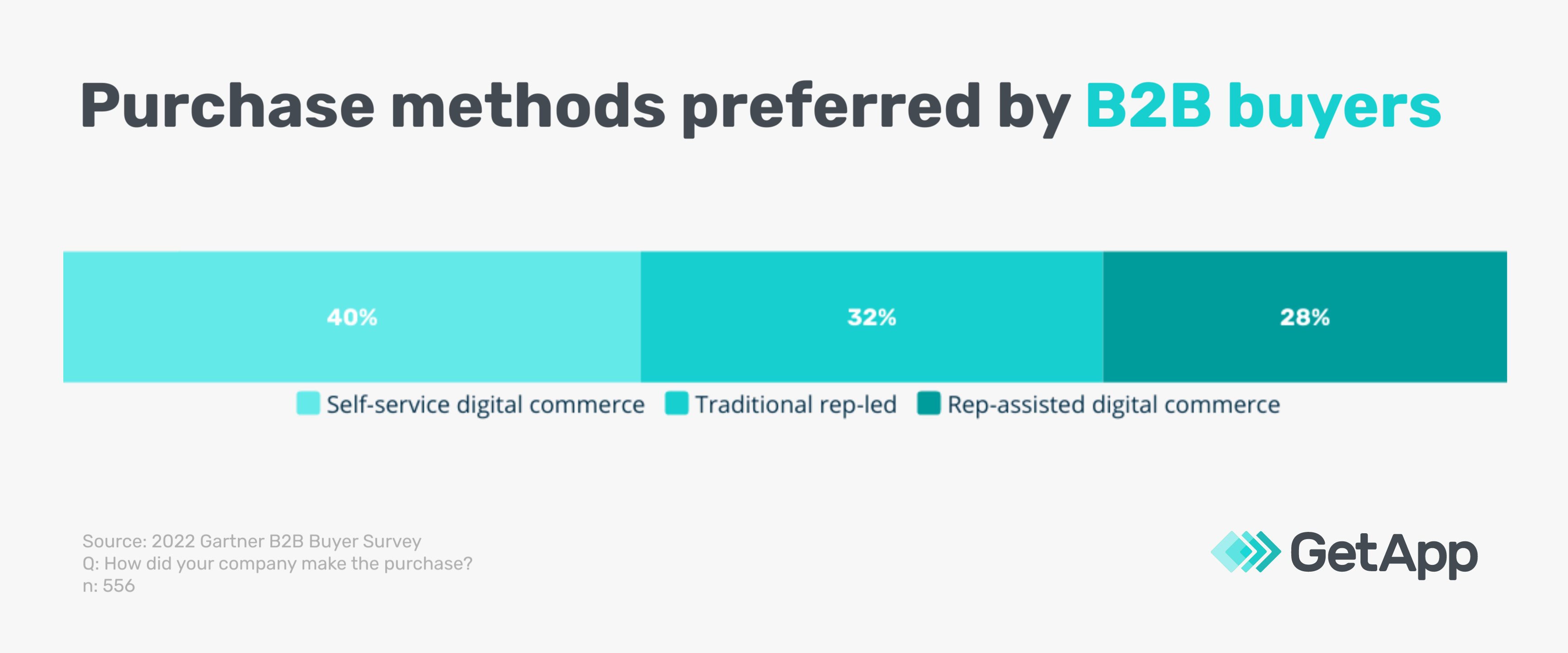
If it’s any consolation, B2B buyers are 22% more likely to regret digital channel purchases compared to traditional rep-led purchases [1]. So while you’re not obsolete just yet, the fact remains that B2B salespeople aren’t connecting with buyers.
How should this finding change your sales prospecting approach?
To address this problem, sales managers should focus on creating digital experiences that engage prospects and highlight the value of the right rep interaction at the right time. One way to do this is through microsites or digital engagement platforms that are tailored to a specific prospect and serve as centralized hubs for communication and information sharing.
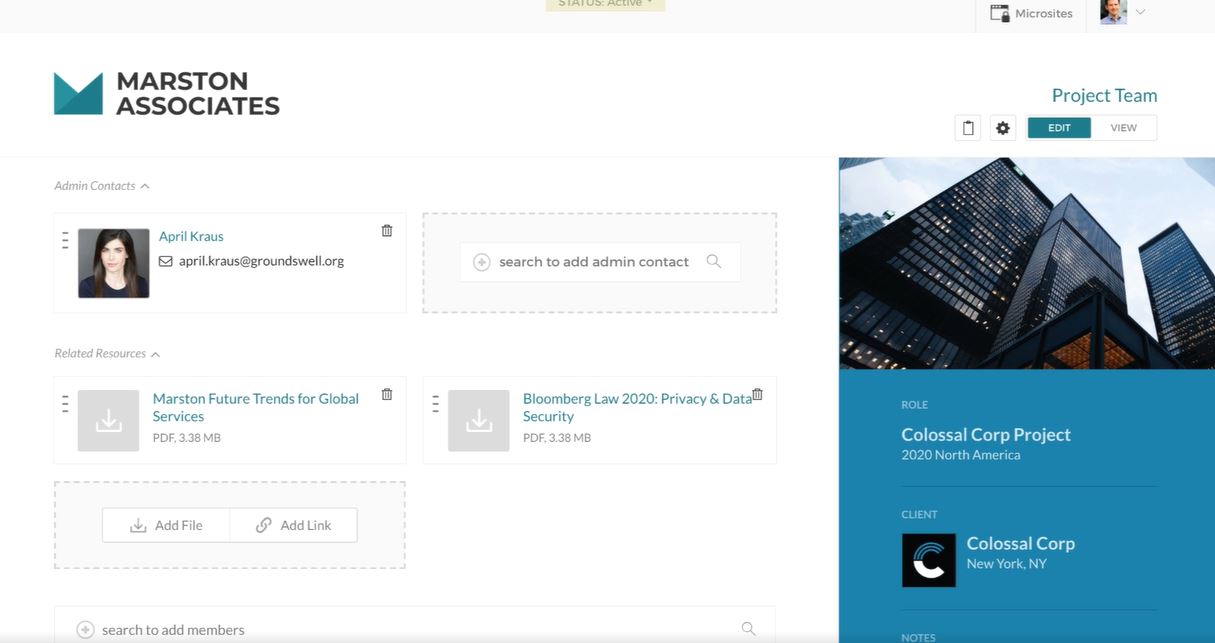
Example of a microsite from sales content management platform Workfolio Client Microsites
Through these microsites, sales reps can help bridge the gap between human and digital customer experience by offering resources that potential buyers can access—whether those are buyers guides, customer testimonials, or market research. By tracking content engagement, you can gauge a prospect’s level of interest and plan your next move accordingly.
Software spotlight
If microsites are new to your organization, run them by your sales team lead. They’re easy to create using the following software tools:
Sales content management platforms provide a centralized location to create, store, and distribute material used during the sales cycle. Sales representatives can access critical content when engaging with current and potential customers. To create microsites, look for tools that offer personalized profiles as a feature.
Sales enablement software covers content and communication tools that help sales teams show off product information to prospective customers, engage potential leads, and overall boost sales team performance. As with sales content management tools, you should filter your search by platforms that offer personalized profiles to build microsites.
Portal software allows sales managers to create a digital gateway through which their employees and customers can access enterprise software systems. To build microsites, look for platforms that offer engagement tracking as a feature.
2. B2B buyers are 63% less likely to complete a high-quality deal for rep-led purchases
Helping sales prospects see the value in human interactions is just one hurdle for reps; the next is closing a high-quality deal with a potential buyer who does opt to work with you. A high-quality deal means the buyer is making a more ambitious purchase, such as a customized, upsell, or cross-sell option. For your brand, this typically means a higher margin or revenue value.
B2B buyers are 63% less likely to complete a high-quality sale for rep-led purchases compared to when they buy on their own or through a hybrid approach [1]. One explanation is the way B2B buyers perceive their interactions with sales reps during their buying journey. A recent study [1] shows that these perceptions tend to fall into one of three categories:
Seamless path: Buyers felt that sales reps understood their needs and received a consistent experience across channels.
Prescriptive path: Buyers received personalized recommendations on what they should do and when they should do it.
Learning path: Buyers reported that sales reps encouraged them to stop and reflect on their goals, helped deepen their understanding of their needs, recognize potential mistakes, identify alternative approaches, and evaluate progress toward the goal.
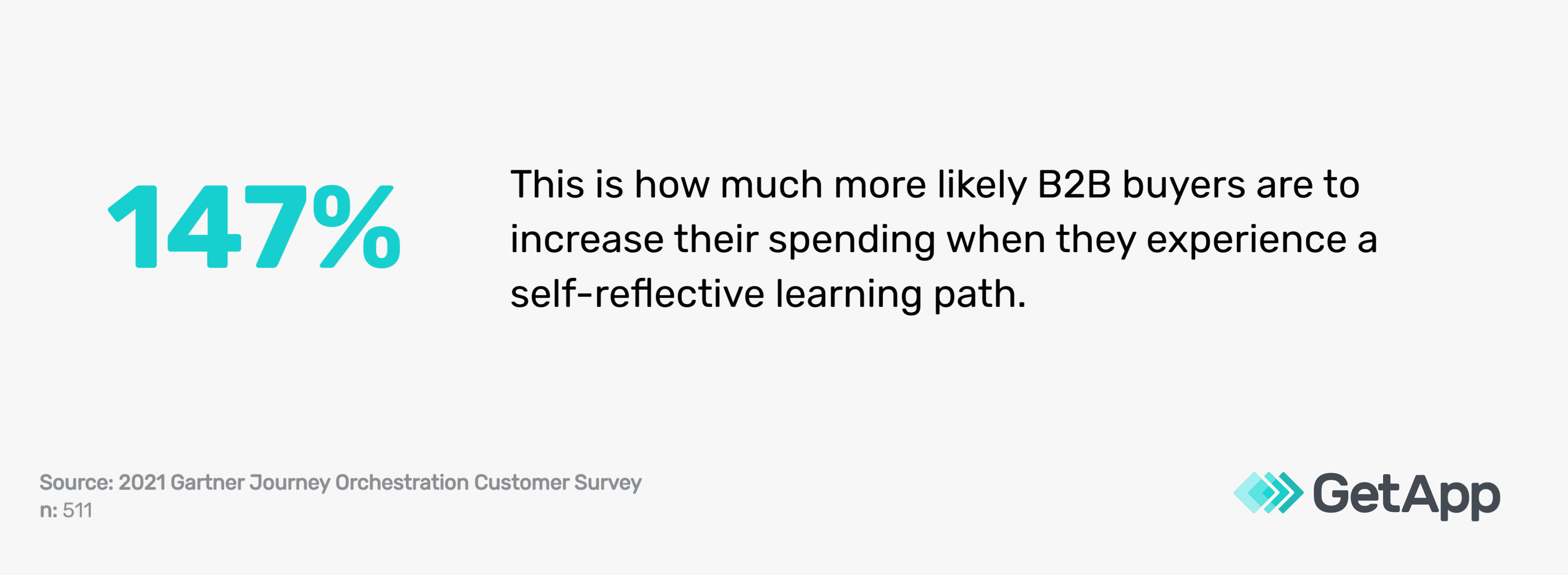
Of the three categories, only the learning path led to customers spending more than originally planned. Buyers who experienced self-reflective learning paths—meaning their rep interactions deepened their own understanding of their needs and goals—were 147% more likely to spend more than originally planned [1].
How should this finding change your sales prospecting approach?
Build self-reflective learning opportunities into your prospecting strategy by asking sales prospects the following questions:
Why is this a priority for you right now?
What challenges do you think you’ll run into as you try to purchase the product?
What is your team hoping to accomplish in the next year?
Is there anyone else you think we should include in this purchasing decision?
A discovery call is the perfect opportunity to ask these questions and more so your prospect can learn whether your product is a good fit for their company and vice versa. Through effective questioning, you can prompt the prospect to (re)evaluate their purchase needs to reduce the chances of purchase regret.
Free download: Lead qualification worksheet
That first sales call is not only for a potential client to learn more about your brand. You should use this opportunity to determine whether they’re worth your time and effort—in other words, whether or not they’re a qualified lead. Our lead qualification worksheet is a great tool that you can use to build your ideal customer profile and weed out unqualified leads. Scroll to the end of this article to download it now.
3. 58% of B2B buyers don’t trust the information they receive from sales reps
The self-reflective learning we discussed in the last section requires the buyer to trust you as their representative. Unfortunately, 58% of B2B buyers report that the information they’ve found on supplier websites conflicts with the information shared by sales reps [3]. This can happen when the efforts of your brand’s marketing team aren’t aligned with your activities as a sales person.
How should this finding change your sales prospecting approach?
Help your marketing team ideate content. As a sales rep, your interactions with customers give you perspectives that marketers don’t have. Did a recent sales call spark an idea for a blog post? Pass it along.
Learn what goals are shared by sales and marketing in your organization. For example, if revenue is the focus, you can concentrate your effort on more valuable prospects and higher-quality deals using the tips we shared in the last section.
Embrace social selling. While social media is usually marketing’s domain, you can piggyback off of your brand’s latest social media marketing campaign by using marketing-approved hashtags in your LinkedIn profile and at the end of posts. Then, you can filter your search for prospects by users who are following these hashtags.
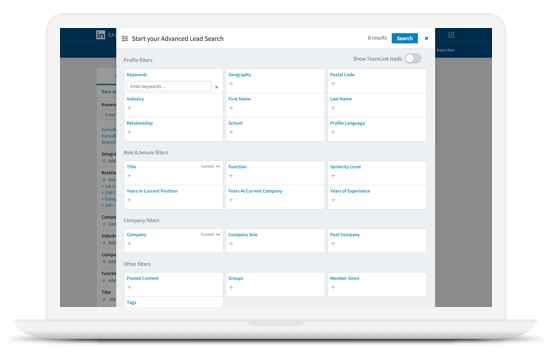
Lead filter feature in LinkedIn Sales Navigator
Software spotlight
Lead management tools, like the example shown above, can capture leads from social media, online stores, advertisements, and cold calls and consolidate them into a centralized database. They can also track leads’ status throughout the sales funnel. Learn more about them here.
Understand prospects to be a better sales professional
The insights we’ve uncovered might make you feel a little apprehensive about your new role as a sales professional. But knowing how B2B buyers feel about working with you can only benefit your prospecting strategy. The table below recaps the issues we’ve discussed and how you can use this information to improve.
| Problem | Solution |
|---|---|
| B2B buyers prefer digital self-service options vs. working with sales reps, yet are less satisfied with their purchase when they don’t work with reps. | Work with your manager to offer more digital experiences that still involve your guidance as a sales rep, such as microsites. |
| Rep-led purchases generate less revenue than self-service or hybrid approaches. | Learn from the interactions that are generating higher-quality deals, and build self-reflective learning opportunities into your prospecting strategy. |
| Buyers are noticing a disconnect between the info you’re sharing with them and what they’re seeing on your website. | Collaborate with marketing to ensure your messaging is consistent. |
For more resources on sales and lead generation, check out the following blog posts:
B2B Sales Prospecting: 3 Buyer-Centric Tips To Drive Conversions
Lead Qualification: What It Is, and Why Your Business Needs It
Note: The screenshots of applications included in this article are examples to show a feature in context and are not intended as endorsements or recommendations.
Lauren Spiller