GetApp offers objective, independent research and verified user reviews. We may earn a referral fee when you visit a vendor through our links.
Our commitment
Independent research methodology
Our researchers use a mix of verified reviews, independent research, and objective methodologies to bring you selection and ranking information you can trust. While we may earn a referral fee when you visit a provider through our links or speak to an advisor, this has no influence on our research or methodology.
Verified user reviews
GetApp maintains a proprietary database of millions of in-depth, verified user reviews across thousands of products in hundreds of software categories. Our data scientists apply advanced modeling techniques to identify key insights about products based on those reviews. We may also share aggregated ratings and select excerpts from those reviews throughout our site.
Our human moderators verify that reviewers are real people and that reviews are authentic. They use leading tech to analyze text quality and to detect plagiarism and generative AI.
How GetApp ensures transparency
GetApp lists all providers across its website—not just those that pay us—so that users can make informed purchase decisions. GetApp is free for users. Software providers pay us for sponsored profiles to receive web traffic and sales opportunities. Sponsored profiles include a link-out icon that takes users to the provider’s website.
What Is Targeted Marketing? A Primer for Small Businesses
Targeted marketing will help your business reach the right people with the right message at the right time.


Targeted marketing tech and tactics continue to advance at a rapid pace. When it comes to big businesses’ ability to target, 52 companies can observe up to 91% of the average user’s web browsing history and greater than 600 companies can observe at least 50% [1].
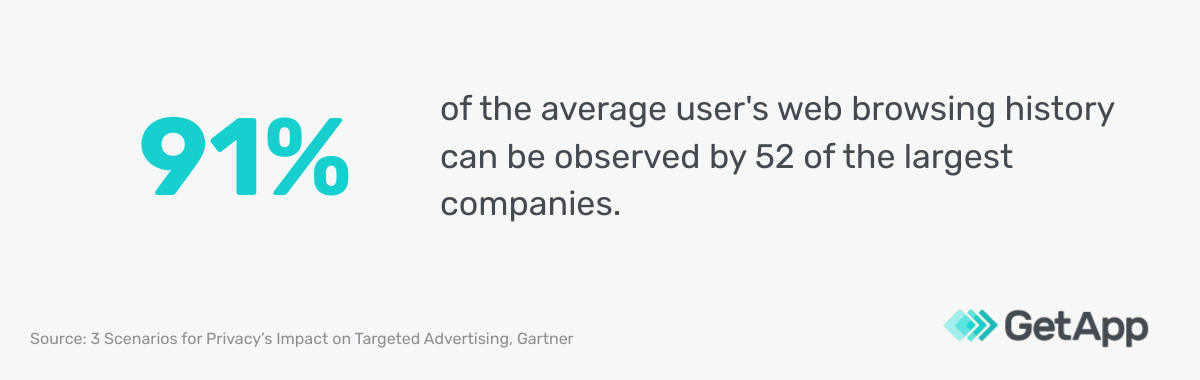
This is a staggering statistic when you consider all the information consumers share online, and it may lead you to the question: “Can I use targeted marketing to attract new customers and grow my business?”
Understanding the four types of segmentation data will help any marketer with limited targeted marketing experience determine whether it's worth investing in the strategy.
What is targeted marketing?
Targeted marketing is a marketing strategy that involves personalizing online advertising through the use of customer data. This data can be demographic, psychographic, behavioral, or geographic in nature which allows marketers to hone in on a target audience instead of casting a wide net with their advertising resources.
What is a target audience (or target market)? A target market is a group of individuals that have been identified as good candidates to purchase a product or service using data—aspects like age, location, income, lifestyle, and more can all be taken into account.
How does targeted marketing differ from other forms of marketing?
Targeted marketing is all about the “who,” whereas more general marketing methods are all about the “what.” The “who” represents your target audience, preferably an individual that matches the buyer persona(s) you’ve created for your business. The “what” represents your promotional message.
Instead of casting a wide net to share the benefits of your offering with the world at large, targeted marketing allows you to seek out the specific audience that’s most primed to positively receive your message.
Why is targeted marketing important?
For smaller businesses, ones that are resource constrained, or those that have a product or service with an easily identifiable audience, targeted marketing is a must. Investing in a targeted mix of marketing channels and segments enables you to find the right people with the right message at the right time [2] and avoid spending unnecessary resources competing for engagement with larger businesses.
While there will always be competition, you can curtail the issue with targeted marketing by discovering as much customer information as possible. From basics such as age, location, and interests to the marketing channels where you’re most likely to find them, collecting and storing this type of information will only serve to improve your marketing ROI as time goes on.
Technology spotlight
Customer data platforms (CDPs) analyze lifetime customer data by collecting and analyzing information from multiple sources. Unlike customer relationship management (CRM) platforms that focus on transactional data, CDPs focus on behavior and provide insights that can aid in product development, marketing, and sales decisions marketing.
Even if you don’t yet have a CDP or CRM tool at your disposal, exploring customer marketing data can be accomplished through other means as well. Tracking purchase history, creating and maintaining a healthy email list, conducting surveys, and engaging in social listening on your community’s favorite platforms are all viable ways to gain valuable customer insights without cracking into the budget.
The four types of market segmentation
There are four main types of marketing segmentation data commonly used in targeted marketing. Below we’ll define them then cover which uses each type of data is best suited for.
Demographic
Demographic segmentation is the most common and readily accessible form of market segmentation. It includes basic information like age, gender, occupation, education, income level, and marital status. To build a foundation for successful targeted marketing, it all starts with demographics.
This information helps begin the process of narrowing down a target audience from scratch, and if you have a niche market your range might be even smaller. For example, if a company sells men’s shaving products, they can begin by narrowing down on the basis of gender and age to target “men over X years old.”
Getting started with demographic data
Assess your current data collection capabilities then analyze the customer data you have available. This data can come from your marketing tools, customer data you’ve collected first hand through surveys or the purchase process, or it can come from digital marketing channels like your social media platforms.
Psychographic
Psychographic segmentation analyzes an audience based on facets of their personalities. Aspects like lifestyle, interests, values, attitudes, and hobbies are all taken into account. Psychographic segmentation tends to be the most advanced option, requiring a lot of data and the ability to connect the dots between seemingly disparate data points.
Therein lies the power of psychographic data, however. It allows businesses to make connections between seemingly unrelated groups based on their attitudes and values. This can prove to be a powerful tool in isolating specific segments that aren’t quite as intuitive as those you’d get from basic demographics.
On a more base level, psychographic data is especially useful for businesses that deal in lifestyle products and services. For instance, if your business sells nutritional supplements, you may be targeting people in many different age groups and socioeconomic statuses who are all connected by their prioritization of health and fitness.
Getting started with psychographic data
Refer to your buyer personas or, if you don’t have any yet, brainstorm to create some. This is an excellent way to dig into psychographic data without the need for advanced data collection methods. Seek to identify who it is you’re speaking to as a business based on their values: animal lovers, environmentalists, frugal people, etc.
Behavioral
Behavioral segmentation focuses on consumer behavior and how both existing and potential customers interact with a business. This can include information like time spent on a business’ website, engagement with a brand’s social media, email clicks or replies, content downloads, and purchase history.
Since this type of data relies on customer interactions with the business, it is also easier to collect. Much of if not all of this data can be found within your marketing tools (depending on your tech stack) or natively within marketing channels like social media, email, and web hosting platforms. For an all-in-one solution meant to house and make use of this customer data, CRM platforms are an excellent option for businesses of all sizes.
Don’t yet have a CRM?
Check out the GetApp CRM Buyers Guide to learn more about the available options and why you should consider adopting a CRM of your own.
For starters, CRMs often provide integration features to share data to other apps as well as implementation options to import data from other apps. This is a powerful pairing when set up correctly, and you should absolutely spend time exploring the options you currently have to decide if an investment is right for you.
Getting started with behavioral data
Review the data you have around purchase history and customer interactions with your online presence. Seek to identify trends that can help you improve performance or better target a specific audience segment. Data like top selling products amongst certain demographics, website pages where people spend the most time, or the social media platforms your customers are most likely to engage with your business on are all useful for segmentation purposes.
Geographic
Geographic segmentation focuses on exactly what it sounds like—where a customer is located geographically. This can be as specific as a neighborhood or zip code or as broad as a region or country. Not only is this type of segmentation data easy to collect, but it also offers another dot to connect with the other types of data to paint a more complete picture of your target audience.
Businesses that are seasonal in nature or those that rely on certain weather to be successful (think alway-on sports weather or a locale known for its rain) can especially benefit from geographic data. For example, a brand that wants to focus its efforts on reaching snow skiers can target locations where there’s increased snowfall year round or a heavy ski resort presence.
Getting started with geographic data
Analyze geographic trends amongst your existing and potential customers to identify areas of improvement for your marketing efforts, discover ideas for product and service development, or find other location-based opportunities like high concentrations of customers in areas you may not expect.
Should I be investing in targeting marketing?
In short? Yes, absolutely.
Any and every business can benefit from improved market segmentation, and there are plenty of ways to go about it. Regardless of what industry you’re in or what product you sell, there’s a specific customer (or set of customers) that you are trying to reach.
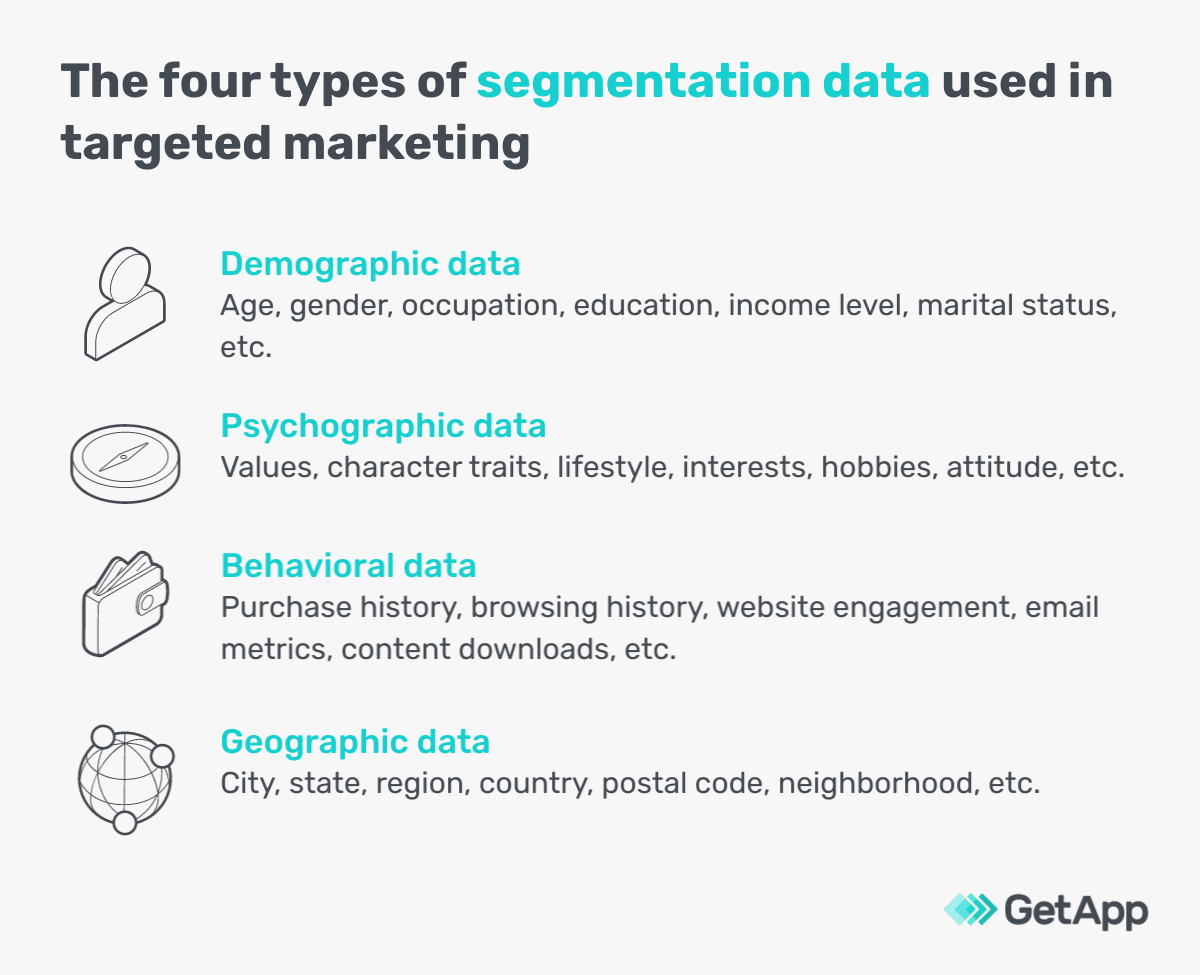
Appropriate segmentation using these four types of data allows you to map relevant marketing channels and CTAs to customers at different points in the buyer journey [2], making for a more personalized (and targeted) experience overall. This leads to a better customer experience overall and, ultimately, more sales and more ROI for our marketing dollar.
For more information on achieving the right targeting mix for your business and data-driven marketing in general, keep your eye on the GetApp blog and start with these helpful resources:
Integrated Marketing vs Omnichannel Marketing: What You Need to Know
Data-Driven Marketing: A Definitive Guide for Small Business
Enhance Your Multichannel Marketing Performance With These Data-Driven Marketing Strategies