GetApp offers objective, independent research and verified user reviews. We may earn a referral fee when you visit a vendor through our links.
Our commitment
Independent research methodology
Our researchers use a mix of verified reviews, independent research, and objective methodologies to bring you selection and ranking information you can trust. While we may earn a referral fee when you visit a provider through our links or speak to an advisor, this has no influence on our research or methodology.
Verified user reviews
GetApp maintains a proprietary database of millions of in-depth, verified user reviews across thousands of products in hundreds of software categories. Our data scientists apply advanced modeling techniques to identify key insights about products based on those reviews. We may also share aggregated ratings and select excerpts from those reviews throughout our site.
Our human moderators verify that reviewers are real people and that reviews are authentic. They use leading tech to analyze text quality and to detect plagiarism and generative AI.
How GetApp ensures transparency
GetApp lists all providers across its website—not just those that pay us—so that users can make informed purchase decisions. GetApp is free for users. Software providers pay us for sponsored profiles to receive web traffic and sales opportunities. Sponsored profiles include a link-out icon that takes users to the provider’s website.
7 Key Takeaways From GetApp's Budgeting and Forecasting Process Survey to Improve Budget Planning
What's the budgeting and forecasting process at most SMBs? GetApp learned which ones are most popular today, and shares how you should prepare tomorrow.

Does your finance department often overestimate budgets and underestimate expenses?
You are not alone. According to GetApp’s Budget and Forecasting Survey 2019, 25% of respondents are concerned about underestimating expenses and 18% worry about overestimating their budget.
As a finance manager, if you share the same concerns, it’s time to digitally transform your budgeting and forecasting process with the help of accounting software.
Businesses that adopt accounting software will not only be able to accurately estimate their budget and expenses but also will increase the transparency of planning by 57%.
In this article, we discuss the key takeaways from the GetApp survey that will help you streamline your budgeting process.
What we'll cover:
Key findings of GetApp's budget and forecasting survey
Accounting and finance leaders are more agile in frequently adjusting their annual budget
Types of budgeting and forecasting processes adopted by accounting and finance leaders
Popular budgeting tools used by accounting and finance leaders
How you can apply GetApp's key takeaways in your next budget
What next?
Methodology and demographics
Key findings of GetApp's budget and forecasting survey
In June 2019, GetApp conducted an online survey to evaluate how small businesses plan their budgeting and forecasting processes. Respondents included managers, staff, CEOs, directors, consultants, CFOs, CTOs, C-level executives, VPs, the board of directors, and executive VPs in the financial and accounting sectors. For a detailed break-up of the demographics, click here.
The key findings of the survey are listed below:
42% of respondents are "moderately" involved in their company's annual budget.
49% indicated that next year's budget will be "somewhat bigger."
17% feel that "increasing employee productivity" would be one of the top three goals when planning the annual budget.
In the sections that follow, we list seven takeaways from the survey based on the key themes in our findings. The sections provide an overall summary of how often the respondents plan the budget, the types of budgeting techniques they use, and popular tools for planning budgets.
Accounting and finance leaders are more agile in frequently adjusting their annual budget

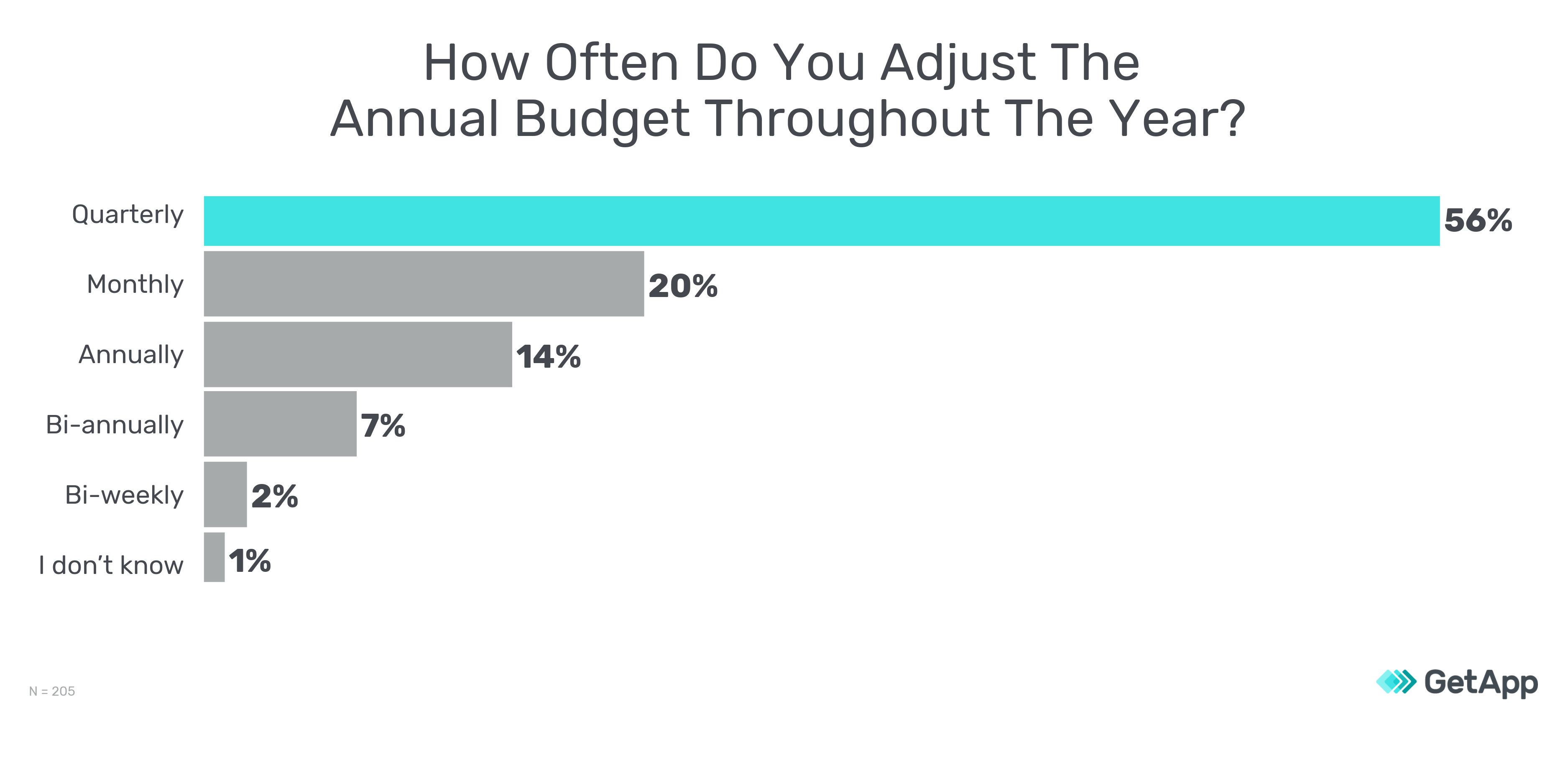
For instance, you may have to lease or rent a property for a specific, short duration because of the seasonal demand for your products and services in certain cities and states. Adjusting your budget quarterly will provide more scope for an increase, if costs of renting new properties temporarily rise.
In addition to adjusting annual budgets in a financial year, 41% of respondents indicate that they spend three to four weeks on planning and approving budgets.

Key takeaway #3:
Respondents cite the following three concerns when planning their annual budgets:
Not spending the right amount to add more customers and revenue: 26%
Underestimating how much my business will spend next year: 25%
Not spending the right amount on specific projects: 20%
Investing the right amount of money in expanding your customer base and revenue is essential to business growth. Adding customers brings in more money and increases your budget, hence increasing the overall cash flow volumes.
Types of budgeting and forecasting processes adopted by accounting and finance leaders
There are three types of budgeting and forecasting processes that can help businesses plan their budgets more effectively. Choosing a type depends on the extent to which external factors, such as business activity and expenses, affect your budget planning processes. These processes are briefly defined below:
Ad hoc budgeting: Budget is created to meet ad hoc or additional business expenses that may arise in a budget year due to unforeseen circumstances.
Zero-based budgeting (ZBB): Budget is created from scratch based on previous years' expense trends.
Activity-based budgeting: Budget is created based on activity-based cost accounting that analyzes business activities such as hiring costs, project cost estimates, and budget for marketing campaigns in the current financial year.
Of these accounting methods, 38% of our respondents prefer ad hoc budgeting, followed by activity-based accounting (33%) and zero-based accounting (27%) for individual projects.


Popular budgeting tools used by accounting and finance leaders
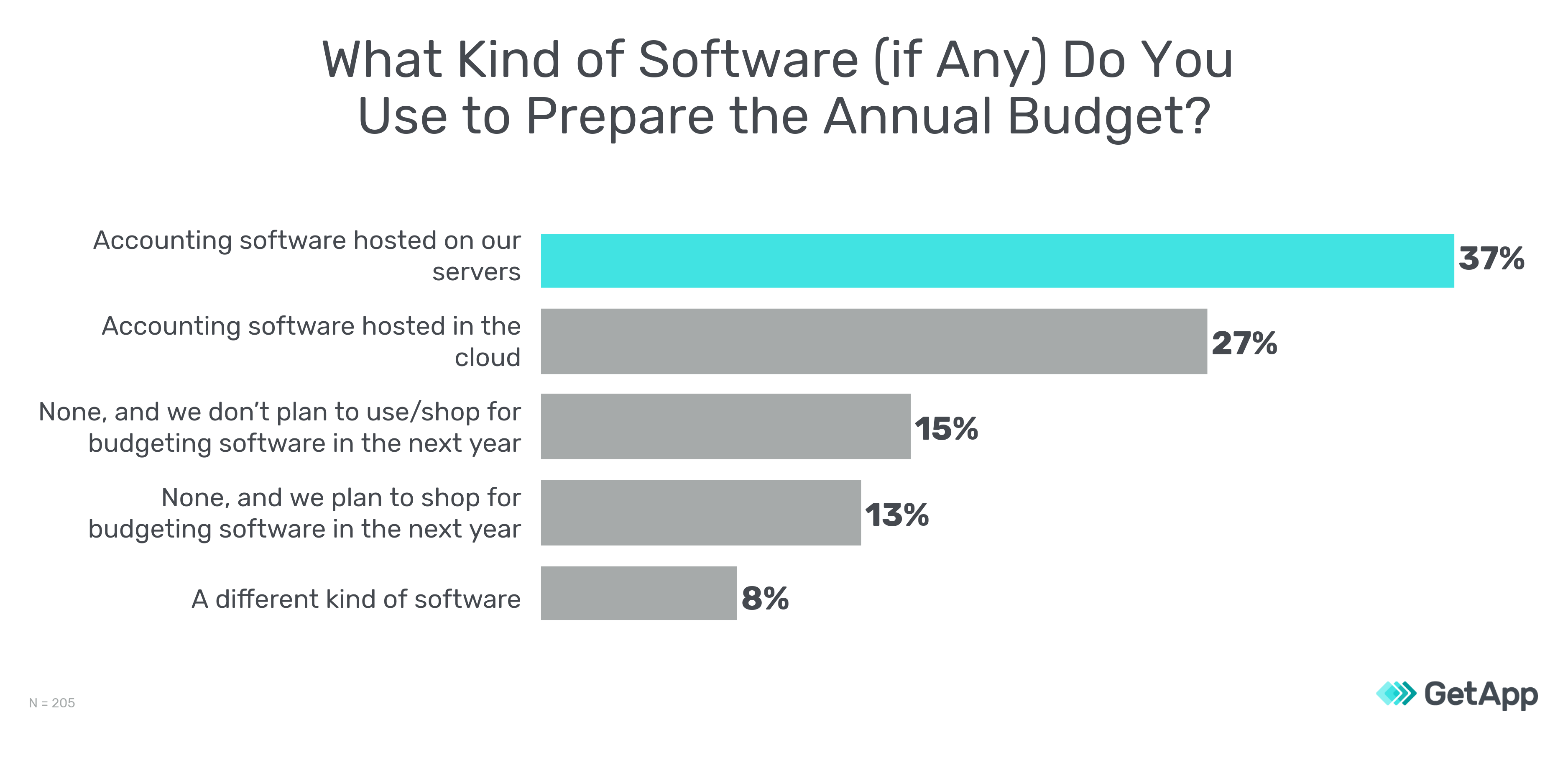
At GetApp, we recommend cloud-based accounting software for small and midsize businesses that don’t have programmers to design their own solution or that want a cheaper alternative to the expensive solutions in the market.
How you can apply GetApp's key takeaways in your next budget
Here are some recommendations to help improve your budget planning based on key insights from our budget and forecasting process survey:
Analyze and research your previous years' P&L statements and budgets to figure out the expense and cost accounting trends for the next budget forecast.
Set aside time in each quarter to plan your budgeting process. This way, the process will be more agile to accommodate unexpected project expenses.
Adopt the ad hoc budget planning process to anticipate additional costs that may arise in individual projects.
Use accounting software to plan your budget more effectively instead of using spreadsheets to track expenses and project budgets.
Anticipate for budget overruns, which you can counter with an additional allocation of 10-20% in each financial year.
What next?
The analysis of our survey results in this article should have given you a comprehensive overview of a few best practices that your finance department needs to adapt. In addition, here are some more GetApp resources to help you plan your budget:
View GetApp's budget directory to shortlist the right software based on your business requirements.
Check out GetApp's category leaders for accounting to shortlist accounting software, specifically for budgeting.
Read our accounting blogs and identify solutions to specific business challenges about budgeting and accounting processes.
Update 07/10/2019: This article was originally published in 2017 based on earlier survey results. In June 2019, we conducted a new survey of 205 respondents in finance and accounting roles, based in the United States. This article has been updated with the latest survey results.
Methodology and demographics
GetApp conducted an online survey in June 2019 to evaluate how small businesses plan their budgeting and forecasting processes. About 205 respondents in accounting and financial roles took the survey.
Demographics of the respondents were as follows:
What best describes your current role?
Manager: 53.66%
Staff: 15.12%
CEO: 8.78%
Director: 7.80%
Consultant: 5.37%
CFO: 1.46%
CTO: 1.46%
Other C-Level Executive: 1.46%
Vice President: 1.46%
Board of Directors: 0.98%
Executive Vice President: 0.98%
Other: 0.98%
COO: 0.49%
What best describes your current employment status?
Employed full time: 96.59%
Employed part-time: 3.41 %
How many people does your business employ in total (including all branches/franchises/locations)?
49: 20.49%
51-199: 32.68%
200-499: 21.46%
500-999: 25.37%
More on Accounting & Finance