GetApp offers objective, independent research and verified user reviews. We may earn a referral fee when you visit a vendor through our links.
Our commitment
Independent research methodology
Our researchers use a mix of verified reviews, independent research, and objective methodologies to bring you selection and ranking information you can trust. While we may earn a referral fee when you visit a provider through our links or speak to an advisor, this has no influence on our research or methodology.
Verified user reviews
GetApp maintains a proprietary database of millions of in-depth, verified user reviews across thousands of products in hundreds of software categories. Our data scientists apply advanced modeling techniques to identify key insights about products based on those reviews. We may also share aggregated ratings and select excerpts from those reviews throughout our site.
Our human moderators verify that reviewers are real people and that reviews are authentic. They use leading tech to analyze text quality and to detect plagiarism and generative AI.
How GetApp ensures transparency
GetApp lists all providers across its website—not just those that pay us—so that users can make informed purchase decisions. GetApp is free for users. Software providers pay us for sponsored profiles to receive web traffic and sales opportunities. Sponsored profiles include a link-out icon that takes users to the provider’s website.
Inside Sales vs. Outside Sales: A Comprehensive Guide
The pandemic and advancements in AI tech have more companies swapping outside sales strategies for inside sales. But which model actually makes sense for your business?

The COVID-19 pandemic and advancements in AI technology have more businesses swapping outside sales strategies for inside sales. But what’s right for other companies might not be right for yours—especially if you’re a new business owner building your sales team from scratch.
Our guide helps you consider all your options by explaining the ins and outs of both the inside and outside sales models. We’ve also included insights from Gartner, [1-2] [4-5] [8] a leading global research firm, so you can feel more confident in your selected sales strategy.
What is inside sales?
Inside sales refers to the practice of selling products or services remotely, as opposed to meeting customers face-to-face. Inside sales professionals build relationships with potential clients via email, phone, video, and virtual or remote sales meetings.
A company may choose to implement inside sales for several reasons:
They have a complex sales process or product. Complex sales processes and products are better suited for virtual sales calls where all customer data, interactions, and documents can be stored in one place—typically a CRM system—and accessed when needed.
They want to save money. Businesses that adopt inside sales can increase revenue by spending less on travel and office space.
Their accounts aren’t local. Inside sales means reps aren’t limited to a single territory.
They’re ready to scale up. Growing companies need a solution that allows them to manage more accounts, engage the accounts they already have, and minimize costs.
According to Gartner’s 2022 CSO Priorities Survey, the popularity of inside sales has tripled compared to pre-pandemic times. [1] What’s more, 75% of customers prefer to learn and engage through digital channels per Gartner’s 2022 B2B Buyer Survey. [2] But the inside sales model makes more sense for some industries than others, as we’ll explore below.
What sort of businesses use inside sales?
Inside sales is the primary sales model for reps in the Software-as-a-Service (Saas) industry. This is because SaaS companies need a sales strategy that can be easily scalable as they grow. It also serves their products better. Since most SaaS solutions are sold on subscription, reps can concentrate on nurturing relationships with clients who keep renewing.
The inside sales model is also effective for B2B sellers who have to navigate more complex sales processes with multiple stakeholders and for B2C organizations that sell big-ticket items such as furniture or appliances. While such transactions might not require any assistance from a sales rep, having that personal touch can help customers make purchase decisions more easily.
Example of inside sales
Musical instrument retailer Sweetwater [3] is a B2C company that assigns one inside sales rep to each customer over the course of their customer lifespan. This ensures sellers are deeply informed about their customers’ needs and can directly respond to queries via email or text. If your business also sells expensive equipment that requires maintenance or other after-sales services, this arrangement can be particularly beneficial for its relationship-building and cross-selling opportunities.
What are the pros of inside sales?
An inside salesperson can:
Connect with and convert more leads in a shorter time frame: Working remotely gives inside sellers the advantage of an accelerated sales process, from lead identification to revenue.
Reference real-time data for more informed conversations: An inside sales representative can have their CRM in front of them while interacting with a customer, which is not as feasible for an outside sales representative.
Work remotely: Because inside sales reps are not confined to one territory, they can enjoy a more flexible schedule and choose where they want to work from. Their company also benefits by not having to pay for office space and offering remote work as an employment incentive.
Leverage AI to craft the perfect prospecting email: According to a 2023 Gartner survey, 30% of technology provider leaders plan to use generative AI within the next six months for sales development representatives (SDRs) developing prospecting emails. [4]
Tech tools that support inside sales
Conversational AI has been making headlines as the latest in sales technology. It can help inside sales reps summarize calls, recommend next steps, and even analyze a prospect’s emotions and tone. Look for solutions that integrate with your CRM so these insights can be housed with the rest of your customer data.
What are the cons of inside sales?
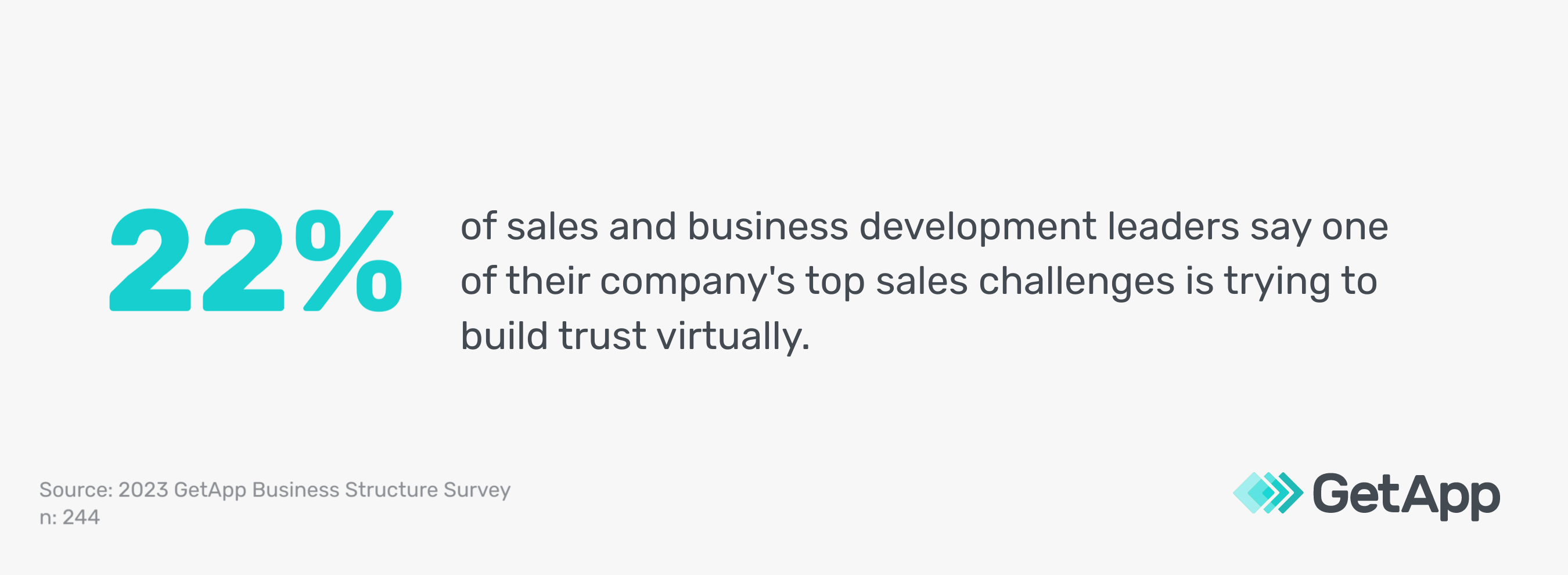
One downside to the inside sales process is its impact on buyer trust. In our 2023 Business Structure Survey, 22% of sales leaders said that building trust in a virtual environment is a real challenge affecting their sales team.*
Additionally, research shows that B2B buyers report higher regret when purchasing through digital channels—even if their use of these channels has increased. [5] This implies that while B2B buyers enjoy the convenience of inside sales, they still benefit from and are perhaps more comfortable with face-to-face sales interactions.
Here are some other drawbacks of inside sales:
Less personal relationships: It can be more difficult to foster relationships with customers when selling remotely, especially for SaaS vendors selling complex or expensive products.
Higher rejection rates: Rejection is an inevitable part of sales, but it’s more prevalent for inside sales reps reaching out to potential clients over phone, email, or social media. [6] This can be particularly discouraging to newer sales reps.
Difficulty standing out from other sellers: As inside sales grows in popularity, it’s becoming more competitive. This can make it difficult for inside sales reps to differentiate themselves from competitors.
Higher expectations of product knowledge: Since inside sales professionals aren’t meeting with clients in person to give demos or deliver samples, their success relies more heavily on product knowledge, which can add pressure to the role.
What is outside sales?
Outside sales, also known as field sales, is the practice of meeting customers in person to sell a product or service. It can look like attending trade shows, visiting the establishments of different accounts, and traveling to meet clients. While outside sales’ popularity has decreased since the pandemic, there are still many industries that value and rely upon face-to-face interactions.
A business may prefer outside sales for several reasons:
They have a product that is better experienced in person. Such products include food and beverage items, household appliances, and health and beauty products.
They provide a local service. Businesses that serve local communities, such as real estate agents and landscaping services, depend on meeting clients in person to both network and showcase their talent.
In-person interaction is important to them. It provides sellers a chance to network, build relationships, and read nonverbal cues that tell them how a customer really feels.
In-person interaction is important to their clients. Many buyers still prefer to make purchases in person. According to a recent Statista survey, [7] baby boomers make up the highest percentage of in-store shoppers at 83%.
What sort of businesses use outside sales?
Outside sales is still the primary sales model for businesses in the food and beverage industry. For example, it’s more effective for a representative from a wine distributor to bring samples to a client, walk them through a tasting, and get their reactions firsthand than it is to ship the samples.
The pharmaceutical industry also benefits from the outside sales model. It’s particularly important for these sales reps to build credibility and strong relationships with physicians who need to feel confident prescribing the suggested products to patients. That said, the pandemic has accelerated the shift toward—and healthcare providers’ demand for—digital engagement in place of face-to-face interactions. [8]
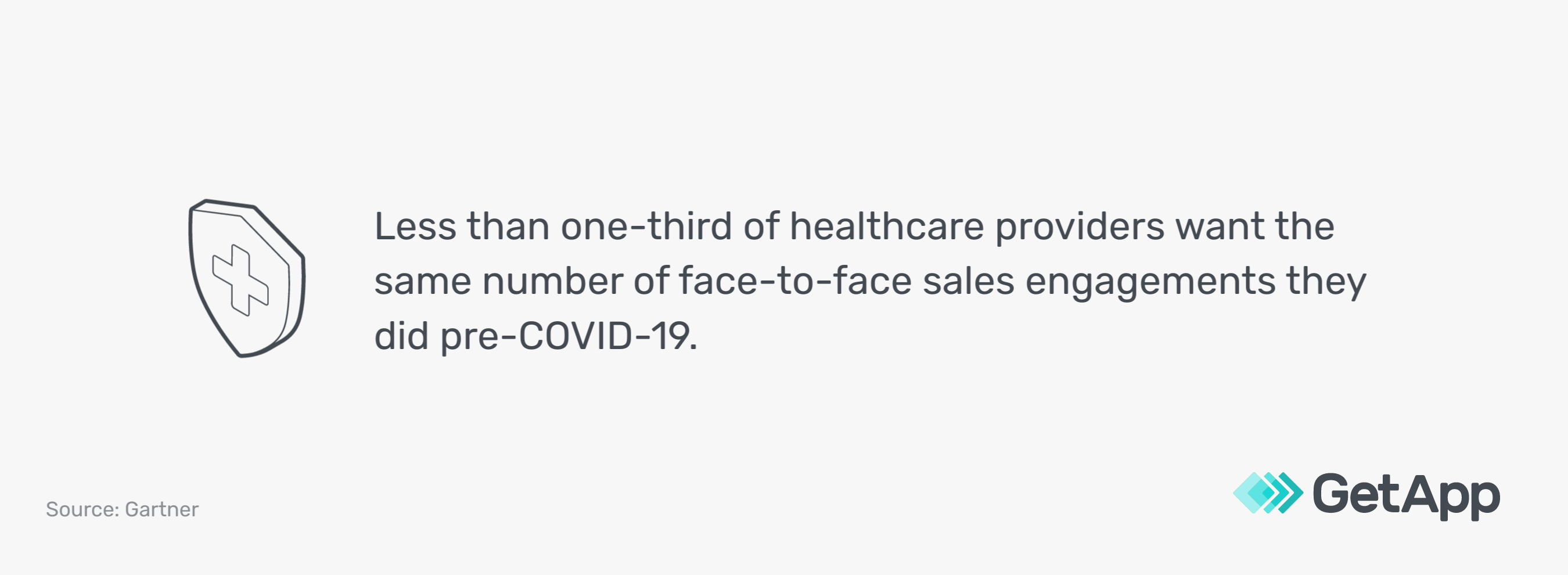
This preference shift puts pharmaceutical sales reps at odds at a time when new product launches and the need for accurate information are more crucial than ever. Research suggests that the most successful companies will find a way to preserve the personalization of in-person sales while investing in tech to better understand customer needs and preferences. [8]
Tech tools that support outside sales
Like CRM software, sales engagement platforms help outside reps work more efficiently by combining all communication channels and methods of outreach into one system and centralizing reporting and performance analytics. Look for solutions that offer territory management as a feature, as those will be tailored to the needs of outside sales reps.
What are the pros of outside sales?
An outside sales professional can:
Personalize sales pitches: Putting a name and face to a sales interaction results in increased trust and stronger relationships with customers. It can also lead to higher close rates, as a field sales rep can tailor a sales call to the customer’s specific needs.
Read nonverbal cues: It’s easier to gauge how a potential customer feels about your product in person and use that information to inform your next move.
Upsell and cross-sell more easily: Giving an in-person demo or presentation can influence a customer to buy up or purchase additional items.
Gather market intelligence: Visiting an account’s establishment (such as their bar, restaurant, or storefront) can tell you what other products they’re selling or promoting and where yours fits in.
What are the cons of outside sales?
Here are some downsides to outside sales:
Less flexible: Outside salespeople serve a particular territory and travel within that territory. Traveling also takes time, which can eat away at a rep’s work-life balance.
Costly: Businesses that opt for outside sales must cover reps’ travel costs as well as office space rent.
Less convenient: As we mentioned earlier, industries such as pharmaceutical and healthcare are shifting toward inside sales and are hesitant to return to in-person interactions.
Less predictable: Outside sales representatives never know for sure when they’ll be closing deals. This can make it difficult to plan for the future.
Should you use inside sales or outside sales?
The decision to build an inside or outside sales team comes down to how long your business has been established, your industry, and your product or service. Newer businesses may want to start out with outside sales and shift to inside as they grow. But if your product or service calls for it, it might make sense to stick with outside sales.
| Inside sales might be better if | Outside sales might be better if |
|---|---|
| You’re a SaaS vendor. | You sell a product that’s better experienced in person. |
| You’re a B2C business that sells big-ticket items. | You just launched your business and are working with a small sales team. |
| You’re being mindful of your budget. | You provide a local service. |
| You want an attractive incentive to offer job candidates. | In-person interaction is important to your target audience |
Whichever sales model you choose, you’ll want to invest in the appropriate tools to give your sales team the best chance at success. A CRM platform is a must-have for newly established sales teams. Inside sales teams will want to find one that offers integration with conversational AI platforms, while outside sales teams will want one that offers territory management.
Looking for more resources on small-business sales? Check out the following articles:
Survey methodology
*GetApp's 2023 Business Structure Survey was conducted in April 2023 among 244 U.S. respondents to learn more about sales strategy and framework, and challenges faced by sales leaders. Respondents were screened for a business development or sales role in a business with 1,000 employees or fewer.
Sources
The Responsibilities and Reporting of Modern Enablement Functions, Gartner
Build Key Seller Skills for Successful Virtual Selling, Gartner
Personalized Gear Advice, Sweetwater
Quick Answer: How Do I Use AI Text Generators, Like ChatGPT, for Prospecting Emails?, Gartner
How Do You Handle Rejection or Negative Feedback From Prospects or Customers?, LinkedIn
Leading Channels to Purchase Products Among Consumers in the United States in 2022, By Generation, Statista
Industry Insights: How to Deliver a Personalized Experience for Healthcare Providers, Gartner
Lauren Spiller