GetApp offers objective, independent research and verified user reviews. We may earn a referral fee when you visit a vendor through our links.
Our commitment
Independent research methodology
Our researchers use a mix of verified reviews, independent research, and objective methodologies to bring you selection and ranking information you can trust. While we may earn a referral fee when you visit a provider through our links or speak to an advisor, this has no influence on our research or methodology.
Verified user reviews
GetApp maintains a proprietary database of millions of in-depth, verified user reviews across thousands of products in hundreds of software categories. Our data scientists apply advanced modeling techniques to identify key insights about products based on those reviews. We may also share aggregated ratings and select excerpts from those reviews throughout our site.
Our human moderators verify that reviewers are real people and that reviews are authentic. They use leading tech to analyze text quality and to detect plagiarism and generative AI.
How GetApp ensures transparency
GetApp lists all providers across its website—not just those that pay us—so that users can make informed purchase decisions. GetApp is free for users. Software providers pay us for sponsored profiles to receive web traffic and sales opportunities. Sponsored profiles include a link-out icon that takes users to the provider’s website.
Mobile Marketing Strategy: How To Optimize For Small Businesses
Sound mobile marketing strategy means embracing new tactics and updating traditional processes with mobile in mind.


The average clickthrough rate for text message content exceeds 30% with a staggering open rate of 99%. This might make simply sending texts to your customers sound like a slam dunk. There’s more to it, however.
To effectively reach and retain loyal customers, marketing content needs to be highly personalized, relevant, and useful to the individual. Without this element, companies risk losing consumers’ trust (and business). [1]
Integrating your mobile marketing tech with other tools in your stack then combining those with tactics such as a mobile-friendly website, loyalty programs, and location-based marketing will enhance your content. By determining which principles are the most effective for your small business, you can optimize your marketing strategy in this way to reach more customers than ever before.
What is mobile marketing?
Mobile marketing is a marketing tactic that involves targeting a consumer directly on their mobile device. This type of marketing initiative can come in the form of short message service (SMS) texts, email, mobile websites, short-form video, and mobile-first social media experiences such as TikTok and Instagram.
To form a well-rounded mobile marketing strategy as part of a greater multichannel effort, the importance of data literacy and analytics as a core capability cannot be overstated. The ability to interpret and clearly communicate results is what will take your mobile strategy from merely another tactic to a lynchpin in your overall program. [2]
Mobile website optimization
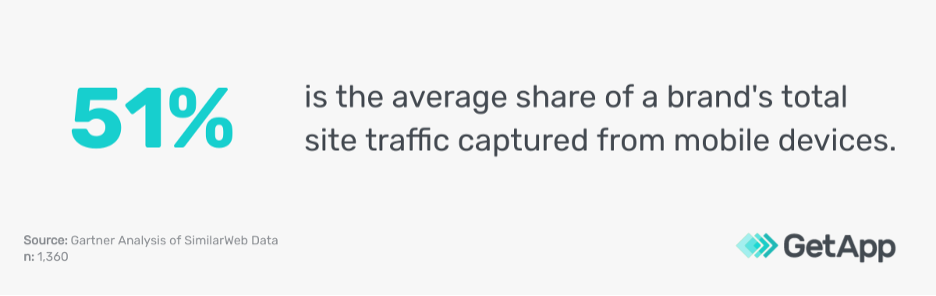
Is your website optimized for mobile advertising? If not, it should be. Over half (51%) of the average brand’s site traffic comes from mobile devices, and mobile usage is likely to increase as time goes on.
There are a number of ways you can accomplish making your website more friendly to mobile users. For starters, some web hosting companies offer automated tools that allow you to convert your traditional website for optimal viewing on mobile devices. This is much easier than building a new site from the ground up (and more cost effective, too).

An example of a website that has been optimized for both desktop and mobile viewing [3]
There are a wealth of optimizations businesses can undergo based on their current level of mobile marketing maturity. [4] If your mobile and desktop websites are currently siloed experiences, starting with developing a responsive design, optimizing page speed, and compressing images are good places to begin. [5]
For more mature businesses that already have mobile sites ingrained in their multichannel marketing efforts, adopting or optimizing data-driven marketing tactics is vital. This includes conducting A/B testing to improve content engagement or testing copy variants on web forms to gain more sign-ups.
Shoppable media
For ecommerce brands in particular, shoppable media is an excellent way to meet customers where they are on their buyer journey.
Not to be confused with social commerce—which includes any content on social media that contributes to selling a product—shoppable media can be employed on a variety of marketing channels. In short, shoppable media is content (wherever it may be found) that empowers people to shop.
Whether it’s widget-based website additions offering in-the-moment purchase opportunities or messaging crafted to add a conversion element to content from a partner, it offers a way for consumers to engage with a brand with the added ability to seamlessly purchase.
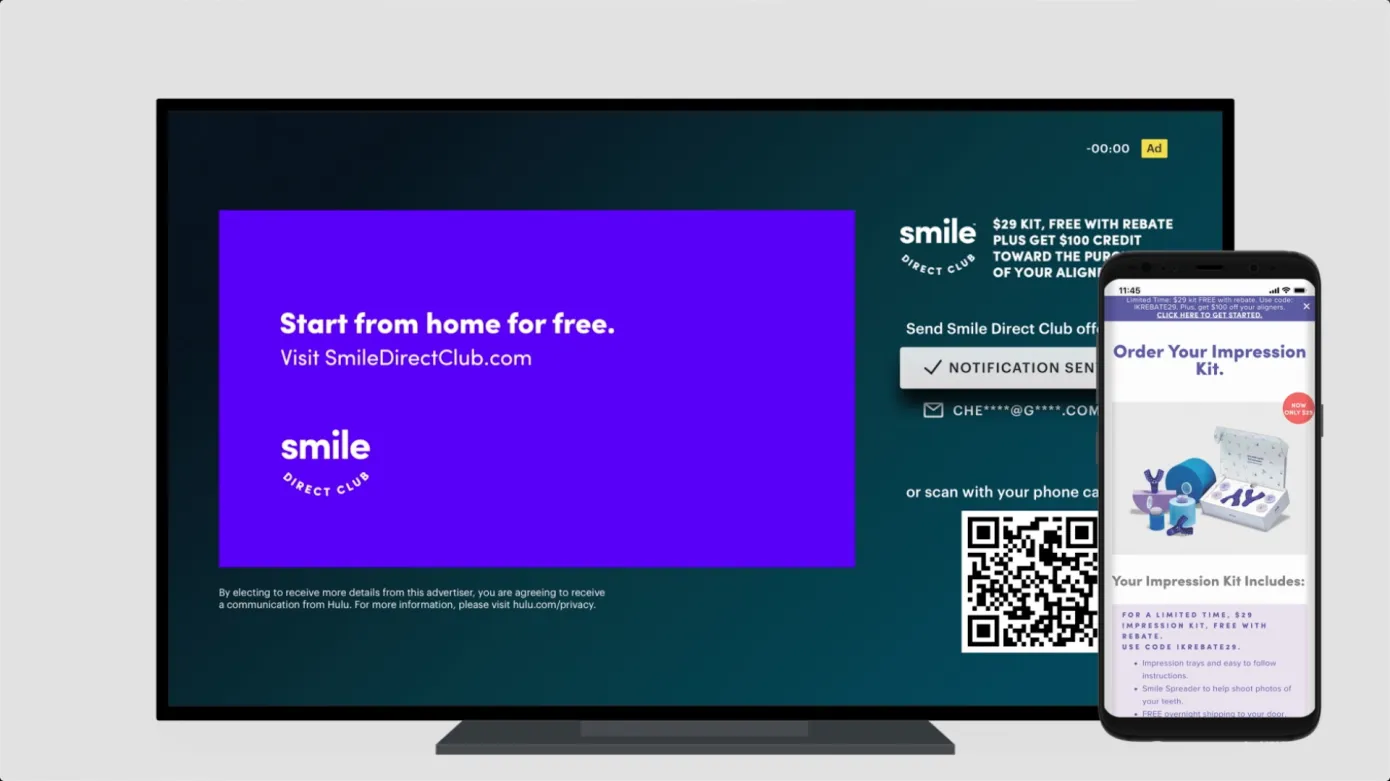
An example of shoppable media on streaming service Hulu [6]
The key to getting started with shoppable media is to have a clear understanding of your customer journey. This allows you to create personalized opportunities that are harder for people to say no to.
For example, if you visit a website to research a new product and you’re served an offer for a new customer discount to try that new product while you’re reading, it becomes much harder to say no. That content is specifically relevant to you as a potential customer, it pertains directly to the product you’re interested in, and it contains an offer aimed at you to lower the barrier to conversion. All good things.
Mobile apps
It’s unlikely that a business will develop their own mobile app unless specifically primed to do so, but for some businesses it does make sense. However, identifying marketing and advertising opportunities within apps that already have wide adoption is the more realistic (and cost effective) tactic.
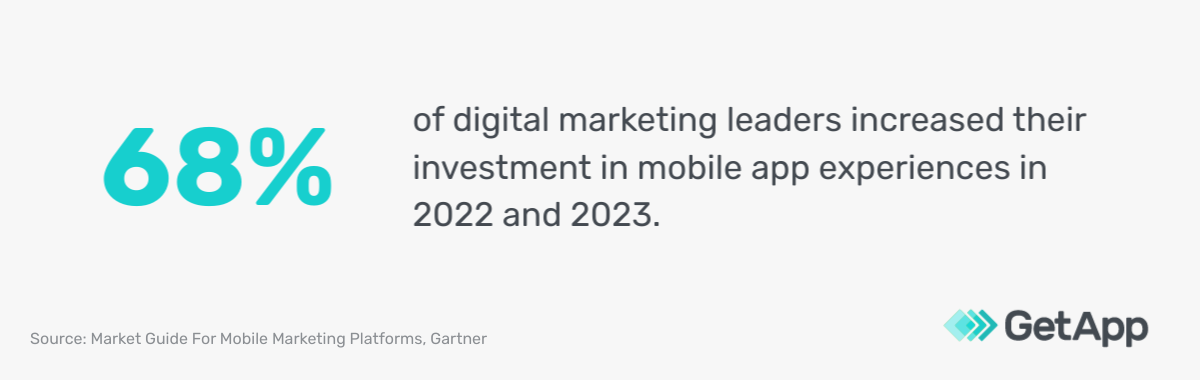
Regardless of the level or type of involvement, it’s clear that businesses are embracing mobile experiences. In fact, 35% of CMOs surveyed expect to increase their budgets on mobile site and application development and maintenance. Additionally, a majority (68%) of digital marketing leaders plan to increase their investment in mobile application experiences in 2022 and 2023. [2]
Investing in mobile apps—whether your own app or opportunities within other apps—puts your business in a position to reach consumers where they spend their time on the go. It’s also a natural follow-on to shoppable media experiences as those represent a key way to break into app-based marketing without the need to develop an app from the ground up.
Chatbots
Chatbots represent a common form of conversational marketing that’s increasingly making its way into more and more mobile experiences.
Conversational marketing tech enables companies to host digital, human-like engagements with consumers at scale. This tactic employs AI bots and automation to design session-based interactions in the form of natural dialogue. These conversations can occur across channels, primarily chat, text message marketing, email, and voice. [7]
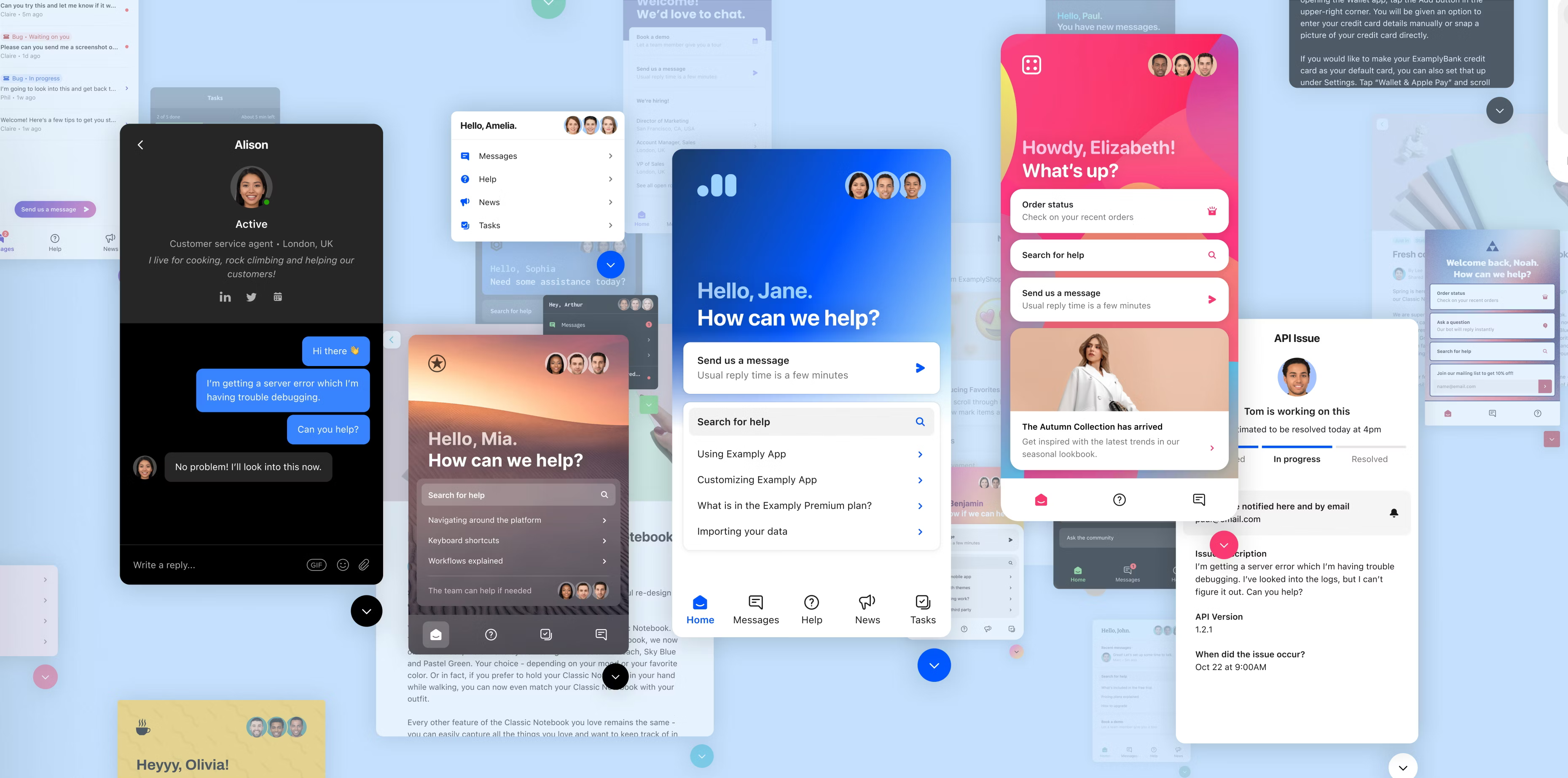
An example of mobile chatbot customization from Intercom (Source)
Chat integrations across your marketing tech stack help deliver more personalized interactions, both for individuals based on their customer profile but also their context in the customer journey. Marketers can improve KPIs across the journey by humanizing interactions with conversational marketing tech.
Voice search
Use of technology like voice search is on the rise as more and more consumers turn to their phones for end-to-end shopping experiences. Mobile marketing continues expanding from traditional mobile marketing channels such as SMS and in-app messaging to voice search, social media messaging, and augmented reality applications. A great way to get started with adopting new tactics like these is to assess your current mobile marketing capabilities.
First, look to your SEO tool, as some of the best ways to optimize for voice search include updating listings to be more voice search friendly: using natural language, optimizing search terms for questions people might ask, and using conversation language in your content.
For small businesses, all this means measuring twice and cutting once when it comes to formulating and adopting a combination of traditional and emerging tactics. Voice search in particular represents an opportunity to offer customers as many opportunities as possible to reach your business.
Not only that, but adopting it doesn’t necessarily require new technology. Instead, there’s a lot of ground to be gained simply from optimizing your SEO strategy with voice in mind.
Location-based marketing
One of the main benefits and capabilities offered by mobile marketing is the ability to target consumers based on their location. This is especially beneficial for businesses with brick and mortar stores as they can directly target people in proximity to their business using geofencing [8] i.e., when a customer enters a predetermined radius around a business they are served an ad.
Whether it’s with timely offers or merely reminders that they might want to stop by, the addition of this type of timeliness and relevance can be incredibly effective. It’s a good practice to create offers or promotions with this in mind, especially in conjunction with a loyalty program.
For example, if a repeat customer hasn’t visited in a while and they enter your neighborhood, you can reach out to them with an ad welcoming them back with a special promotion. The deal may attract them, and if they are on the fence they’re already close by. This both offers a benefit to visiting your store (the promotion) and removes a barrier (the inconvenience of getting there).
In this way you can send a personalized ad to someone who’s already a customer when they are primed to visit. In other words: the right message to the right person at the right time.
QR code marketing
QR codes have seen a surge in usage as the need for touchless experiences has increased since 2020. That initial increase may be waning, but now QR code functionality is being embraced for other uses. QR codes are simple to create and track, and they are an exceptionally easy way for consumers to engage with your business—both online and offline.
Many platforms offer their own QR code creators or you can use a link management tool to create QR codes as well as take advantage of UTM links. Both of these options afford you more data around who is interacting with your content and where.
To get started, explore the options you may already have for creating QR codes, including free-to-use online tools or features within your current martech stack.
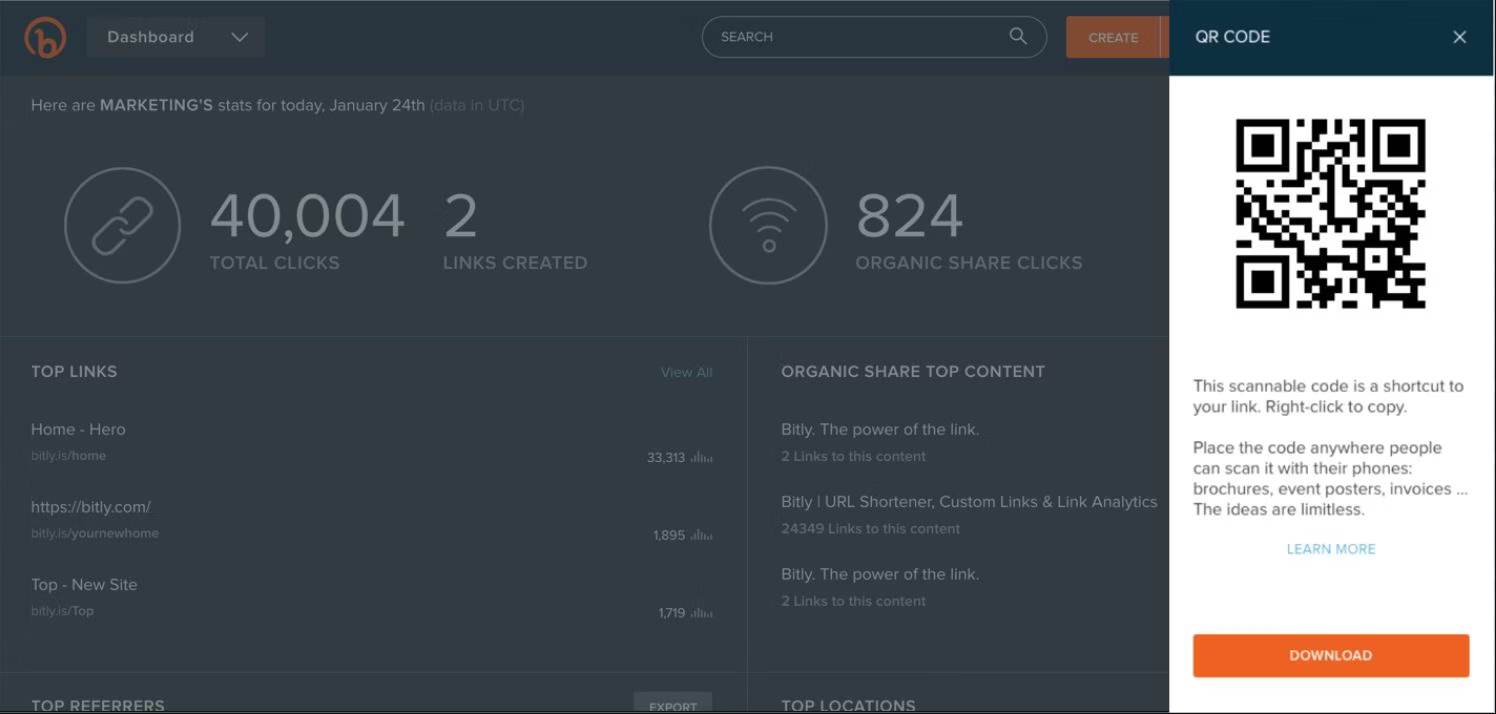
An example of a QR code generator from bit.ly (Source)
Resources to help apply these tactics for your own business
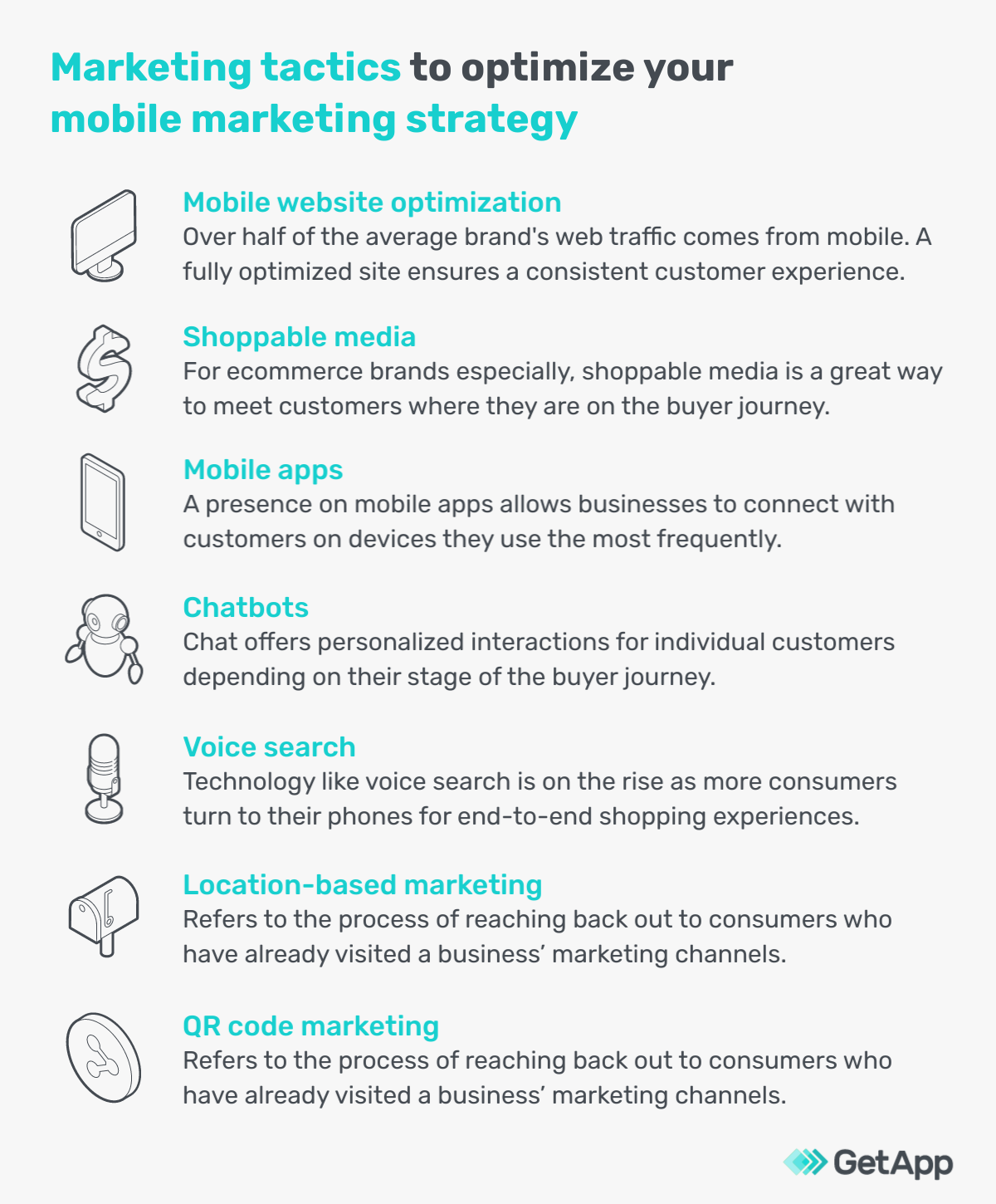
Armed with this list of strategies and mobile marketing tips, you’ll be able to strengthen your mobile marketing foundation or build one from the ground up.
You may have your own mobile marketing software software already, and if you don’t there are a wealth of options available in the GetApp directory to peruse. Check out GetApp’s Category Leaders to compare the top ranking mobile technology based on user reviews from business owners and marketers just like you.
Finally, there’s a wealth of information on the GetApp blog around all things digital marketing. If you enjoyed this article, continue your learning there starting with these resources:
Sources
Use Customer-Directed Engagement Models to Earn First-Party Data for More Effective Personalization, Gartner
Responsive vs. Mobile-Friendly Websites: What's the Difference?, Tungsten
4 Strategies To Improve Your Website’s Mobile Version, Forbes
Homepage, Hulu
Extending Loyalty Program Success Through Mobile Apps, Gartner