

GetApp offers objective, independent research and verified user reviews. We may earn a referral fee when you visit a vendor through our links.
Our commitment
Independent research methodology
Our researchers use a mix of verified reviews, independent research, and objective methodologies to bring you selection and ranking information you can trust. While we may earn a referral fee when you visit a provider through our links or speak to an advisor, this has no influence on our research or methodology.
Verified user reviews
GetApp maintains a proprietary database of millions of in-depth, verified user reviews across thousands of products in hundreds of software categories. Our data scientists apply advanced modeling techniques to identify key insights about products based on those reviews. We may also share aggregated ratings and select excerpts from those reviews throughout our site.
Our human moderators verify that reviewers are real people and that reviews are authentic. They use leading tech to analyze text quality and to detect plagiarism and generative AI.
How GetApp ensures transparency
GetApp lists all providers across its website—not just those that pay us—so that users can make informed purchase decisions. GetApp is free for users. Software providers pay us for sponsored profiles to receive web traffic and sales opportunities. Sponsored profiles include a link-out icon that takes users to the provider’s website.
7 Strategies That Lead to Ecommerce Success
Retailers with a strong ecommerce strategy are better poised for ecommerce success in the long term. Here are 7 strategies that will help position your ecommerce business for success.


Undoubtedly the defining event of 2020, the COVID-19 crisis has profoundly changed consumer shopping behaviors. Ecommerce is now essential, so it’s important to develop strategies for ecommerce success.
To find out how online retailers can launch or pivot their ecommerce strategy, we surveyed nearly 500 U.S. consumers to identify how their online shopping habits have changed as a result of COVID-19. We specifically asked about:
Impact of shopping expenditure and frequency––during COVID-19 and post COVID-19
Top challenges in online shopping experiences
Top factors in providing a great online shopping experience
Millennial consumers are buying more online––and it’ll continue
What, where, and how often consumers make purchases have changed as a result of the pandemic. In fact, 64% of those surveyed stated that they’ve been spending more online and less in-store. Consumers are migrating online to shop, and it’s an increase that is expected to sustain well beyond the crisis.
What you need to know
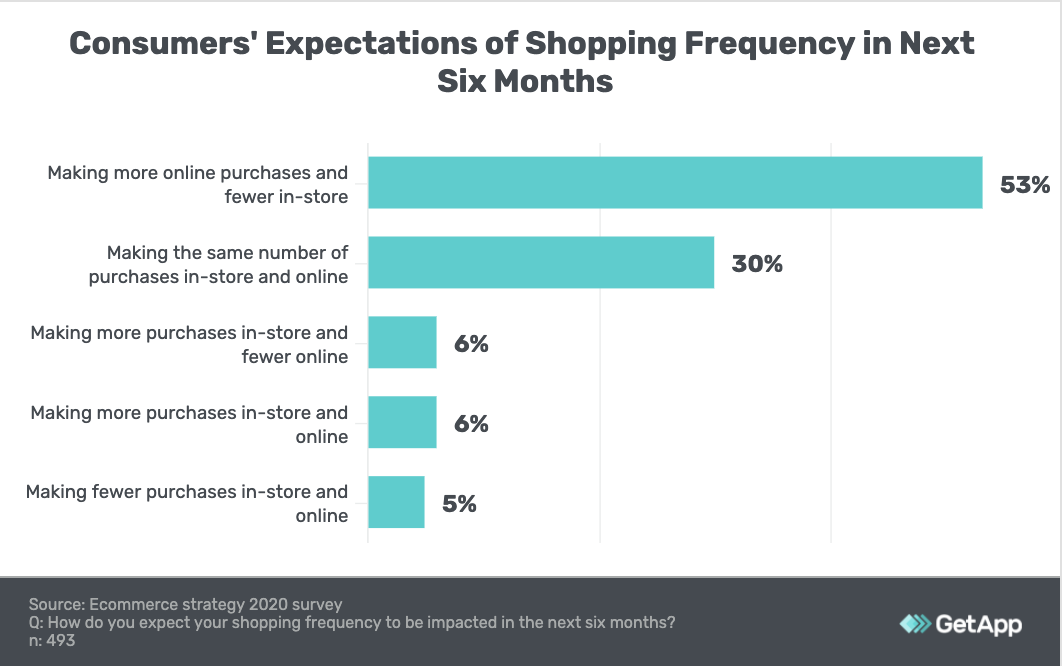
Consumers are not just increasing the number of times they purchase online. They’re also spending more online. Since the pandemic, two out of three (64%) surveyed consumers are making more purchases and spending more online. That focus on online spending will continue as over half (53%) of respondents say they expect to spend more online after the pandemic.
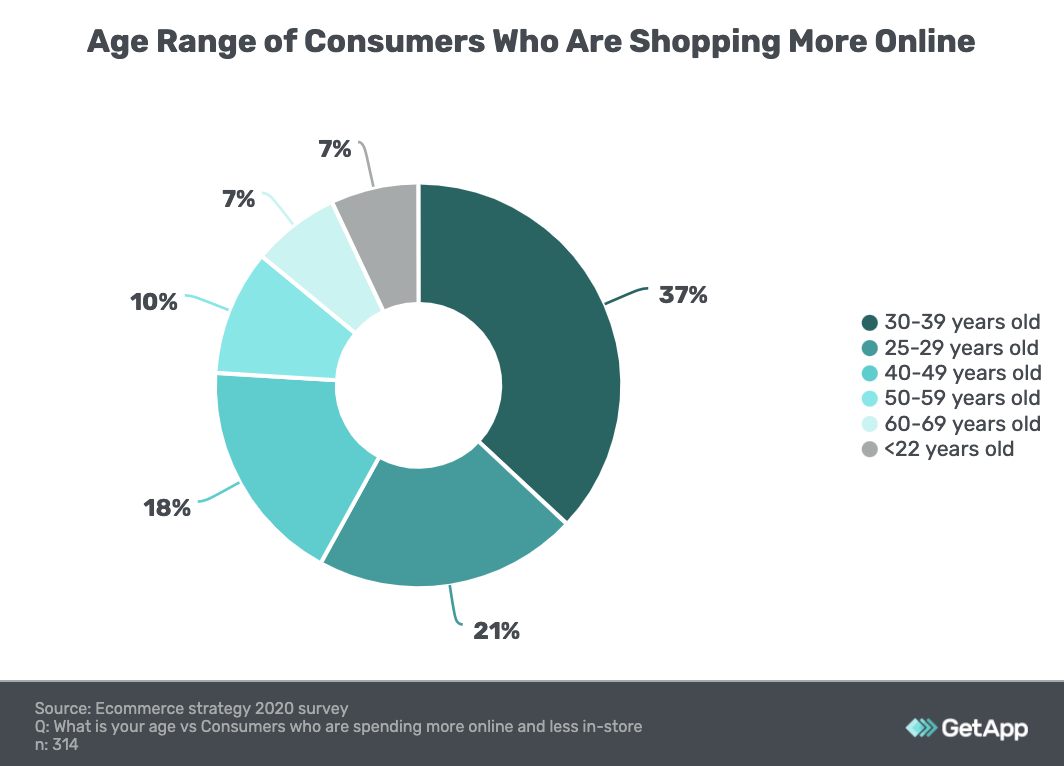
Traditional millennials are the largest online spenders. Of people who are spending more money online, 66% fall in the 30-39 age range, followed by 25-29 year olds (64%), and 40-49 (56%).
Strategies for ecommerce success
Accelerated by the pandemic, the widespread shift to online shopping is here to stay. Consumers are appreciating the convenience of online shopping, home delivery, and click-and-collect. It’s important to invest in digital capabilities to meet the expectations and demands of an omnichannel shopping experience in a post-COVID-19 world.
Despite being more likely to have families and higher bills, older millennials (30-39 years old) have proven to be significant drivers of online sales. They value convenience and are turning to digital channels to meet that need and added value.
Strategy #1: Make the most of every purchase by bundling products
Our survey found that three quarters of consumers (75%) have been spending the same or more since the pandemic. Because spending money hasn’t been heavily impacted, retailers should seek to maximize revenue with every purchase and make every transaction count.
One example could be bundling products that consumers would’ve otherwise bought separately. By bundling and slightly reducing the price, your consumer receives the benefit of a discounted item and you’ve successfully increased your profits.
How to execute: Evaluate all your SKUs to see what people are regularly buying together and then bundle those items together. Package an item with a top seller to encourage increased purchases.
Strategy #2: Market to millennials
With or without a crisis, young and traditional millennials (ages 25-29 and 30-39) have overtaken boomers as the largest population segment, and are expected to increase their per capita spending by over 10% in the next five years. As a tech and social media savvy generation, millennials will likely be doing much of this spending online—so ecommerce marketing is essential.
Our survey confirms that both younger and older millennials have emerged as the most dominant spenders on digital channels during the COVID-19 pandemic. Retailers should assess their marketing strategy and expenditures for the target audience—millennials—by identifying key categories and marketing channels. Evaluate to make sure you’re reaching and engaging with your millennial audience through the most effective channels.
Out-of-stock products can shake consumers’ faith—so here’s what to do
Retailers continue to face disruption in supply and demand as a result of COVID-19. As consumer demand persists for certain products, retailers are being put to the test to fill the gap and fulfill customer satisfaction.
What you need to know
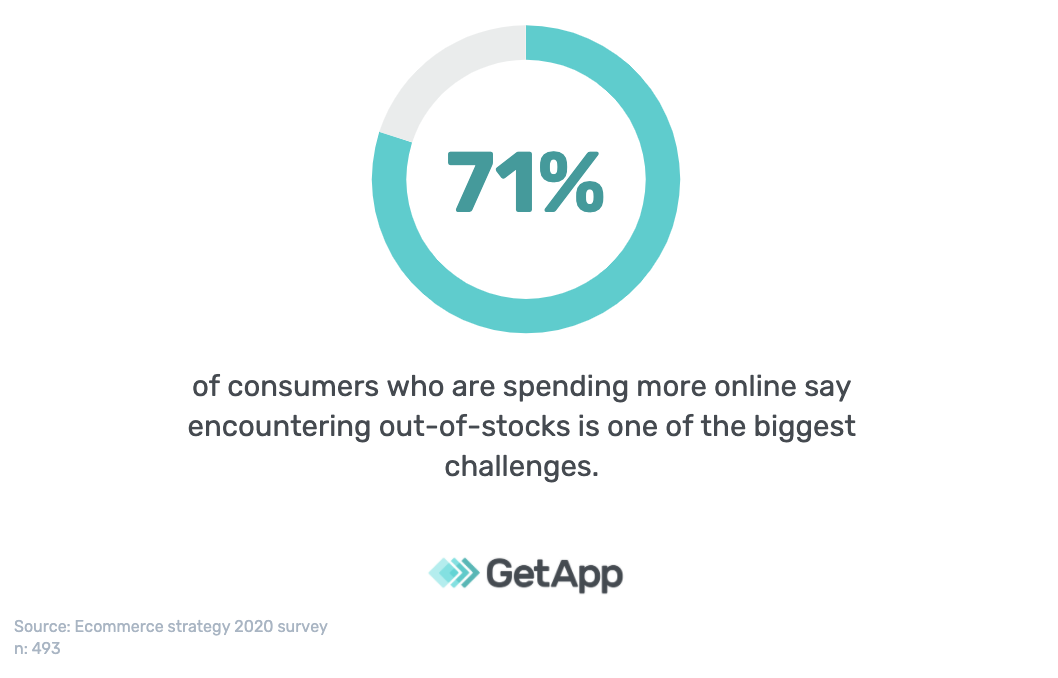
Out-of-stock products are the biggest pet peeve for three in four online consumers. Of respondents who are spending more online, nearly three-quarters (71%) of consumers say out-of-stock products are one of top five biggest challenges in recent online shopping experiences, followed by the inability to feel/test products (62%), quality of product not the same as expected (62%), delayed/slow delivery (61%), and high delivery fees (61%).
These challenges may be outside of your control—such as the inability to feel or test products—or byproducts of COVID-19’s impact on other industries—such as delayed deliveries. But with supply chain disruptions and staff shortages, online shoppers are finding more out-of-stock products than usual. Experiences like that can cause lasting damage to customer relationships, so let’s look at some ways to minimize the damage done.
Strategies for ecommerce success
In a separate survey, as much as 37% of respondents reported going to a different retailer upon encountering out of stock household essentials. Another 14% of respondents ordered products from an online retailer when the desired product was out of stock in-store.
Strategy #3: Simplify your SKU profiles
One way to ensure a reliable and steady supply across your product categories is by reducing variety and increasing quantities of your best sellers, while reducing slower-moving items. This ensures key in-demand products are hitting–and flying–off your shelves.
Strategy #4: Recommend similar products
Direct customers to another similar product or alternative variety that they can purchase. Streamlining products means you can provide the most essential or popular products to as many customers as possible.
Strategy #5: Communicate closely with suppliers for alternatives and savings
Explore alternatives with existing and alternate suppliers and ask what they can do to provide more certainty and control over your products.
Reel in potential ecommerce buyers by improving your online shopping experience
Many factors go into persuading visitors to make a purchase at your online store. If your ecommerce marketing draws them in, your ecommerce experience should seal the deal. Make sure all your bases are covered in order to provide a well-rounded online shopping experience.
To that end, we asked respondents that are spending more online what they value most from an ecommerce store when deciding where to make their online purchase.
What you need to know
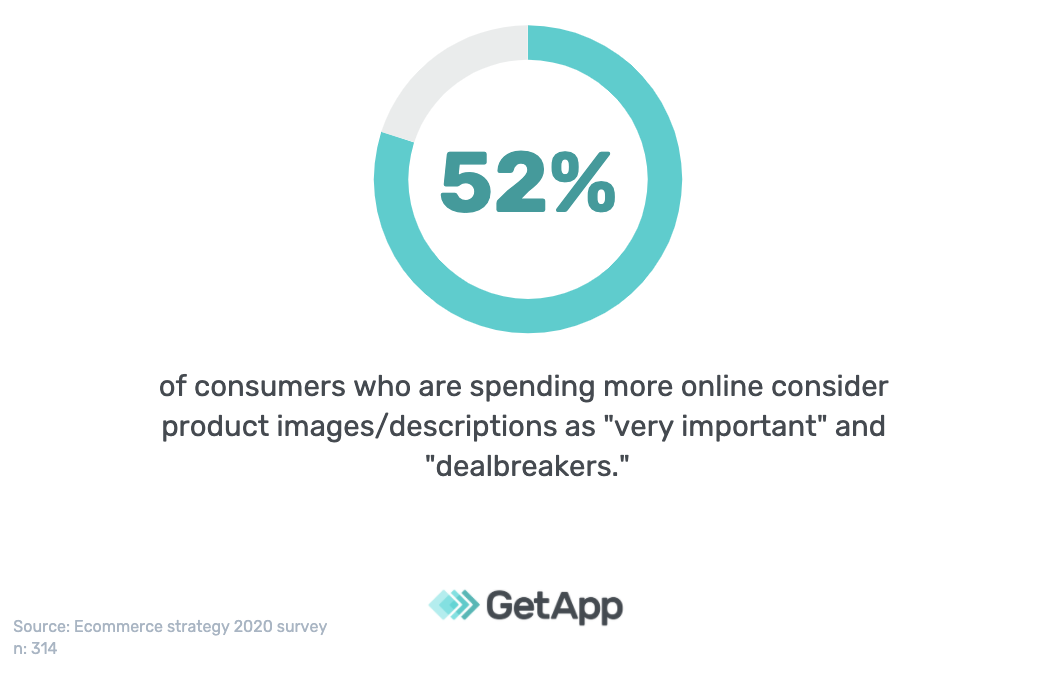
Great product images and descriptions sell. Of consumers who spend more online, over half (52%) rate having great product images and descriptions as “very important” and “deal breakers.” What’s most noteworthy about this response is that you have almost complete control over what images and descriptions are featured on your ecommerce shop.
Accurate stock availability and hassle-free returns are important too. Consumers who spend more online also cite accurate stock availability (41%) and coordinating easy returns (41%) as “very important” and “deal breakers.” An improved post-purchase experience can build customer loyalty.
Strategies for ecommerce success
We talked above about consumer challenges when shopping online, and they were largely out of your control. But you can control what customers see when they land on your online store—and initial impressions count.
Images are the first thing customers see when looking at your product page. Using compelling images and detailed description for your products provides customers with relevant and helpful information they need to make their purchasing decision.
But just having a good product image and description isn’t all—your biggest online spenders also highly value accurate inventory counts and hassle-free returns. These are also within your control to offer and optimize. Whether you offer these features will make or break the success of your ecommerce strategy.
Strategy #6: Re-evaluate and optimize your existing product images and descriptions
A picture is worth a thousand words. Ensure every image and description demonstrates benefits and features to your customer clearly. Here’s what to watch out for:
Create your own DIY photography setup (or hire a photographer if you have the budget): To deliver quality pictures, you need to start off with the right equipment. Look into investing in a DSLR camera or smartphone that is capable of delivering high-quality photos.
Showcase your products from multiple angles: Display different aspects (close-ups, medium, and long-shots) of photography to help your customer visualize the finer details of your product and how it can look or feel in real-life.
Describe the compelling benefits and features of the product to your target buyer: Address your ideal buyer directly by providing them with crucial product details that will improve their quality of life, the problems it solves, and other key benefits.
Strategy #7: Adopt an inventory management system that automates store inventory tracking and updates with one single view
“Sorry, your item is no longer available” can be a disappointing customer experience if a shopper sees that stock is still available for a desired product and upon checkout it disappears.
According to the Auburn University RFID Lab, the average level of inventory accuracy for U.S. retailers is only 65%. Omnichannel retailers should invest in a retail inventory management system that provides a single view of inventory across your entire network of warehouses, distribution centers, and stores.
Delivering a customer-centric ecommerce experience
As consumers move to making more purchases online, businesses will need to focus their investments and resources on delivering a smooth and frictionless ecommerce experience.
Having the right technology and tools is a necessary first step to helping you achieve that.
Inventory management platforms enable easy monitoring of stock levels while accommodating supply and demand fluctuations, and alerting you when stocks fall below a defined level. With customer relationship management tools, you gain a deeper insight regarding your customers’ demographics, preferences, and buying behavior, which can help you identify leads that have the highest potential.
Visit GetApp’s inventory management software directory and customer relationship management directory to research tools rated and reviewed by real buyers. Filter products by features, business size, customer rating, and more.
Additional reading:
More on eCommerce


Sep 02, 2022
Aug 05, 2024


Jun 13, 2024

Sep 20, 2021