GetApp offers objective, independent research and verified user reviews. We may earn a referral fee when you visit a vendor through our links.
Our commitment
Independent research methodology
Our researchers use a mix of verified reviews, independent research, and objective methodologies to bring you selection and ranking information you can trust. While we may earn a referral fee when you visit a provider through our links or speak to an advisor, this has no influence on our research or methodology.
Verified user reviews
GetApp maintains a proprietary database of millions of in-depth, verified user reviews across thousands of products in hundreds of software categories. Our data scientists apply advanced modeling techniques to identify key insights about products based on those reviews. We may also share aggregated ratings and select excerpts from those reviews throughout our site.
Our human moderators verify that reviewers are real people and that reviews are authentic. They use leading tech to analyze text quality and to detect plagiarism and generative AI.
How GetApp ensures transparency
GetApp lists all providers across its website—not just those that pay us—so that users can make informed purchase decisions. GetApp is free for users. Software providers pay us for sponsored profiles to receive web traffic and sales opportunities. Sponsored profiles include a link-out icon that takes users to the provider’s website.
How To Offer More Effective Lead Magnets at Each Stage of the Funnel
Generate more qualified leads with lead magnets that are tailored to prospective customers’ needs. This guide shows you how.


A lead magnet is an incentive offered in exchange for a potential customer’s contact information. While some marketers focus their energy on the drafting and design phase of creating a lead magnet, your time and resources are better spent planning your lead magnet content so it’s as relevant and valuable as possible for your ideal customer.
If your lead magnets aren’t generating as many or as qualified prospects as you’d like, but you’re working with limited staff or resources, it's time to tailor your content strategy based on prospects’ needs across the lead magnet funnel.
In this article, we’ll walk you through how to offer more effective lead magnet content at each stage of the funnel. Along the way, we’ll include insights from Gartner research as well as advice from a small-business leader.
What are the parts of a lead magnet?
An effective lead magnet has the following five components:
A call to action (CTA), which is a brief message that prompts a lead to take action.
A form asking for the lead’s name, email address, and/or phone number. This form can appear on a separate landing page or be combined with the CTA.
Lead magnet content in the form of an asset (e.g., e-book, white paper) or offer (e.g., free trial, discount coupon).
A delivery email that includes the asset or offer to be sent to the lead.
A thank you page that the lead will see after filling out your form.
What are the different stages of a lead funnel?
Gartner [1] breaks the lead funnel into three buying stages: explore, evaluate, and engage. No matter which of these stages you’re creating a lead magnet for, we encourage you to invest in lead nurturing software. These tools are designed specifically to build relationships with leads at every stage of the funnel and allow you to establish trigger-based communication modes throughout a buyer’s journey. In addition, they help determine which stage a lead is in by analyzing the amount of time they spend on your site.
How to create a lead magnet for the explore stage
Leads in the explore stage, which is also known as top of the funnel, are still identifying their needs. According to Gartner [1], content at this stage should be educational but not time-consuming. Media types that offer lighter “snack-size” consumption are preferable at this stage to long text-based content.
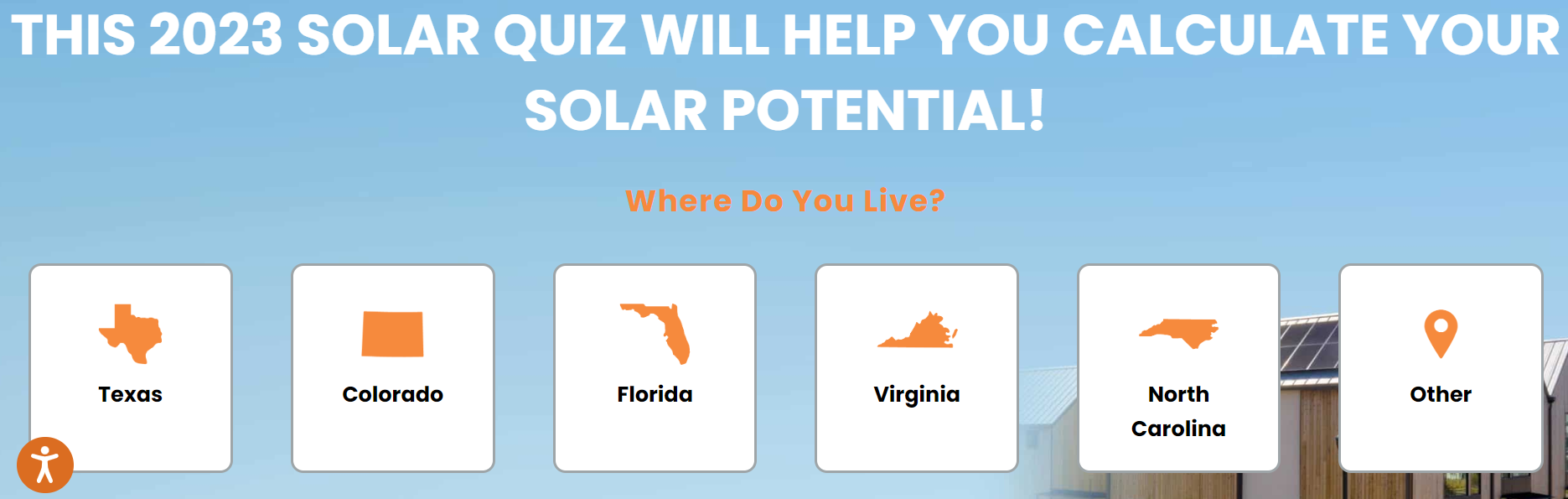
Explore-stage lead magnet from solar panel company Freedom Solar Power [2]
To create an explore-stage lead magnet, ask yourself the following questions:
What do you want a first-time website visitor to know about your brand? Is it your mission to provide reliable service or your commitment to the environment?
What problem is a first-time visitor looking to solve? Do they want to know how you compare to similar brands or which of your products would best fit their needs?
What “snack-size” content could you offer as an introduction to your brand? This could be as simple as a promotional code or a quiz to help visitors narrow your product options. Short videos and infographics are also great magnets that don’t require much of a lead’s time.
Next, consider what type of CTA you could use to draw in explore-stage leads. Your CTA should make your value proposition clear—something like “Watch this video to learn how we got started,” or “Subscribe to our newsletter for updates on our latest products.”
Tech tools to create explore-stage lead magnets
If you’d like to create a brief video to offer as an explore-stage lead magnet, video making software can provide the tools you need to create and publish videos. If an infographic is more your speed, graphic design software can help you design, edit, and publish graphics or images. Here are some vendors that offer a free trial.
How to create a lead magnet for the evaluate stage
Leads in the evaluate stage, or middle of the funnel, have demonstrated interest in your product or service. Here’s where you can begin to tailor your lead magnets based on what a lead is looking for. Drawing a clear connection between your content and the lead’s need will help them visualize your product or service fitting into their lifestyle before they fully commit to your brand.
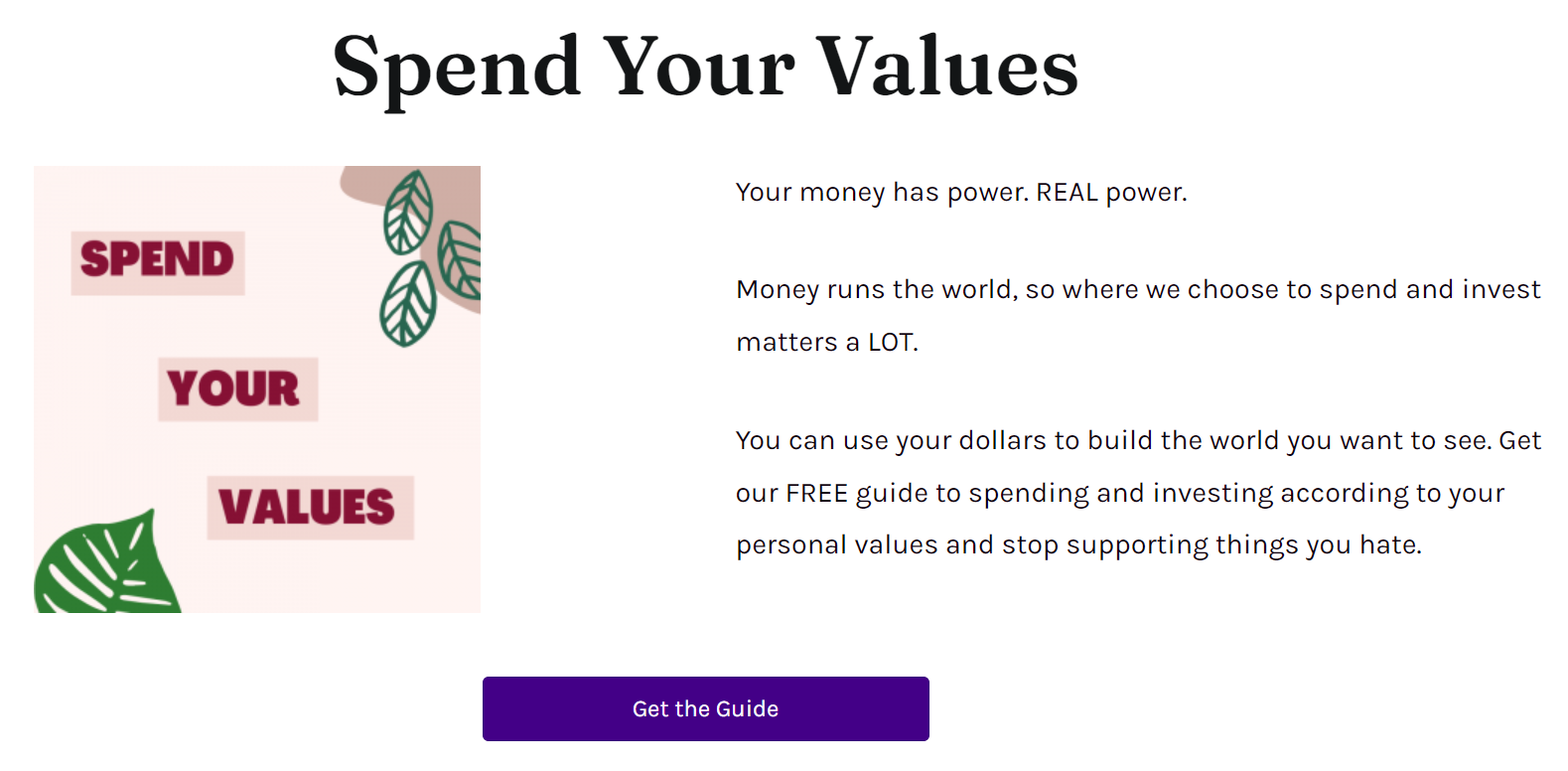
Evaluate-stage lead magnet from financial education company Bravely Go [3]
To create an evaluate-stage lead magnet, consider the following:
How would you spend 45 minutes in a room full of qualified leads? Imagine yourself performing a demo, giving a presentation, or even hosting a panel of satisfied clients eager to share their success stories. The type of lead magnet you choose should deliver the same impact.
What can you point to as evidence that your product or service is worth the investment? Consider offering an ROI calculator, a case study, or any resource that allows leads to measure the value or profitability of their investment in your offering.
CTAs at this stage should entice leads to learn more about how your product or service is the perfect solution for their problem. For instance, “Check out our client testimonials to learn how we eliminate the stress of moving day,” or “Request your free sample to witness the power of our cleaning products firsthand.”
Tech tools to create evaluate-stage lead magnets
Assuming you don’t have a room full of in-person leads, a webinar is a great option to offer as a evaluate-stage lead magnet. Webinar software is designed to help conduct virtual events and share recorded promotional and educational presentations with potential customers.
Similarly, demo software enables your sales, marketing, and customer service teams to showcase visual product demonstrations to clients. These solutions offer a variety of features such as screen recording, video conferencing, and collaboration tools. See here for free options.
How to create a lead magnet for the engage stage
Engage-stage or bottom-of-the-funnel leads are convinced of your offering’s value and want to make a purchase. Here’s where you can step up the urgency by linking lead magnets to content or resources that help potential clients make their decision quickly and with confidence.

Engage-stage lead magnet from piano merchant M. Steinert & Sons [4]
Ask yourself the following questions when creating engage-stage lead magnets:
What information does the lead need to make a purchase? Would they benefit from an implementation guide so they can start planning for how and when they should start using your product or service? Or should they be put in contact with one of your sales representatives who can personally answer any lingering questions?
What might be in the way of the lead making a purchase? If your lead is taking a while to close the sale, a free trial or another incentive such as a sample might help.
Next, you’ll want to word your CTA in a way that prompts immediate action—“Connect with a sales executive today,” or “Download our installation guide to enjoy fast and seamless service right away.”
Tech tools to create engage-stage lead magnets
Content management software is a great tool to plan and deliver engage-stage lead magnets. It helps manage digital content on your website without the need for extensive HTML experience. It also lets you establish a categorized repository of content and enables the creation, modification, and storage of digital assets, including engage-stage lead magnets such as implementation and buying guides.
Case study: An in-depth analysis
Kara Pérez [5] is the founder of financial education company Bravely Go. Her website features several lead magnets, including a values-based budgeting guide and an investing workbook, that help women build wealth.

Kara Pérez, founder of Bravely Go [5]
Pérez’s lead magnets are successful because she pays attention to her target audience. She determines what sort of content is going to be most useful for a prospective client by making a note of the conversations happening on her social media accounts and during her workshops.
“I take questions people ask me and use them to make freebies for my website,” says Pérez. She’s also seen success from the careful placement of her lead magnets. For instance, the Money Checklist featured at the bottom of her blog posts is her most downloaded asset.
Seventeen percent of prospects who download Pérez’s lead magnets go on to purchase her products. This is intentional, as her lead magnets serve as stepping stones to her paid products as well as the courses she teaches, such as her sustainable investing course. Pérez’s planning and design ensure her lead magnets result in conversion as well as growth of her brand.
Download our free creative brief to bring your lead magnet content to life
Whether you’ve decided to create an explore-stage infographic, an evaluate-stage ROI calculator, or an engage-stage buying guide, your next step is the drafting and design phase of creating your lead magnet. Here’s where our creative brief comes in.
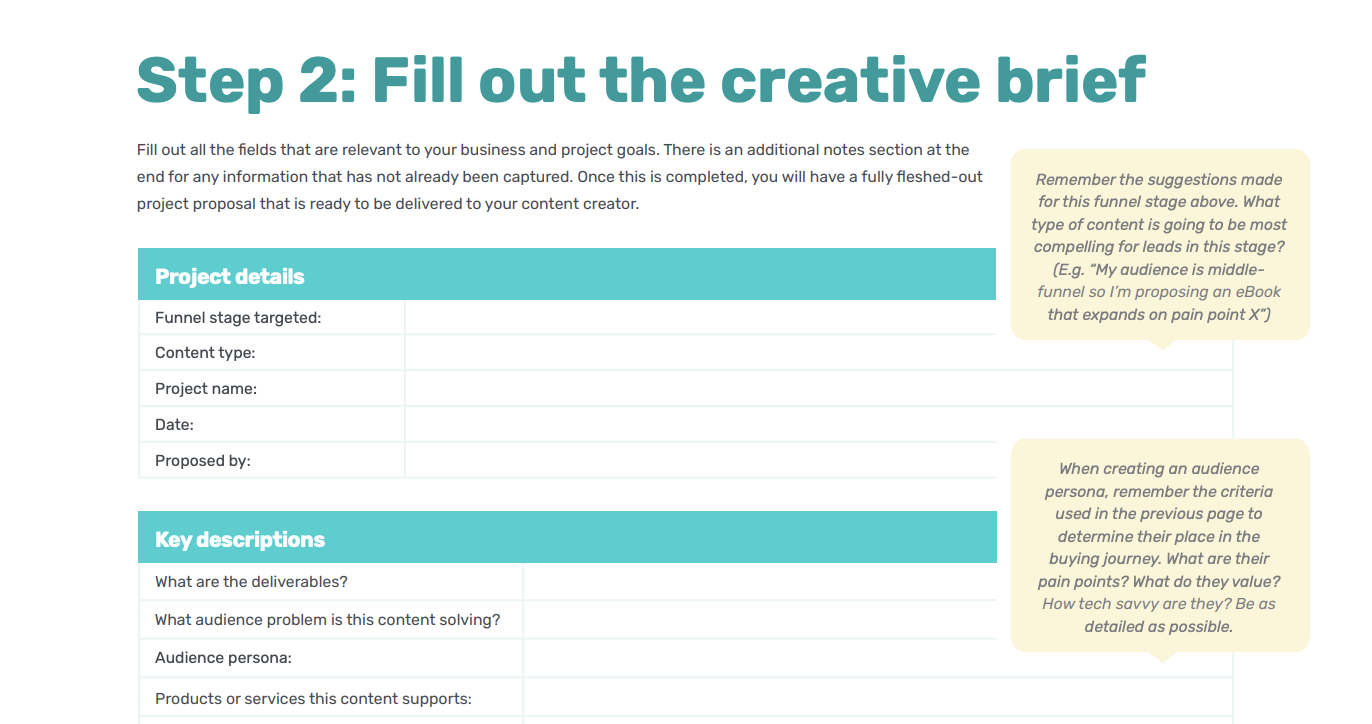
A screenshot of GetApp's Lead Magnet Creative Brief worksheet
Our free creative brief describes the parameters of your downloadable asset so everyone involved is clear on the prospective customer’s needs and how to provide them the most value. It also includes our lead qualification tool to help identify a prospect’s buying stage.
Once you’ve filled out the brief, take it to your designer or creative team. If you don’t have an in-house designer, outsource this step to a design service, or use it as a planning tool to create assets yourself using one of the tech tools we discussed earlier.
Looking for more ways to generate quality leads?
Note: Questions and responses have been edited for brevity and clarity.
Sources
Ignition Guide to Refreshing Homepages for Lead Generation Effectiveness as a Tech CEO, Gartner
Solar Quiz - Freedom Solar, Freedom Solar Power
I'm Kara, Bravely Go
The Guide to Buying a Piano, M. Steinert & Sons
Kara Pérez, LinkedIn
Lauren Spiller