GetApp offers objective, independent research and verified user reviews. We may earn a referral fee when you visit a vendor through our links.
Our commitment
Independent research methodology
Our researchers use a mix of verified reviews, independent research, and objective methodologies to bring you selection and ranking information you can trust. While we may earn a referral fee when you visit a provider through our links or speak to an advisor, this has no influence on our research or methodology.
Verified user reviews
GetApp maintains a proprietary database of millions of in-depth, verified user reviews across thousands of products in hundreds of software categories. Our data scientists apply advanced modeling techniques to identify key insights about products based on those reviews. We may also share aggregated ratings and select excerpts from those reviews throughout our site.
Our human moderators verify that reviewers are real people and that reviews are authentic. They use leading tech to analyze text quality and to detect plagiarism and generative AI.
How GetApp ensures transparency
GetApp lists all providers across its website—not just those that pay us—so that users can make informed purchase decisions. GetApp is free for users. Software providers pay us for sponsored profiles to receive web traffic and sales opportunities. Sponsored profiles include a link-out icon that takes users to the provider’s website.
Why Your Lead Magnets Should Be Diverse at Each Stage of the Funnel
Providing the right content at the right time is crucial to a lead’s decision-making process. Learn why you must tailor your lead magnets for each stage of the funnel.


To a prospective buyer, a lead magnet promises value in exchange for contact information. But if you’re a marketing leader looking to maximize that value in a way that drives conversions, then offering the same lead magnet to all prospects, regardless of their needs, won’t cut it.
Connecting prospects to the most valuable content for their funnel stage drives conversions by generating higher-quality leads. To show you how this works, we’ll first cover some lead magnet basics and then walk you through four reasons your lead magnets should be diverse. Along the way, we’ll support our findings with insights from Gartner, a leading global research firm.
What is a lead magnet?
A lead magnet is an incentive offered to a lead in exchange for their contact information, such as email address or phone number. The incentive could be a downloadable asset (e.g., checklist, report, e-book) or a service or promotion (e.g., free consultation, trial, coupon). An effective lead magnet draws leads by providing an item of value that will entice them to make a purchase.
A successful lead magnet has the following five components:
A call to action (CTA), which is a brief message that prompts the lead to take action. In this case, you’re directing your lead toward the lead magnet offer promised in exchange for their contact information.
A form asking for the lead’s name, email address, and/or phone number. This form can appear on a separate landing page or be combined with the CTA.
An asset or offer to provide to the lead in exchange for their contact information.
A delivery email that includes the asset or offer to be sent to the lead.
A thank you page that the lead will see after filling out your form. While optional, it notifies the lead that their form completion is successful and may instruct them on what to do next—for example, “Check your inbox for your free download.”
While lead magnets are often found on a website’s homepage, you’ll have an easier time connecting leads to the content they need if your lead magnets are tailored to behavioral triggers such as a customer adding an item to their cart or browsing a product page for five minutes. You can set this up through a landing page software platform such as the example shown below.
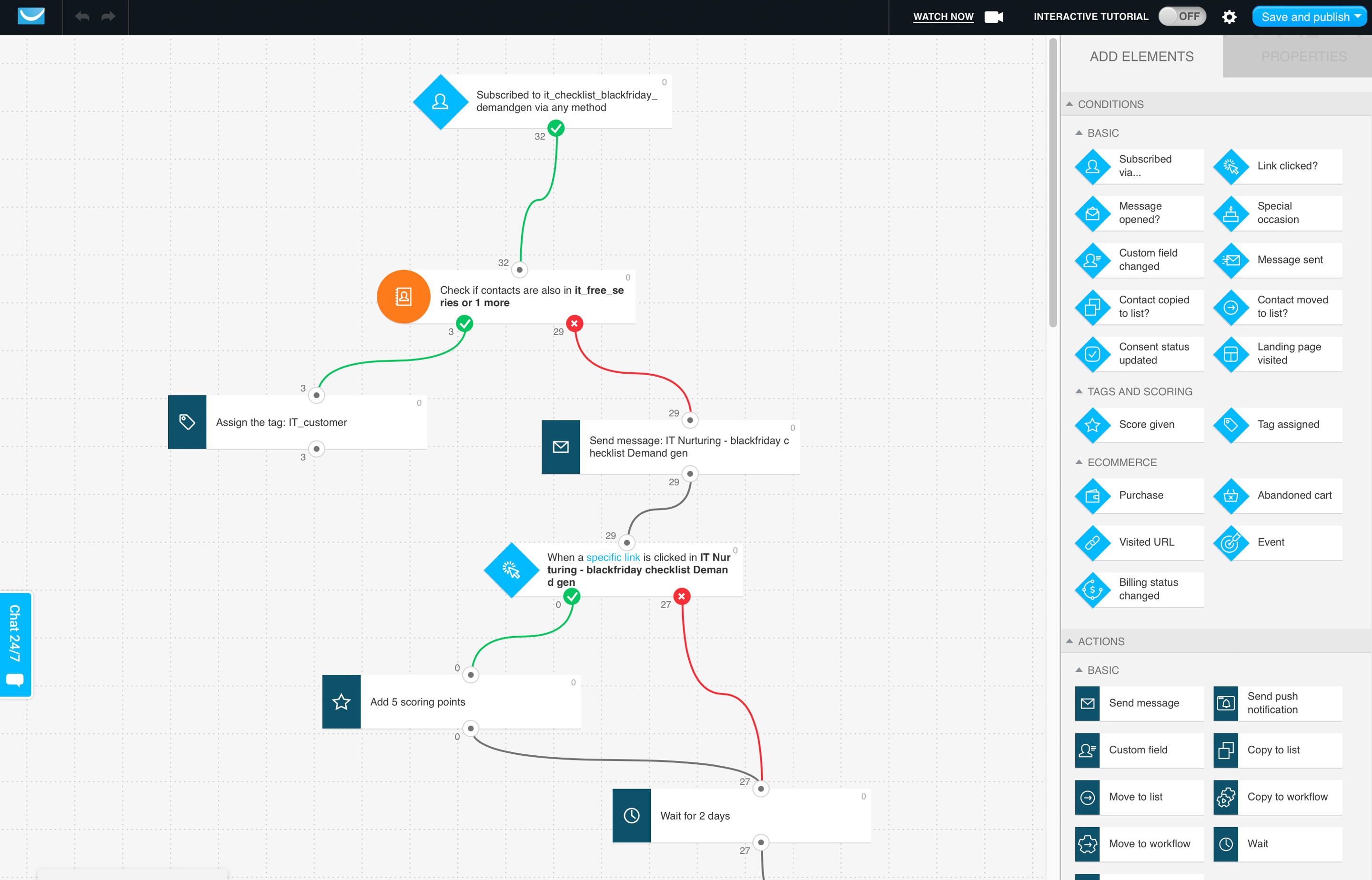
Visual marketing automation feature in landing page software platform GetResponse
Landing page software helps marketers like you increase conversions through A/B testing of their marketing campaigns. A/B testing shows how features on your website perform compared to other features, such as certain text on CTA buttons or image placement.
How does A/B testing work in digital marketing?
In an A/B test, a digital marketer uses a tool to feed half of a certain number of users one version of a website or an app (say, homepage with the CTA at the top), then feeds the other half another version (say, homepage with the CTA at the bottom). Statistical analysis is then used to compare both versions and determine which one is leading to more conversions or users are better interacting with.
What is a lead magnet funnel?
A lead magnet funnel describes the buying journey a potential customer takes. Similar to the customer acquisition or sales funnel, it begins with the lead showing interest—in this case, by downloading your lead magnet—and ends with a closed sale.
Gartner [1] breaks down the lead funnel into three buying stages:
1. Explore
In the explore stage of the funnel, leads are identifying their needs. This stage can be described as top of funnel or “window shopping,” as leads are likely turning to search engines for light research but not yet looking to make a purchase.
Content at this stage should be educational but not time-consuming. Gartner [2] recommends short videos and infographics that can be quickly and easily consumed by viewers, since these media types offer lighter “snack-size” consumption than long text-based content. Lead magnets that provide instant gratification through discount codes are also an option, as shown below.
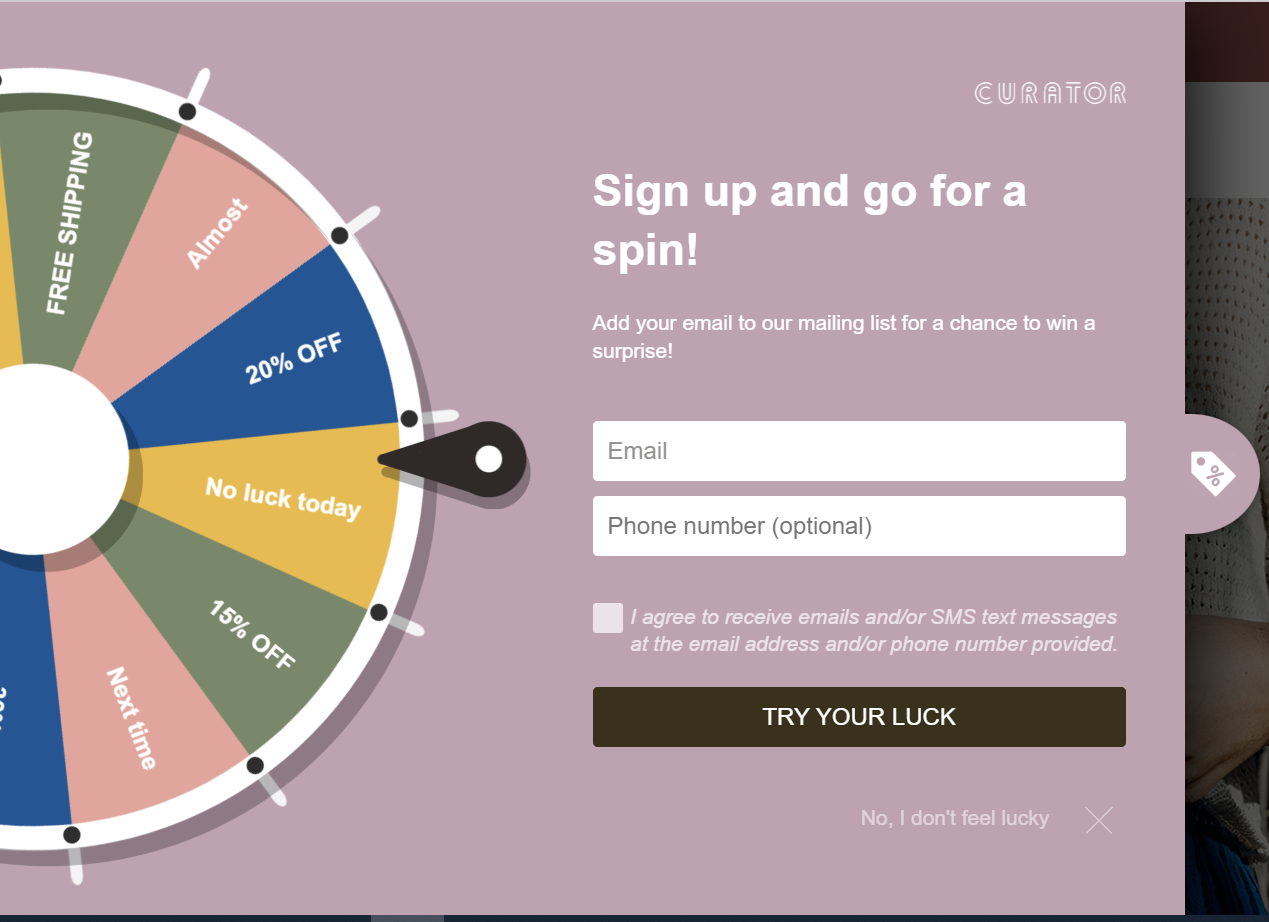
Top-of-funnel lead magnet example from women’s clothing retailer Curator SF [3]
CTAs at this stage might look like:
“Explore our offerings.”
“Watch a video about our story.”
“Subscribe to our newsletter.”
2. Evaluate
In the evaluate stage or middle of funnel, the lead has demonstrated interest in your product or service. Here’s where you can begin to tailor your lead magnets based on what the lead is looking for. Drawing a clear connection between your content and the lead’s need will help them visualize your product or service fitting into their lifestyle before they fully commit to your brand.
Content at this stage might include a product demo, webinar, return-on-investment (ROI) calculator, or guide (such as the example below)—anything that asserts the value of your product or service.

Middle-of-funnel lead magnet example from style coach Elyse Holladay [4]
CTAs at this stage might look like:
“Request a demo.”
“Read client success stories.”
“Use our ROI calculator.”
3. Engage
In the engage stage, also known as bottom of funnel, the lead is convinced of your offering’s value and wants to make a purchase. Step up the urgency here by linking lead magnets to content or resources that help prospects make this decision. By wording your CTA in a way that prompts immediate action, you can encourage the lead to finalize their purchase.
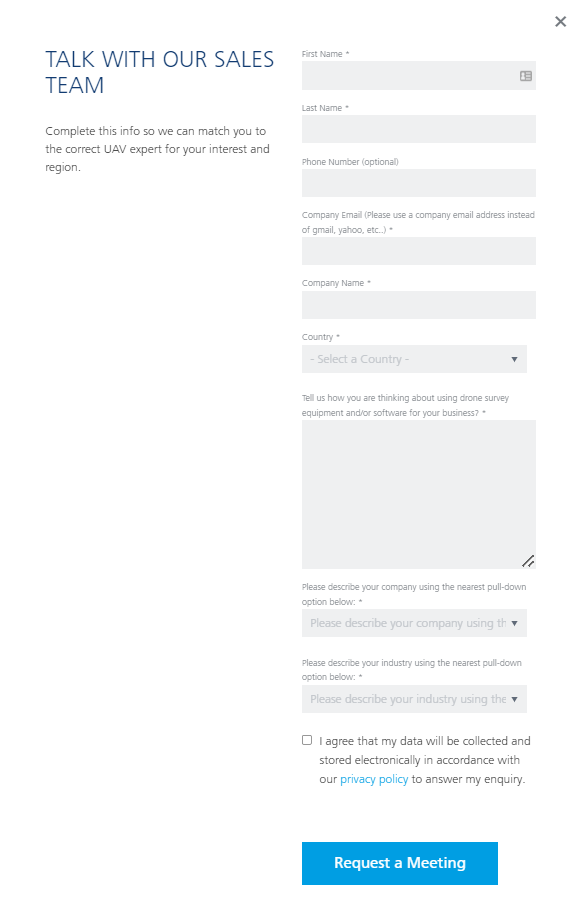
Bottom-of-funnel lead magnet example from surveying drone manufacturer Microdrones [5]
CTAs at this stage might look like:
“Download a free trial now.”
“Take a look at our buying guide.”
“Download this implementation guide now.”
“Talk to a sales executive today.”
Why should you diversify lead magnets at each stage of the funnel?
According to Gartner [6], providing the right content at the right time is crucial to a customer’s decision-making process. By only including a generic lead magnet on your homepage, you’re missing out on opportunities to generate marketing-qualified leads (MQLs), optimize campaign performance, build trust with your buyer, and nurture leads through tailored communications.
We’ll break down each of these benefits below.
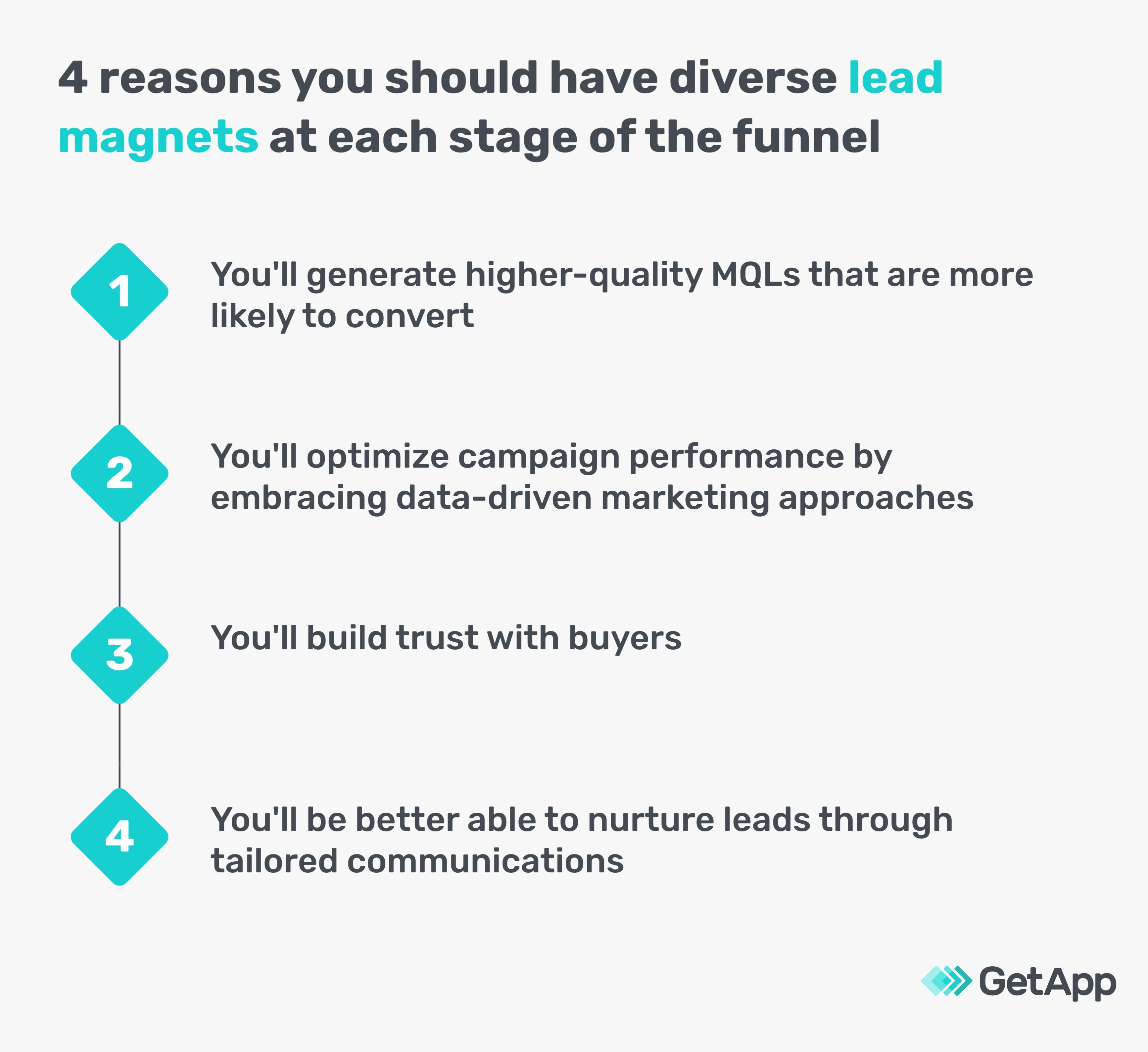
1. Generate higher-quality MQLs that are more likely to convert
Tailoring your lead magnet to a lead’s buying stage is more likely to attract marketing-qualified leads. Also known as warm leads, MQLs are potential leads that have expressed interest in your product or service. Although MQLs haven’t yet committed to a purchase nor spoken to a sales rep, they’re a good target for your content because their interest suggests they’re likely to convert.
A generic lead magnet may garner some attention, but the value it offers isn’t necessarily tailored to what the lead needs at that moment. Additionally, the information you get through the transaction isn’t going to reveal much more than, “This customer is interested in our free checklist.” That information can be even more dubious when your lead magnet offers a free trial or sample, as seeking a free product doesn’t necessarily mean your lead is interested.
2. Optimize campaign performance by embracing data-driven marketing approaches
According to Gartner [2], marketing teams that embrace data-driven marketing approaches to identify, reach, and engage leads are better positioned to optimize campaign performance. Targeted multichannel campaigns that vary their marketing content and CTAs simply do a better job of keeping prospects engaged throughout the buying cycle.
To leverage customer data in your marketing approaches, ensure your content marketing software can integrate with your customer relationship management (CRM) platform. This way, you’ll be better positioned to engage leads that share demographic traits with your existing customers.
3. Build trust with buyers
Providing contact information is already a display of trust from leads that are concerned about data privacy. What’s more, 55% of buyers will abandon an online purchase if they’re asked for too much information, according to a recent GetApp survey*.
Being deliberate with your lead magnets in terms of content and delivery shows care and consideration on behalf of your business. Rather than just a data grab, you want your customers to receive something useful to their buying journey. And as we mentioned earlier, the right lead magnet can filter warm leads from those that aren’t as serious about making a purchase.
4. Nurture leads through tailored communications
While a generic lead magnet is still useful for adding contacts to your email list, tailored lead magnets help segment leads according to their funnel stage. This ensures once a lead gets their asset or offer, they continue receiving communications relevant to their needs, such as product-specific information if they’re in the explore or engage stage.
Maximize the value of your lead magnet with tech tools
Diversifying your lead magnets at each stage of the lead funnel has several benefits. Below is a recap of the ones we covered:
We discussed earlier how landing page software can help you implement trigger-based actions for more personalized lead magnets. Here are some other tech tools that can help maximize the value of your lead magnets:
Content management software: Content management software (CMS) lets your business manage digital content on websites without the need for extensive HTML experience. It helps establish a categorized repository of content and enables the creation, modification, storage, and deletion of all forms of digital assets, including documents, images, and videos.
Content marketing software: Content marketing software helps your business develop and produce branded content. It lets you store the created content and manage its distribution across marketing channels as well as third-party platforms on the internet.
Lead generation software: Lead generation software allows your business to automate the lead-collecting process. With these tools, you can collect information on leads and segment the data based on your needs or preferences. These tools also offer contact management, form customization, social media marketing, and post-sale follow-up.
Lead management software: Lead management tools assist you in creating web forms to capture lead data. You can also integrate these tools with your existing CRM and customer service software.
Survey methodology
*GetApp conducted the 2022 BYOI/Guest Checkout Survey in March 2022 among 770 U.S. consumers who shop online at least once each week to learn about preferences toward eCommerce account registration and online checkout processes.
Sources
Ignition Guide to Refreshing Homepages for Lead Generation Effectiveness as a Tech CEO, Gartner
Demand Generation Primer for 2022, Gartner
Curator SF | Ethical Women's Clothing Made in San Francisco, Curator SF
Elyse Holladay | Personal Style Coaching, Elyse Holladay
Aerial LiDAR & Photogrammetry UAV Drone Survey Equipment, Microdrones
How To Optimize Your Website for Relevance and Engagement Success, Gartner
Note: The screenshots of applications selected in this article are examples to show a feature in context and are not intended as endorsements or recommendations.
Lauren Spiller