

GetApp offers objective, independent research and verified user reviews. We may earn a referral fee when you visit a vendor through our links.
Our commitment
Independent research methodology
Our researchers use a mix of verified reviews, independent research, and objective methodologies to bring you selection and ranking information you can trust. While we may earn a referral fee when you visit a provider through our links or speak to an advisor, this has no influence on our research or methodology.
Verified user reviews
GetApp maintains a proprietary database of millions of in-depth, verified user reviews across thousands of products in hundreds of software categories. Our data scientists apply advanced modeling techniques to identify key insights about products based on those reviews. We may also share aggregated ratings and select excerpts from those reviews throughout our site.
Our human moderators verify that reviewers are real people and that reviews are authentic. They use leading tech to analyze text quality and to detect plagiarism and generative AI.
How GetApp ensures transparency
GetApp lists all providers across its website—not just those that pay us—so that users can make informed purchase decisions. GetApp is free for users. Software providers pay us for sponsored profiles to receive web traffic and sales opportunities. Sponsored profiles include a link-out icon that takes users to the provider’s website.
3 Benefits of Loyalty Programs From a Real Small-Business Owner
Loyalty programs boost customer acquisition and retention, personalize communications with your customer base, and build trust in your brand. Find out how in this customer loyalty primer featuring insights from a real small-business owner.


As a shopper, there’s no better way to nab discounts at your favorite stores than by joining a customer loyalty program. But what’s in it for the business?
It’s a valid question, especially if you’re a small-business owner who’s keeping a close eye on your bottom line. And if your business is new or struggling, the thought of offering discounts or giving away free products may seem counterintuitive.
The truth is, a loyalty program will only benefit your small business if you’re prepared to set up and maintain the program as well as start collecting more information about your customers. To gain perspective, we spoke to David Davis, co-owner of The Cornucopia, a natural foods market in San Marcos, Texas about his loyalty program and the ways it has benefited his business.
3 real-life benefits of loyalty programs
David started The Cornucopia’s customer loyalty program in 2014 out of a desire to grow his customer base, and he’s been using customer loyalty program software to maintain it. As such, the following three benefits speak specifically to rewards programs that are maintained using tech tools.
1. Increase customer retention and acquisition
David’s main reason for implementing a customer loyalty program was twofold: to get existing customers to come back more frequently, and to see new customers in the store as well.
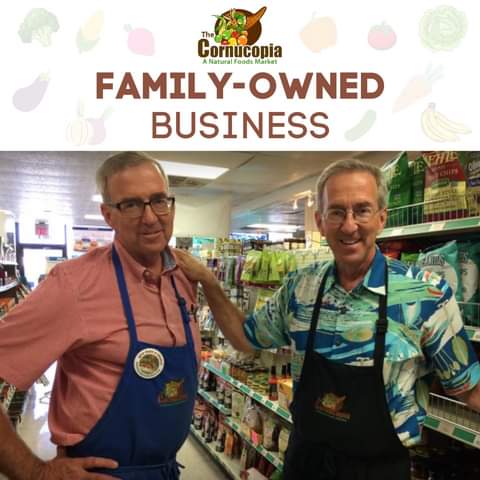
David Davis (right) and Dan Davis, co-owners of The Cornucopia [1]
“It’s nice when people come in and say, ‘I got this offer on my phone, and it told me to come back [to the store].’” David mentioned, looking back on how it felt when the program first launched, and repeat customers started redeeming the rewards they had earned.
A customer loyalty program is the way to go if you’re trying to increase retention. According to Harvard Business Review, businesses with rewards programs can see an upswing in return customers buying more products than usual, or buying more expensive versions of the products they normally purchase [2]. But how exactly does a loyalty program bring in new customers?
It can automate marketing campaigns. David uses his loyalty program software not only to maintain his loyalty program, but to launch marketing campaigns (e.g. a social media ad campaign) and track their progress. This is a great way to catch the attention of prospective customers.
It helps spread the word about your business. Loyalty program platforms that offer review monitoring as a feature can help you solicit more and better quality reviews from existing customers. (Hint: this is also a great way to encourage regular customers to become brand advocates.)
It can help you learn more about what your customers like and dislike. Seeing which rewards loyalty program members are more likely to redeem, or which marketing campaigns get more engagement, can give you insights that you can use to get more customers in the door.
2. Personalize communications with your customer base
David’s customer loyalty program software helps him communicate with 30 thousand customers by email, and half of those customers have opted into text messages from The Cornucopia.
“We contact customers to advertise promotions for certain products or a line drive, or just general discounts,” David explains. “Our program operates based on tiers, so different offers and communications are sent to different customers depending on their tier.”
The feature David is referring to is called customer segmentation. Segmentation creates a personalized approach by grouping customers on the basis of various attributes, such as their purchase history and spending habits.
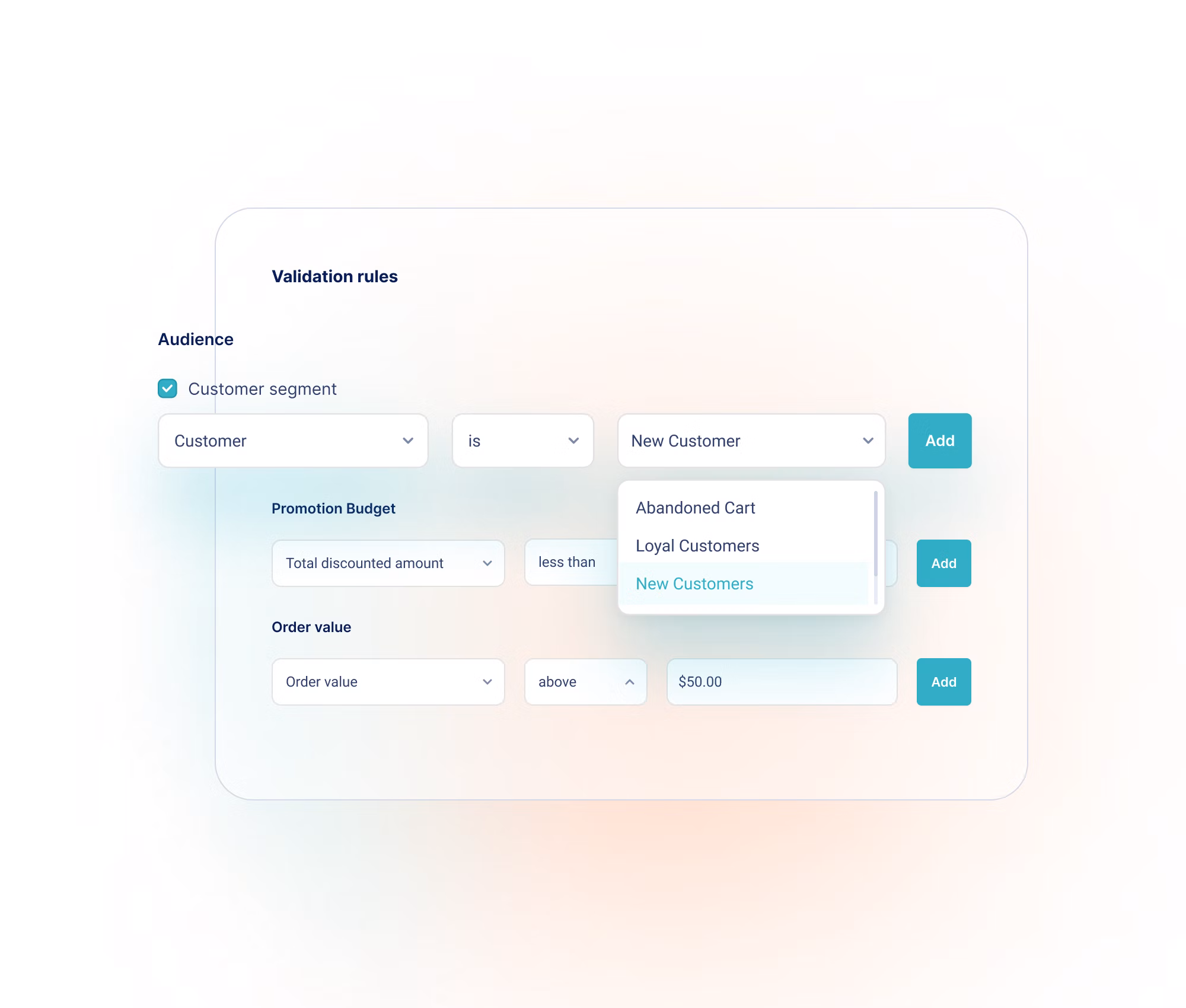
Use of segmentation in customer loyalty platform Voucherify (Source)
This way, you can send special offers to new customers, or a discount such as the one pictured below, to engage “at-risk” or “lapsed” customers (those who haven’t visited in a long time).
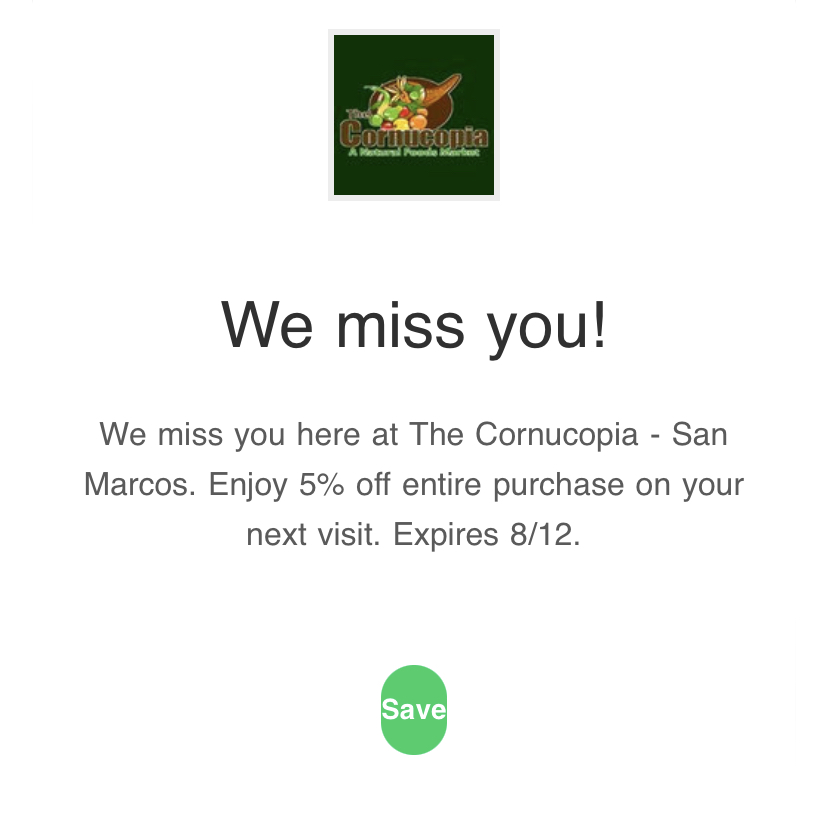
Screenshot of email reward from The Cornucopia’s customer loyalty program, taken by author
When customers receive messages that reflect where they stand with your brand, this can lead to greater customer satisfaction and even a boost in sales, according to Forbes [3]. It also strengthens the customer relationship, encourages brand loyalty, and makes it easier for customers to access and redeem rewards.
3. Build trust in your brand
To start a loyalty program, you’ll need to gather information from each new customer: a phone number or an email address you can use to stay in contact as well as track reward points. This might not seem like a big deal, but customer sentiment around data privacy is evolving. Plus, many shoppers are wary of spam, so getting this information from them is a sign of trust.
David admits that asking for customers’ phone numbers was awkward initially, but once they learned how The Cornucopia was using their information, and how easy it was to accrue loyalty points from checking in with their phone number for every purchase, that skepticism diminished.
Tips for building trust in your brand as you grow your business
Building trust in your brand is important because it’s the entire basis of a loyalty program. When customers choose to shop with you again and again, the value they get from your relationship outweighs any benefits they might get from a competitor.
Here are some ways that small-business owners such as yourself can continue establishing trust in your brand through your reward program:
Make sure customers receive a welcome offer as soon as they provide you with their phone number or email address. This reassures them that you are using their information as expected.
Explain to customers how their information is protected. Be clear about the actions your business is taking to safeguard customer data as well as your methods and how you’re using that data.
Ask customers for their feedback via customer satisfaction surveys. You can ask, “How satisfied are you with our loyalty program?” to gauge its performance.
David’s tips for implementing a customer loyalty program
As he’s done with his own loyalty rewards program, David recommends investing in customer loyalty program software: “Get familiar with the software and use it. Take advantage of the resources available to you.”
He adds that most of these platforms are fairly intuitive–it wasn’t difficult to train his team on using the software. “You’re just prompting the customer to put their number in there. Sometimes it involves talking to people about the program, and sometimes they’re hesitant to give their number out, but once they realize how easy it is to use, it’s not a problem.”
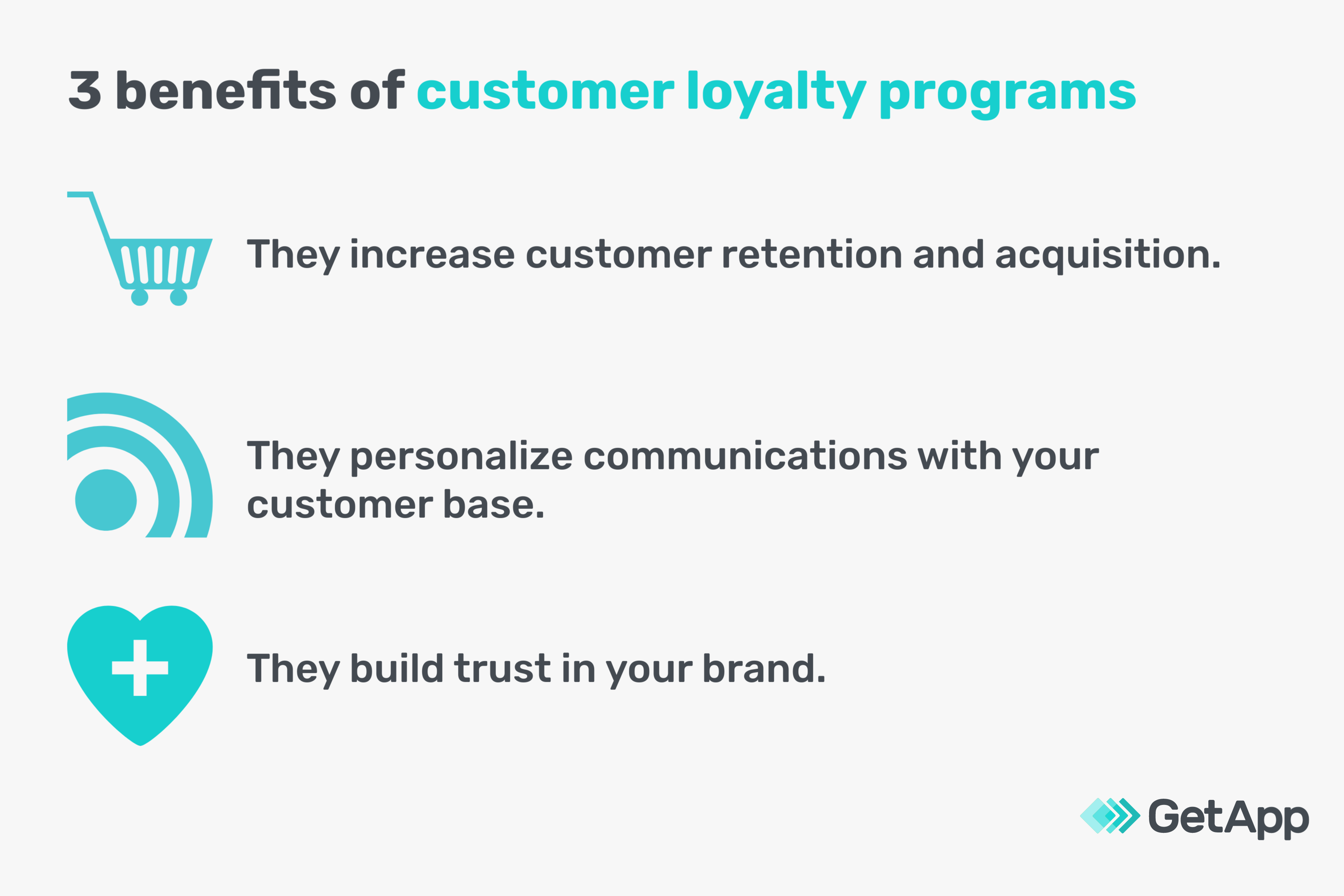
Speaking of training your team, you can present these benefits of loyalty programs to them as rationale for your key performance indicators (KPIs). Then, measure your program’s performance using metrics such as customer lifetime value and repurchase ratio.
Want to learn more about customer loyalty programs? Check out the following articles:
Note: Questions and responses have been edited for brevity and clarity.
Note: The applications selected in this article are examples to show a feature in context and are not intended as endorsements or recommendations. They have been obtained from sources believed to be reliable at the time of publication.
Sources
1. Cornucopia Facebook Home Page, Facebook
2. How to Make Your Loyalty Program Pay Off, Harvard Business Review
Lauren Spiller
mentioned in this article

More on CRM


Apr 22, 2024

Jul 03, 2024

Mar 26, 2024

May 16, 2024

Mar 04, 2024