GetApp offers objective, independent research and verified user reviews. We may earn a referral fee when you visit a vendor through our links.
Our commitment
Independent research methodology
Our researchers use a mix of verified reviews, independent research, and objective methodologies to bring you selection and ranking information you can trust. While we may earn a referral fee when you visit a provider through our links or speak to an advisor, this has no influence on our research or methodology.
Verified user reviews
GetApp maintains a proprietary database of millions of in-depth, verified user reviews across thousands of products in hundreds of software categories. Our data scientists apply advanced modeling techniques to identify key insights about products based on those reviews. We may also share aggregated ratings and select excerpts from those reviews throughout our site.
Our human moderators verify that reviewers are real people and that reviews are authentic. They use leading tech to analyze text quality and to detect plagiarism and generative AI.
How GetApp ensures transparency
GetApp lists all providers across its website—not just those that pay us—so that users can make informed purchase decisions. GetApp is free for users. Software providers pay us for sponsored profiles to receive web traffic and sales opportunities. Sponsored profiles include a link-out icon that takes users to the provider’s website.
Marketing Attribution Models: Understanding and Optimizing Campaign Performance
Optimize campaign performance and properly give credit to specific marketing tactics with these tried and true marketing attribution models.


You’re collecting data from multiple sources, you’re monitoring the right metrics, and you may even have software integrations that help tell a more compelling data story.
Sounds like a well-oiled marketing machine, but what if you’re doing all this and still don’t know what tactics are actually converting? This is where an understanding of marketing attribution models comes in.
Knowing what specific piece of content creates a lightbulb moment in the mind of a prospective customer is easier said than done (and also the holy grail of multi-channel marketing), but there are common models and technology available to help you do just that.
What is marketing attribution?
Marketing attribution refers to the process of seeking to understand and attribute marketing results to specific customer touchpoints. These touchpoints can include anything from social posts, marketing emails, and TV ads to forms from a business’ website, loyalty program sign-ups, or in-person marketing tactics.
The process aims to take into account the entire customer journey from awareness and engagement to (hopefully) conversion. The goal is to determine which channels, messages, and pieces of content resonate with users to provoke action as they move along that journey.
Why is marketing attribution important?
The ultimate question in marketing is, “How do we reach the right person with the right message at the right time?” Marketing attribution seeks to answer that question by properly attributing marketing results to the messages and pieces of content that earn customers. This strategy may look different depending on what stage of growth your marketing organization is in, but the idea is to start with a simple method like last-touch attribution then evolve into a more fully featured multi-touch model [1] (more on both of these below).
You can have an amazing multi-channel marketing approach and collect all the data in the world, but if you don’t know what is actually making customers convert, well, it can feel a bit like you’re chasing your own tail.
Related reading
For more on multi-channel marketing and how you can improve your own tactics to achieve a truly integrated strategy, visit our article on the subject here: Integrated Marketing vs Omnichannel Marketing: What You Need to Know
Types of marketing attribution models
There are several different types of marketing attribution models, however, they fall into two main categories: single-touch models and multi-touch models. Single-touch models assign 100% of the credit for a conversion to a single marketing touchpoint whereas multi-touch models split the credit between multiple marketing touchpoints.
Single-touch models
First-touch attribution
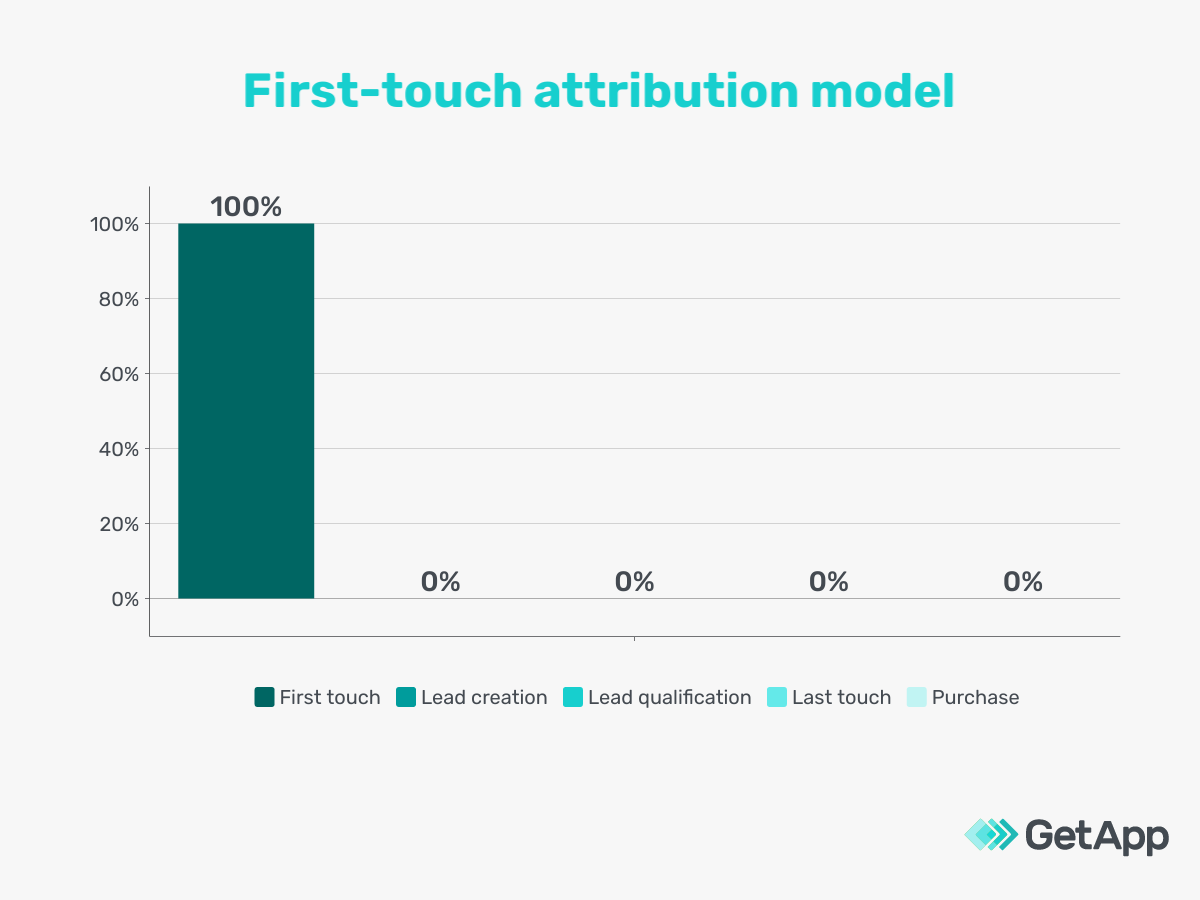
The first-touch attribution model assigns 100% of the credit to the first interaction a customer has with a business, ignoring subsequent interactions and the final touch before conversion. This model is best reserved for businesses that are primarily focused on building awareness at the top of their marketing funnel. It’s also helpful for businesses with especially short customer journeys i.e., ecommerce businesses that serve consumers directly.
| Pros | Cons |
|---|---|
| Straightforward and easy to track | Less context provided by focusing on only the first interaction |
| Excellent option for businesses focused on awareness | Limited insight to inform future decisions |
Last-touch attribution
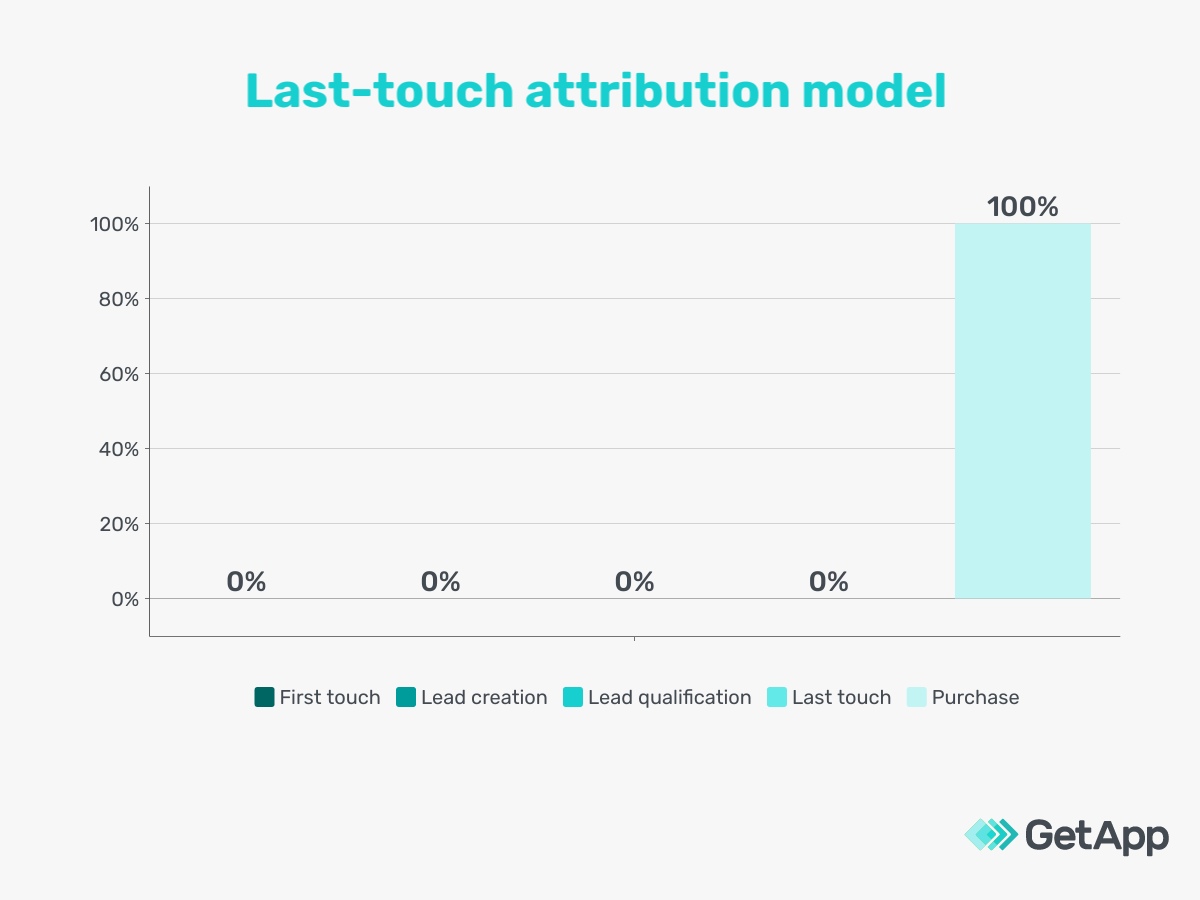
The last-touch attribution model focuses on—you guessed it—the last interaction a customer has before converting. This generally refers to the piece of content that guided them to the shop page e.g., a promotional email, SMS, or social post, etc.
For example, if a customer discovers a business on Facebook, clicks a post to visit the website, then returns later to complete a purchase through a cart abandonment email, the email will get credit for the conversion—not the Facebook post.
| Pros | Cons |
|---|---|
| Similar to first-touch attribution, last-touch is simple and straightforward | Misses out on context related to driving awareness and engagement before conversion |
| Good option for businesses focused on driving sales | Limited insights to improve top and mid-funnel performance |
Last non-direct touch attribution
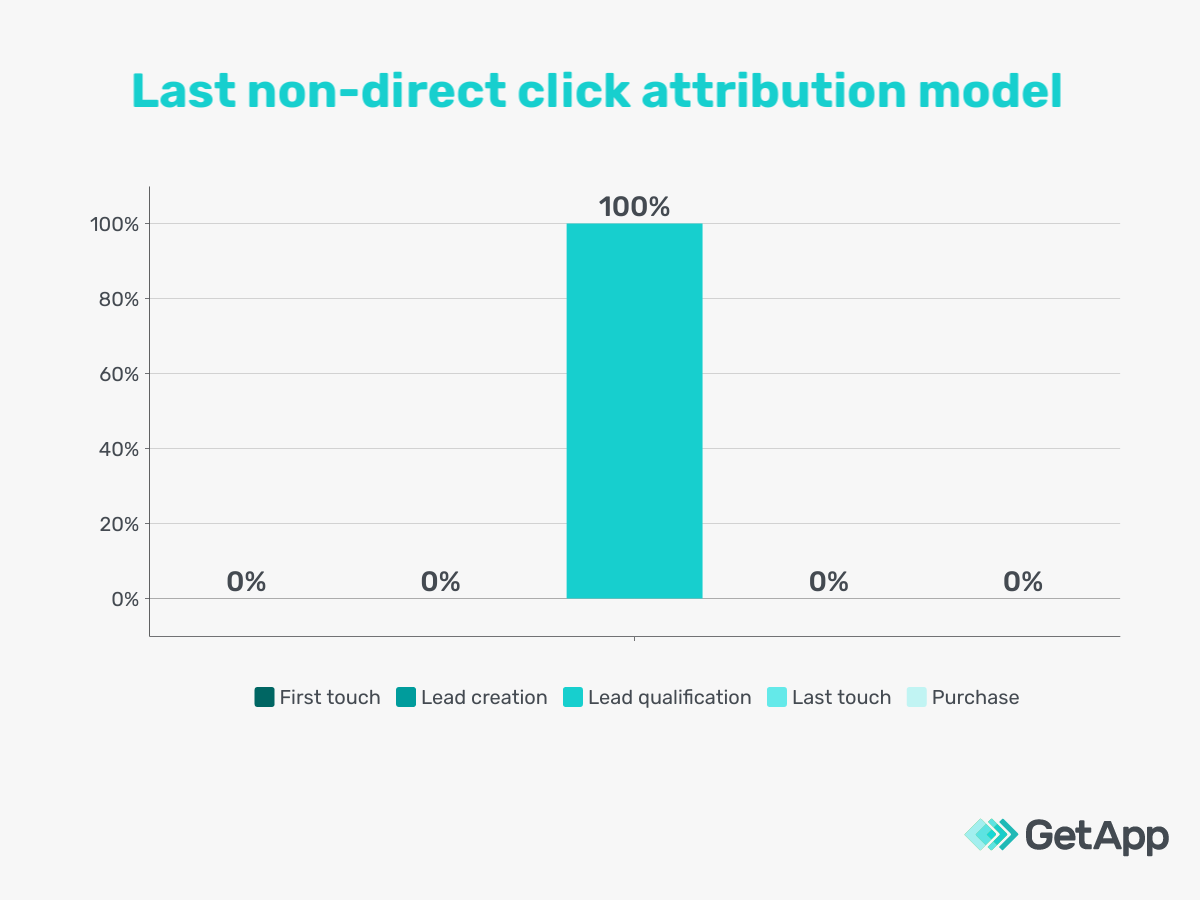
Last non-direct attribution also gives credit to a single touchpoint along the customer journey, but it chooses to ignore the final “direct” touch before a customer converts.
For example, if a customer follows a business organically on social media, makes their way to the business’ website from a promotional post, then much later on revisits the site to make a purchase, the social post that first triggered them to visit the website will be given 100% of the conversion credit.
| Pros | Cons |
|---|---|
| Helps contextualize the marketing channels that are driving conversions | Fails to account for the impact of marketing tactics outside the last non-direct touch |
| Especially useful with a multi-channel marketing approach | Doesn’t provide insights on customer activity at the top-of-funnel |
Lead creation attribution
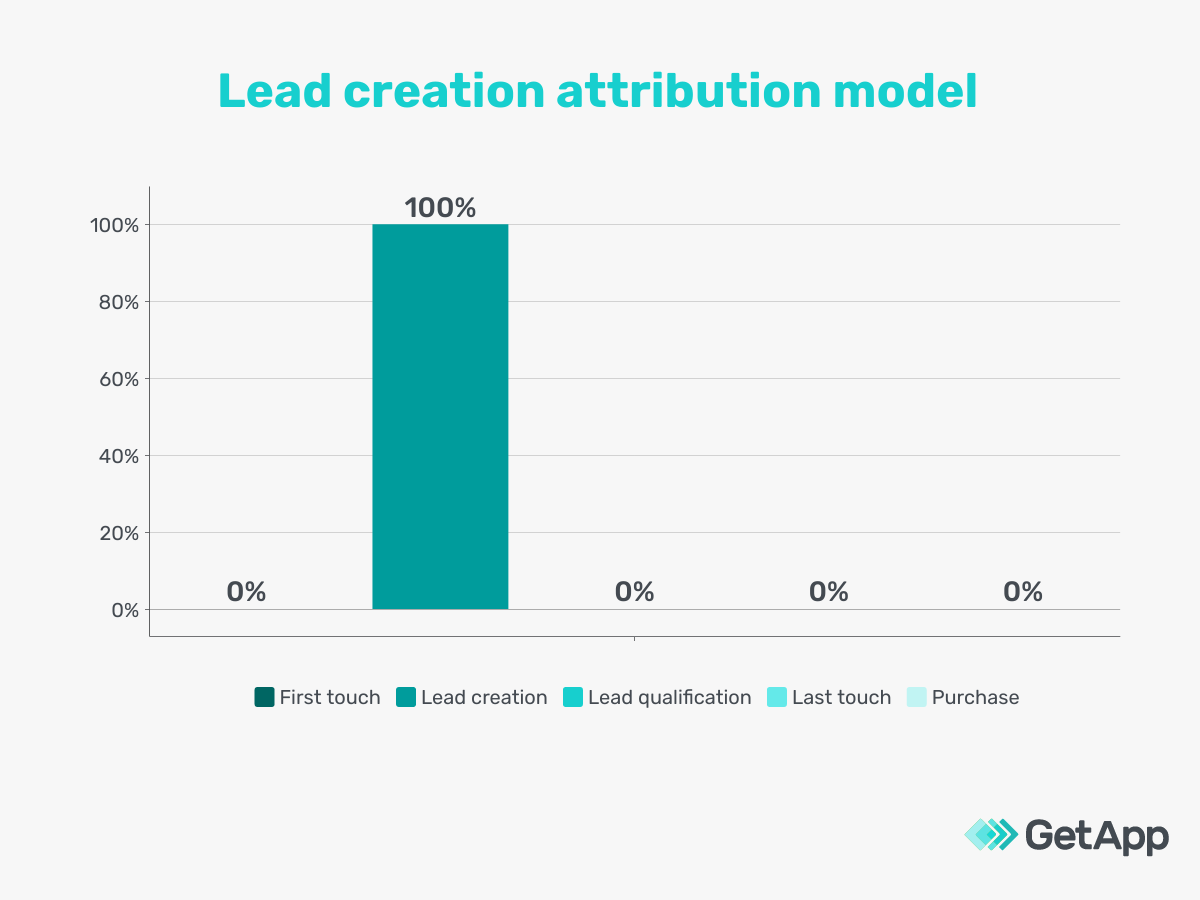
Similar to the last non-direct touch model, lead creation attribution focuses its attention on the specific interaction in the customer journey that transforms a consumer from a mere prospect to a bonafide lead.
This model is selected by businesses who want to understand the critical point at which a customer voluntarily enters their information to learn more about a product or become part of a business’ community. Examples include customers entering contact information into a web form, signing up for an email newsletter, attending an online event, etc.
| Pros | Cons |
|---|---|
| Helps accurately determine where leads are earned within the marketing funnel | Ignores potentially important touch points leading up to and following lead creation |
| Gauges effectiveness of engagement and lead generation tactics | Focuses solely on lead creation, ignoring awareness and conversion |
Multi-touch models
Linear attribution
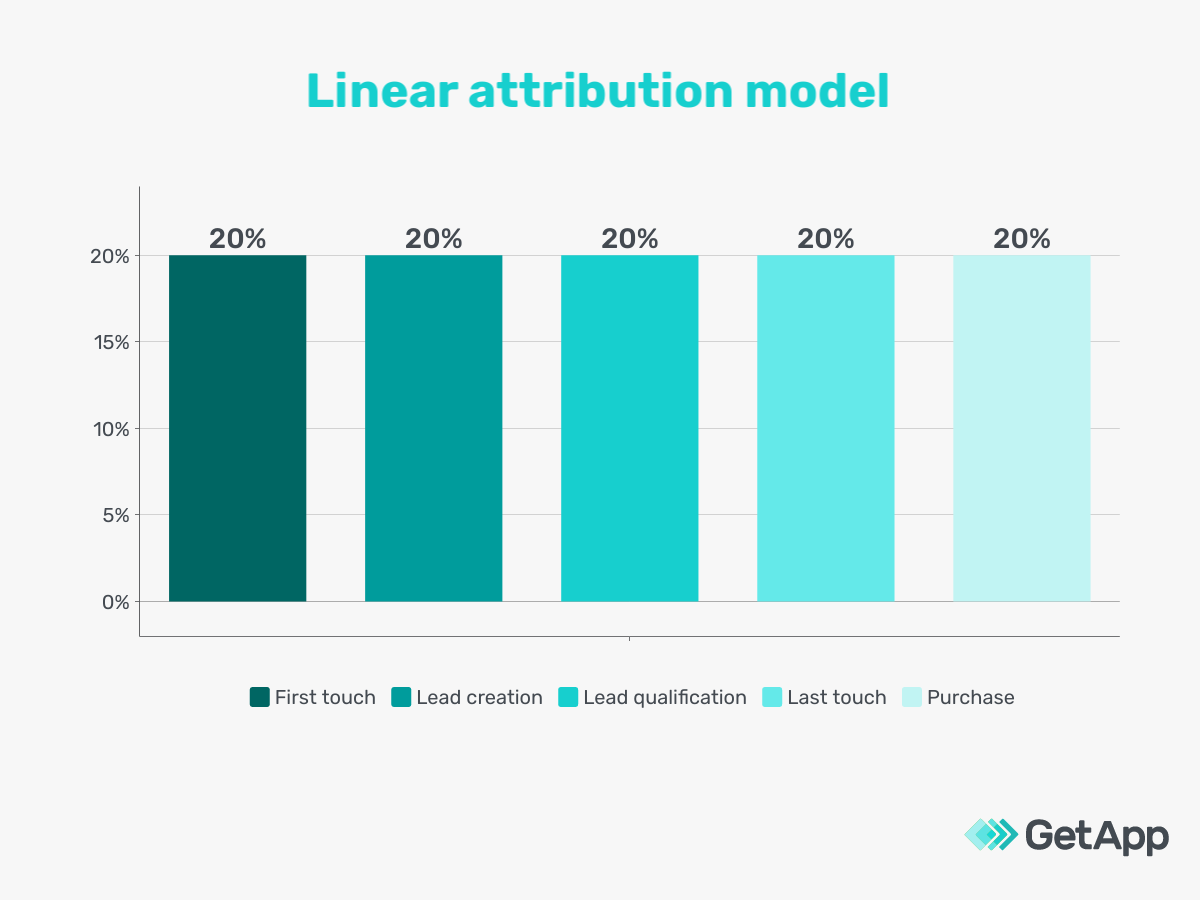
As our first multi-touch model, linear attribution means every touchpoint along the customer journey gets an even share of the credit for a conversion. This model represents a good starting point in striving for multi-touch attribution since it does take multiple touch points into account while not being overly complicated to track.
For example, if a customer visits a business’ website, signs up for the mailing list, then returns to the site through a social post to purchase, each of these three touch points would get 33% of the conversion credit.
Linear attribution is a relatively simple way to track results and gives a big picture view of which channels are working and which aren’t. In this way it’s a great starting point for businesses who are just beginning to look at multi-touch attribution or multi-channel marketing in general.
| Pros | Cons |
|---|---|
| Attempts to quantify the impact of individual marketing channels | Doesn’t provide information on the proportion of credit each touch point receives |
| Easier to track than other, more-complex multi-touch models | Doesn’t offer differentiation between the performance of individual channels |
Time decay attribution

Time decay attribution assigns credit to each touchpoint along the customer journey. However the amount of credit increases the closer the interaction is to a conversion event. This is especially good for businesses who want to track multiple KPIs in an effort to contextualize their tactics within the stages of awareness, lead creation, lead qualification, and finally conversion.
| Pros | Cons |
|---|---|
| Excellent for honing in on the tactic(s) that trigger conversions | Less effective for business with shorter marketing cycles |
| Helpful for contextualizing multiple KPIs | Top-of-funnel activities may not receive credit for building awareness |
Position-based attribution
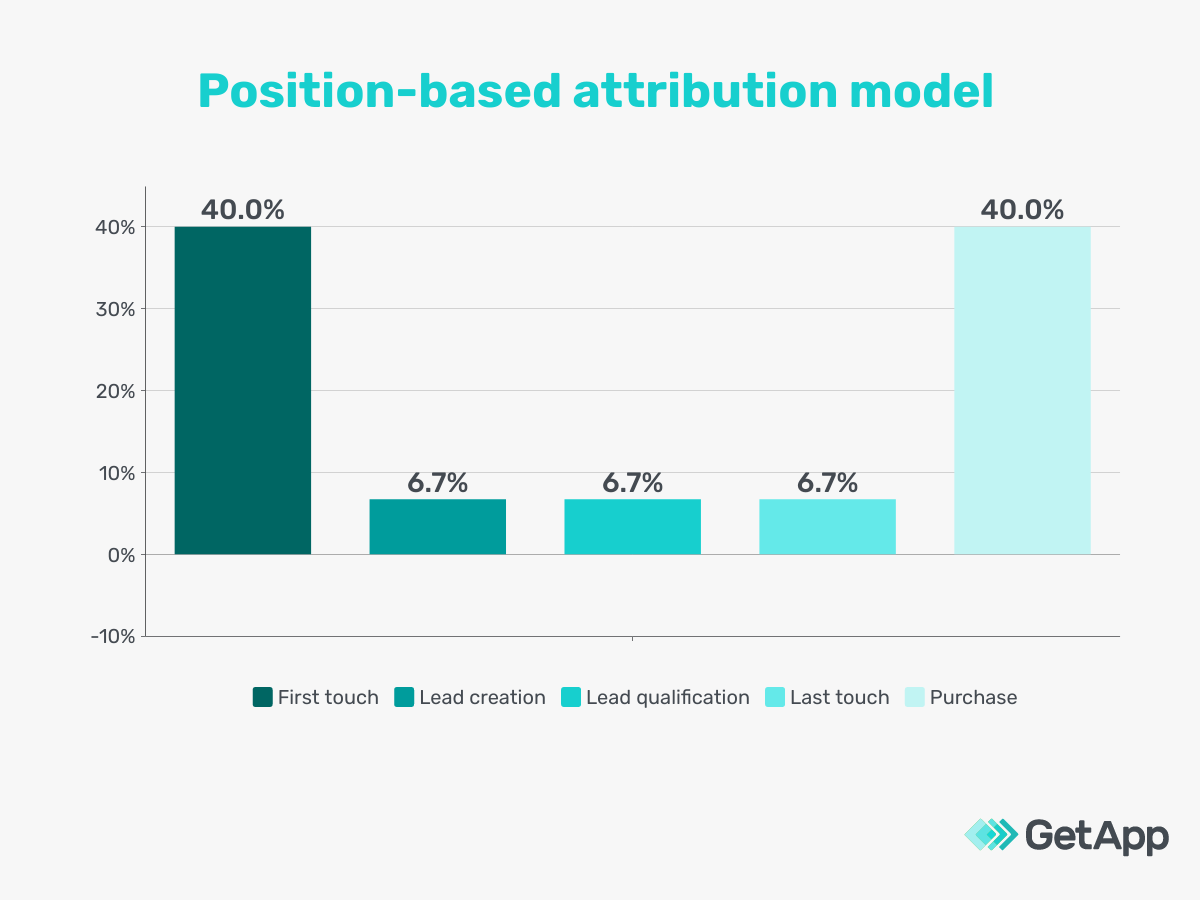
Position-based attribution seeks to combine the benefits of the linear, first-touch, and last-touch models. The most common position-based model (the U-shaped model) assigns 40% of the credit to the first customer interaction, 40% to the last customer interaction, then distributes the remaining 20% evenly amongst any other touchpoints in between.
This model is best suited for businesses who have a large amount of potential touchpoints and/or want to take a simplified approach to multi-touch attribution.
| Pros | Cons |
|---|---|
| Simple and easy to implement multi-touch strategy | Gives less credit to potentially crucial touchpoints in the middle of the customer journey |
| Works especially well for businesses with many potential touchpoints | Doesn’t take into account length of time between the first touch and the last touch |
Other position-based models: W-shaped and Z-shaped attribution
Like the U-shaped model, both the W- and Z-shaped models seek to attribute credit using position-based logic.
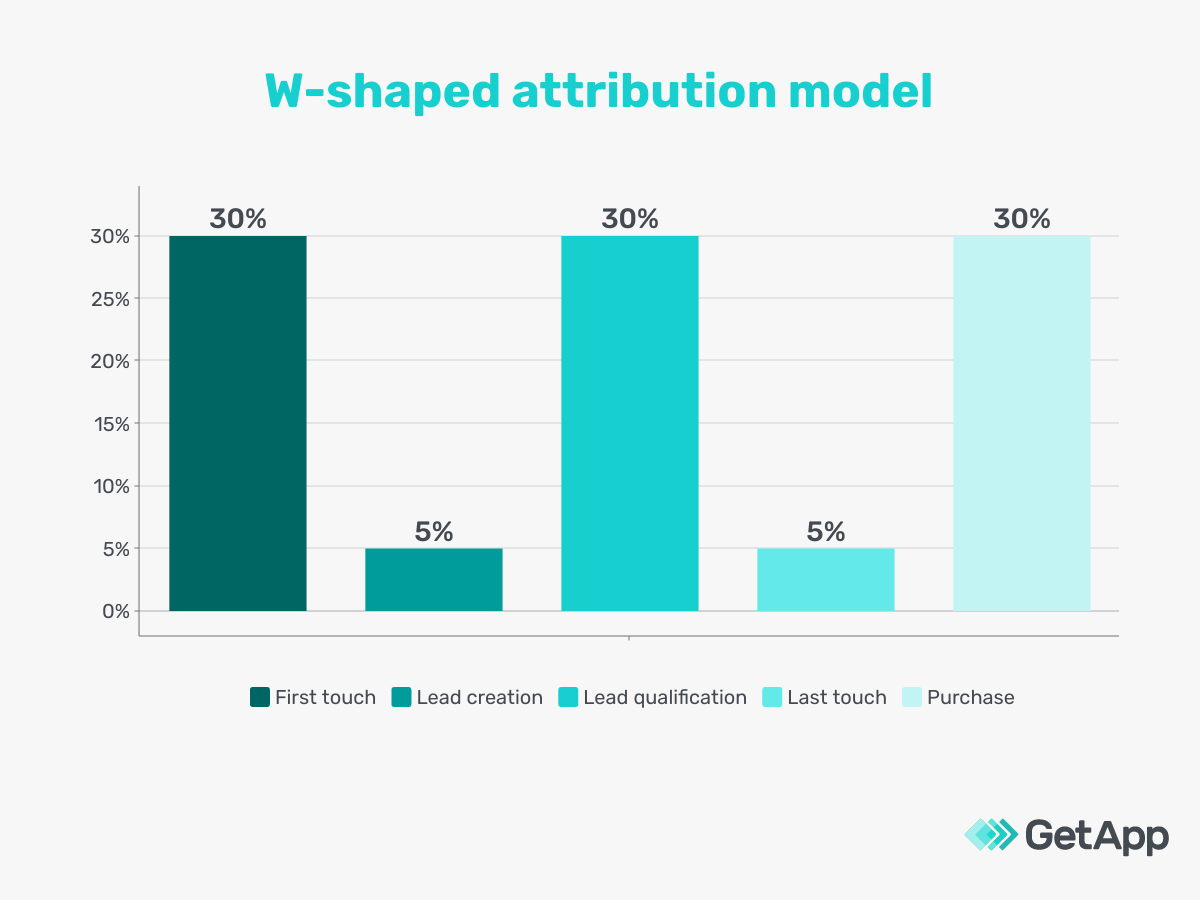
In the W-shaped model, credit is split between the first-touch interaction, the last-touch interaction, and the interaction where a lead becomes qualified. Each touchpoint is assigned 30% of the credit, and the remaining 10% is attributed to any touch points outside of these three milestones.
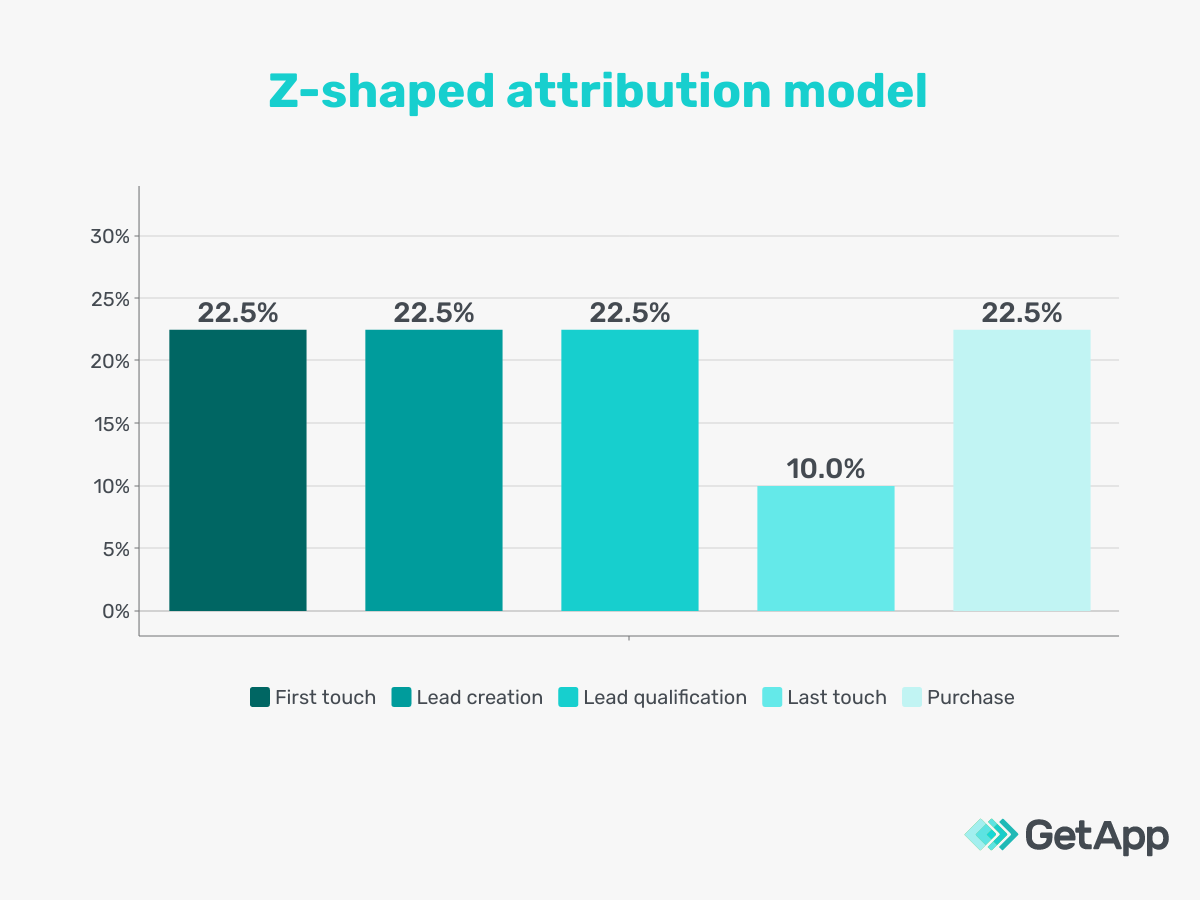
The Z-shaped model is extremely similar to the W-shaped model. The key difference is that it takes into account a greater number of milestones (generally lead creation in addition to lead qualification).
| Pros | Cons |
|---|---|
| Offers greater customization when it comes to choosing which touch points to measure | Doesn’t consider potentially important touch points that aren’t tied to a milestone event |
| Flexible in that you can opt for U-shaped, Z-shaped, or W-shaped | May overestimate the amount of impact a particular milestone has |
Custom attribution
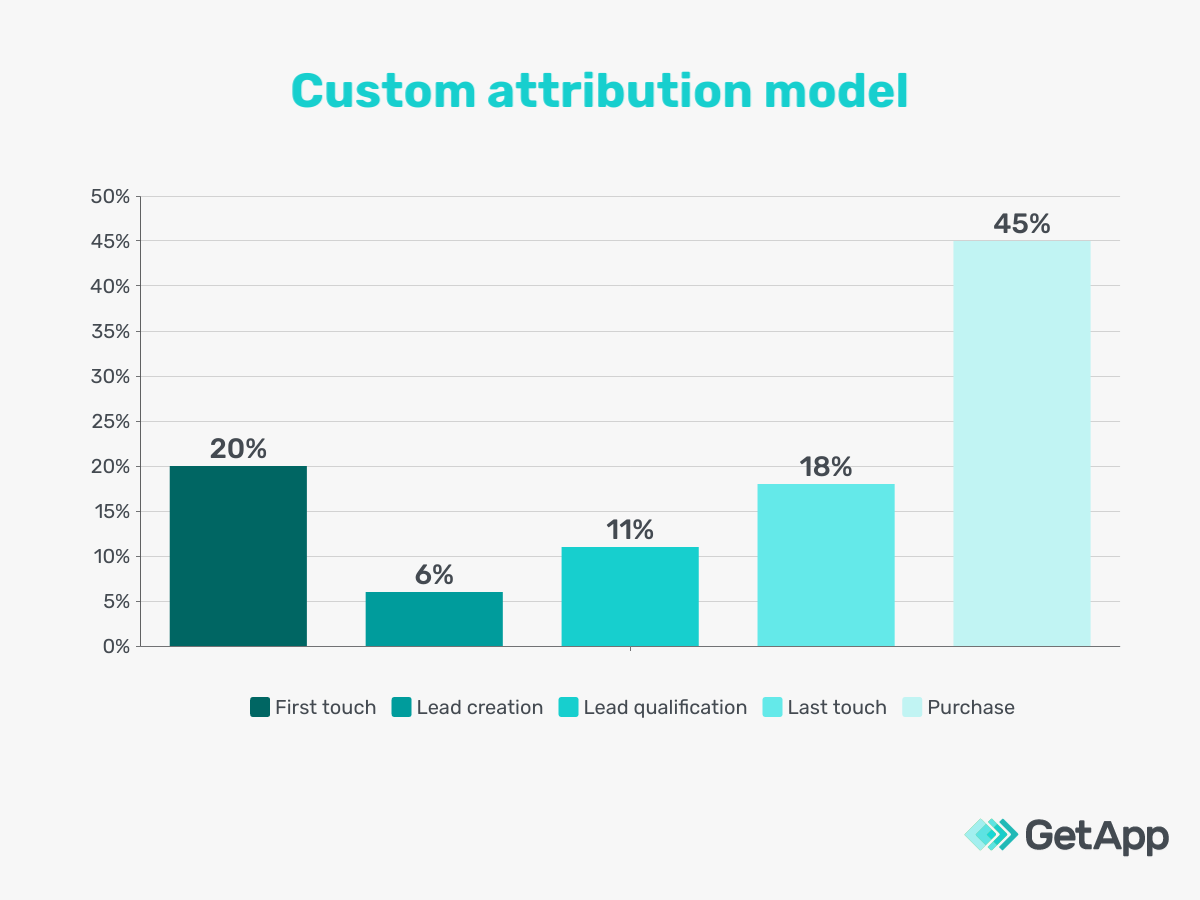
Last but not least, custom attribution allows for complete customization of the way touch points are weighted. This can be especially good for businesses who want to track multiple interactions with a specific focus on one (or multiple) touch points.
For example, if a business is well-established but decides to place a renewed interest on awareness-building tactics, they may want to shift more of the credit toward top-of-funnel activities. Conversely, a brand new business who is still building awareness but is also gearing up for a product launch may add more weight to conversions for the period surrounding launch.
A key benefit of adopting a completely custom approach means you can update the most important touch points on the fly, adjusting based on your business’ goals, milestones, or changes in your road map.
| Pros | Cons |
|---|---|
| Allows for the greatest flexibility in attributing credit to the most important touch points | Requires legwork and potentially trial and error to get it right |
| Can be good for a variety of businesses based on goals and needs | Requires the most robust data collection strategy to remain accurate |
Putting it all together: Resources needed to form your own marketing attribution structure
While there are many marketing models to consider, the good news is that there is definitely one for you based on your resources, available technology, and level of expertise.
When undergoing the process of choosing and implementing a new model, start by assessing your martech stack—especially your marketing analytics platform—to see what capabilities you already have. Also check your CRM or other customer data platform to look for key integrations with other tools that can help you better collect, store, and manage your data.
It’s likely you already have functionality available that you may not be taking advantage of. And if you don’t? Identify testing and attribution gaps [2] then approach your software vendor to ask if your needs will be addressed in the future. If they won’t be, now you have a short list of requirements for a potential next purchase! Marketing attribution software is even a category all its own, so be sure to start there and expand your scope based on your resources and needs.
Eager to learn more? Keep an eye on the GetApp blog for new digital marketing content, and start with these resources:
Sources