GetApp offers objective, independent research and verified user reviews. We may earn a referral fee when you visit a vendor through our links.
Our commitment
Independent research methodology
Our researchers use a mix of verified reviews, independent research, and objective methodologies to bring you selection and ranking information you can trust. While we may earn a referral fee when you visit a provider through our links or speak to an advisor, this has no influence on our research or methodology.
Verified user reviews
GetApp maintains a proprietary database of millions of in-depth, verified user reviews across thousands of products in hundreds of software categories. Our data scientists apply advanced modeling techniques to identify key insights about products based on those reviews. We may also share aggregated ratings and select excerpts from those reviews throughout our site.
Our human moderators verify that reviewers are real people and that reviews are authentic. They use leading tech to analyze text quality and to detect plagiarism and generative AI.
How GetApp ensures transparency
GetApp lists all providers across its website—not just those that pay us—so that users can make informed purchase decisions. GetApp is free for users. Software providers pay us for sponsored profiles to receive web traffic and sales opportunities. Sponsored profiles include a link-out icon that takes users to the provider’s website.
Boost Revenue by Aligning Sales With Marketing
A growing business can’t afford to have its sales and marketing efforts misaligned.


In an ideal world, sales and marketing teams work together to reach your target audience, drive conversions, and boost sales. But as your business grows, this alignment takes more work to achieve. Take it from the 16% of sales professionals in our 2023 Business Structure Survey* who don’t think their sales and marketing efforts are effectively aligned.
If you’re a B2B sales leader looking to keep your team on the same page as marketing, we’re here to help. We explain the differences between a marketing funnel vs sales funnel, followed by four tips, backed by insights from global research firm Gartner [1-3], to align your team’s efforts with marketing and maintain a strong sales pipeline.
What’s the difference between a marketing funnel vs sales funnel?
Over a quarter (27%) of sales professionals* use “marketing funnel” and “sales funnel” interchangeably to describe the sales process as a whole. They’re not wrong; while the terms can be used to describe separate processes, they’re actually two parts of the same customer acquisition funnel.
The first three stages—awareness, interest, and consideration—are marketing’s domain. They describe a lead’s experience with your brand before they’re passed off to a sales representative. For B2B businesses, this looks like a lot of research, reviews, and stakeholder meetings.
The last three stages involve your sales team: intent, evaluation, and purchase. These stages chart the customer journey from the time a lead is contacted by a sales rep to the time they buy your product or service. Sales activities include demos, contract proposals, and finally closing the sale.
Because these different stages work toward the same goal, their activities should be aligned. If they aren’t, the following issues can clog your funnel and slow your sales pipeline:
Lack of qualified leads: If the marketing team doesn’t properly vet leads, sales reps risk wasting time that could be spent on leads who are likely to make a purchase.
Customer distrust: If your website or marketing materials promise something your sales reps don’t deliver, your brand loses credibility, and leads will look elsewhere.
Data silos: When marketing and sales don’t share the same tech tools, this results in data silos where only one team has access to insights that could be helpful to the other.
The tips below provide actionable advice on how to avoid or counteract these issues and more.
How to align your marketing and sales teams
Tip #1: Agree on a buyer persona to get higher-quality leads
To get quality leads, sales and marketing need to agree on the type of customer they want to target—otherwise known as a buyer persona. A buyer persona is a living document that helps business leaders understand what their target audience wants and how they will engage.
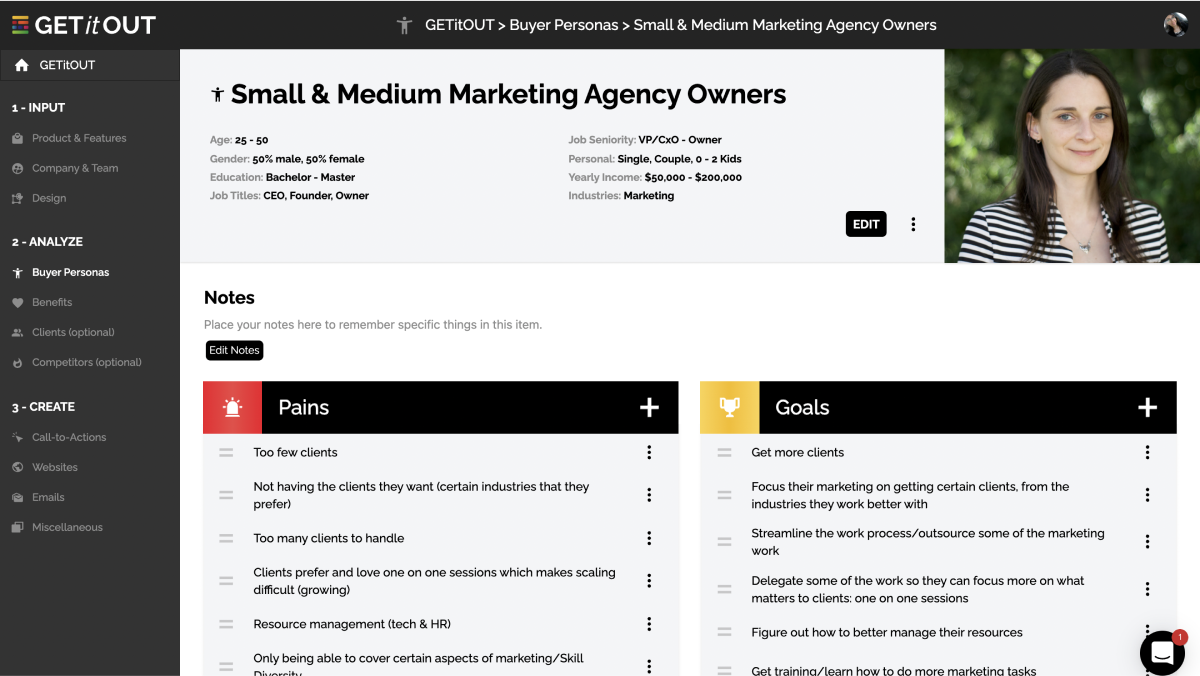
Buyer persona mapping in marketing automation platform GETitOUT
Buyer personas are created through a process called segmentation, which categorizes potential leads by traits such as demographics, goals, and motivation factors. Sellers and marketers can work together to create a buyer persona by using a Google doc or marketing automation tool such as the one shown above.
To start building your persona, ask questions such as:
What’s our buyer trying to achieve for their company?
What are their values?
What are their pain points?
What impact will our product or service have on their business or professional goals?
What events or triggers are prompting them to buy now versus later?
Once both teams are satisfied with the buyer persona, the ball is in marketing’s court to target that type of buyer and direct them to sales. More on that in our next tip.
Tip #2: Take a marketing-first approach to keep messaging consistent
“Marketing first” is a term used to describe strategies that focus on marketing efforts before sales. This ensures your sales activities are informed by the story your marketing team has created about your product or service, as well as the content they produce for promotion.
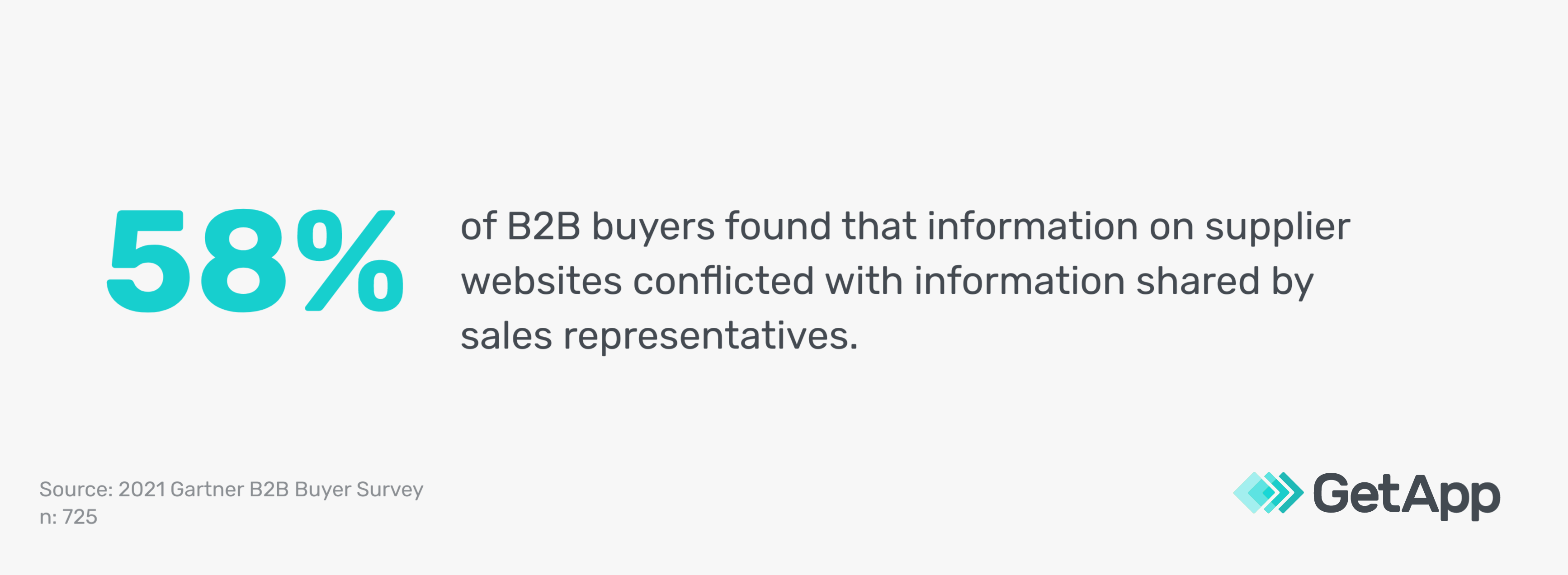
Not taking a marketing-first approach can result in a disjointed experience for customers, weakening their trust in your brand. This is an avoidable yet common misstep: 58% of B2B buyers [1] report that the information they’ve found on supplier websites conflicts with the information shared by sales reps.
The easiest way to ensure your sellers are telling the same story as your marketers is to get them in the same room every month or quarter. Cross-team meetings give the marketing team the opportunity to introduce new content and detail the buyer persona for a new marketing campaign. They can also discuss preferred outreach methods for sales reps.
Tip #3: Use the same tech tools to prevent data silos
As we mentioned earlier, marketing and sales teams that don’t share the same tech tools risk siloed data. This too can result in inconsistent messaging and a disjointed customer experience.
The following tools can help keep sales and marketing in alignment, as long as both teams have access. If you already own one or more of these types of software, meet with your marketing team lead to review access permissions and plan training sessions. If any are new to you, consider adding them to your tech stack.
Customer relationship management (CRM) software
Your sales team may be familiar with your organization’s CRM as a lead management tool, but if your marketing team isn’t, they need to be. Marketers can use a variety of CRM metrics, such as email open rates, new subscribers, and purchases, to track campaign performance. The image below shows an example of a CRM dashboard with some of these metrics.
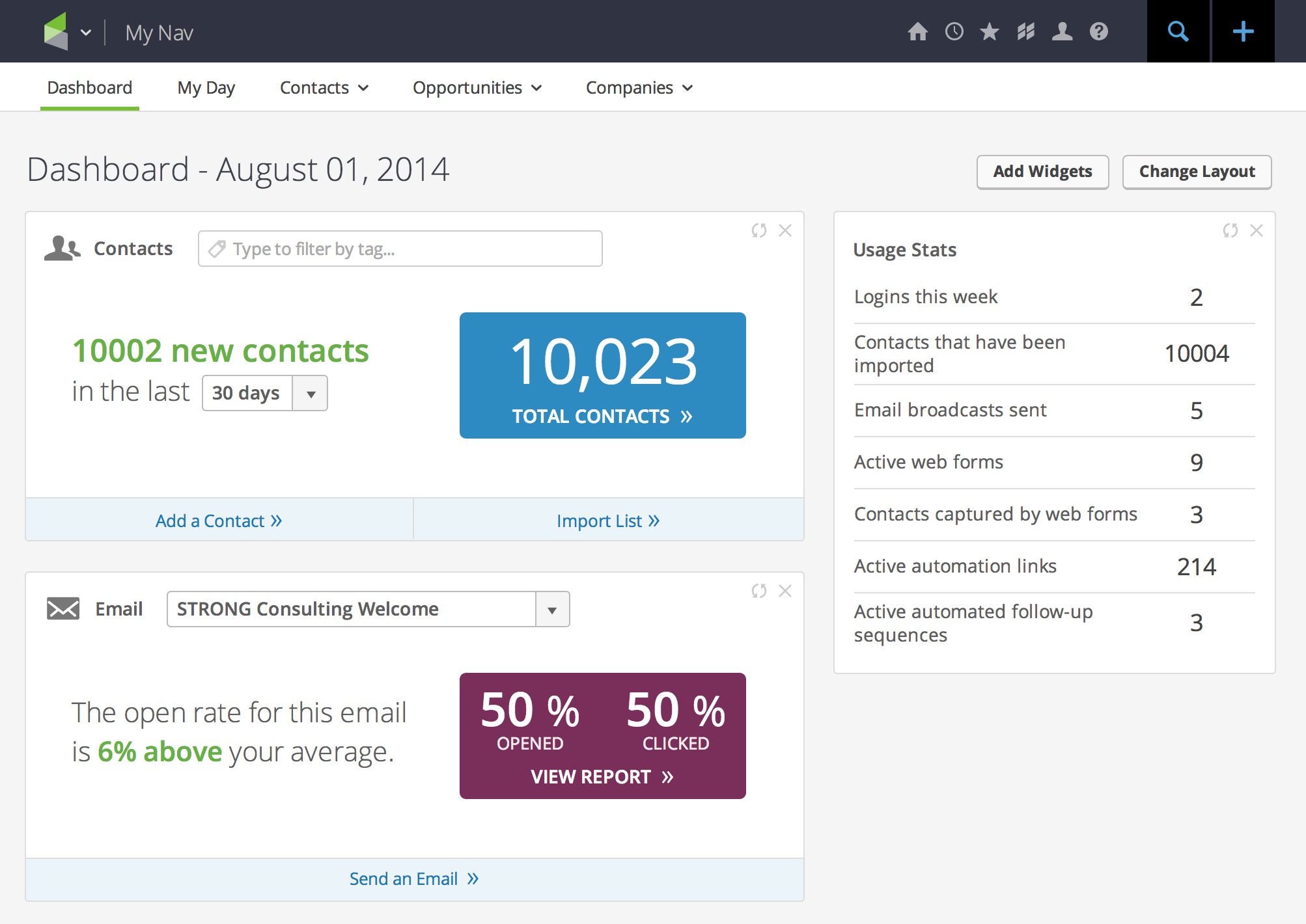
Dashboard feature in CRM platform Keap
Lead generation software
Lead generation tools benefit sales teams by automating tasks such as data entry and research. But marketing teams can leverage its data to track lead sources to identify which marketing campaigns are successful and which aren’t. Learn more about how automated lead generation tools support cross-team alignment here.
Marketing automation software
Marketing automation might be old news to marketers, but sellers can leverage data from these tools to analyze customer behavior, identify qualified leads, and establish better customer communication. The software can also notify sales teams about the best time and communication channel to reach out to particular leads.
Tip #4: Involve marketing in sales training to improve performance
Gartner [2] notes that because most sales teams comprise reps who are early in their careers, they require more coaching and development to perform well. Marketing can help improve their success by adjusting what information is provided during sales training.
Here are a few ways marketing can contribute to future sales success:
Help sales leaders like you build an engagement playbook to standardize prospecting methods and other forms of sales outreach.
Develop resources such as customer FAQs and buyer use cases to improve sellers’ in-the-moment thinking with buyers.
Share the same content on a weekly basis or more frequently over time to reinforce learning and memory.
Create a feedback loop using a CRM or email inbox so reps can submit questions and concerns between regular meetings.
When marketing has a say in what information gets relayed to new sales reps, everyone wins. Research [3] shows that sellers who connect buyers to the right information are more effective at closing high-quality deals than sellers who use personal experience, knowledge, or expertise to address customers’ needs.
Encourage collaboration to strengthen your pipeline
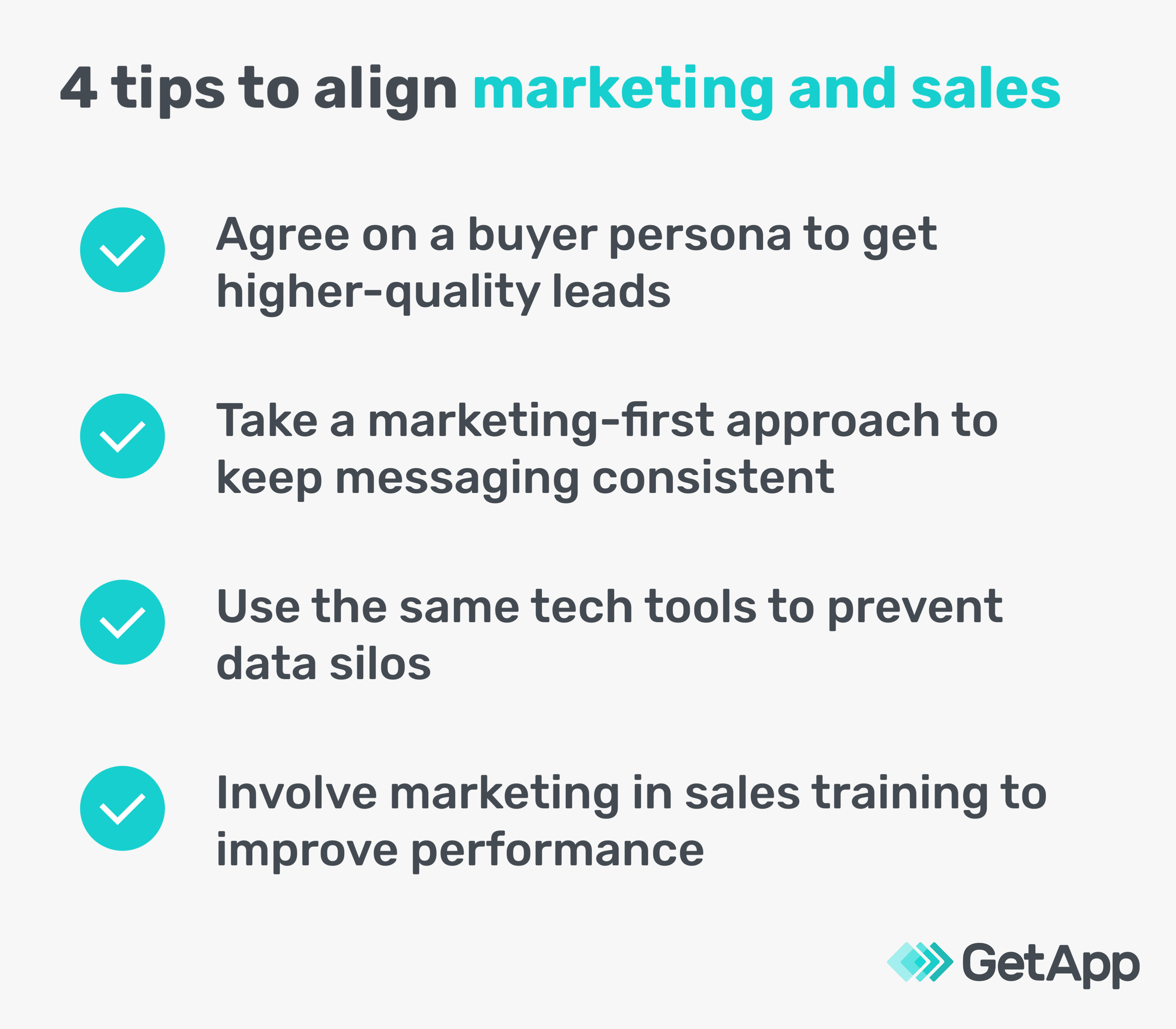
Continuous feedback and collaboration are crucial for maintaining alignment between sellers and marketers. This is reflected in each of our four tips:
While our last tip highlights the importance of marketing in sales training, marketers can learn a lot from sellers as well. We recommend implementing feedback loops for marketers to gather insights from sellers to continuously improve their marketing strategy.
Looking for more resources to support your sales team? Check out these related articles
Note: The screenshots of applications included in this article are examples to show a feature in context and are not intended as endorsements or recommendations.
Survey methodology
*GetApp’s 2023 Business Structure Survey was conducted in April 2023 among 244 U.S. respondents to learn more about sales strategy and framework, and challenges faced by sales leaders. Respondents were screened for a business development or sales role in a business with 1,000 or fewer employees.
Sources
Lauren Spiller