GetApp offers objective, independent research and verified user reviews. We may earn a referral fee when you visit a vendor through our links.
Our commitment
Independent research methodology
Our researchers use a mix of verified reviews, independent research, and objective methodologies to bring you selection and ranking information you can trust. While we may earn a referral fee when you visit a provider through our links or speak to an advisor, this has no influence on our research or methodology.
Verified user reviews
GetApp maintains a proprietary database of millions of in-depth, verified user reviews across thousands of products in hundreds of software categories. Our data scientists apply advanced modeling techniques to identify key insights about products based on those reviews. We may also share aggregated ratings and select excerpts from those reviews throughout our site.
Our human moderators verify that reviewers are real people and that reviews are authentic. They use leading tech to analyze text quality and to detect plagiarism and generative AI.
How GetApp ensures transparency
GetApp lists all providers across its website—not just those that pay us—so that users can make informed purchase decisions. GetApp is free for users. Software providers pay us for sponsored profiles to receive web traffic and sales opportunities. Sponsored profiles include a link-out icon that takes users to the provider’s website.
Level Up Your Sales Enablement Strategy With the Right Tech
The right technology is critical to a sales enablement program that gets results.


By 2026, 65% of B2B sales organizations will upgrade their tech stacks in ways that enhance efficiency, performance, and customer insights—yet less than a quarter (22%) of their sales enablement budgets are currently allocated to technology. [1]
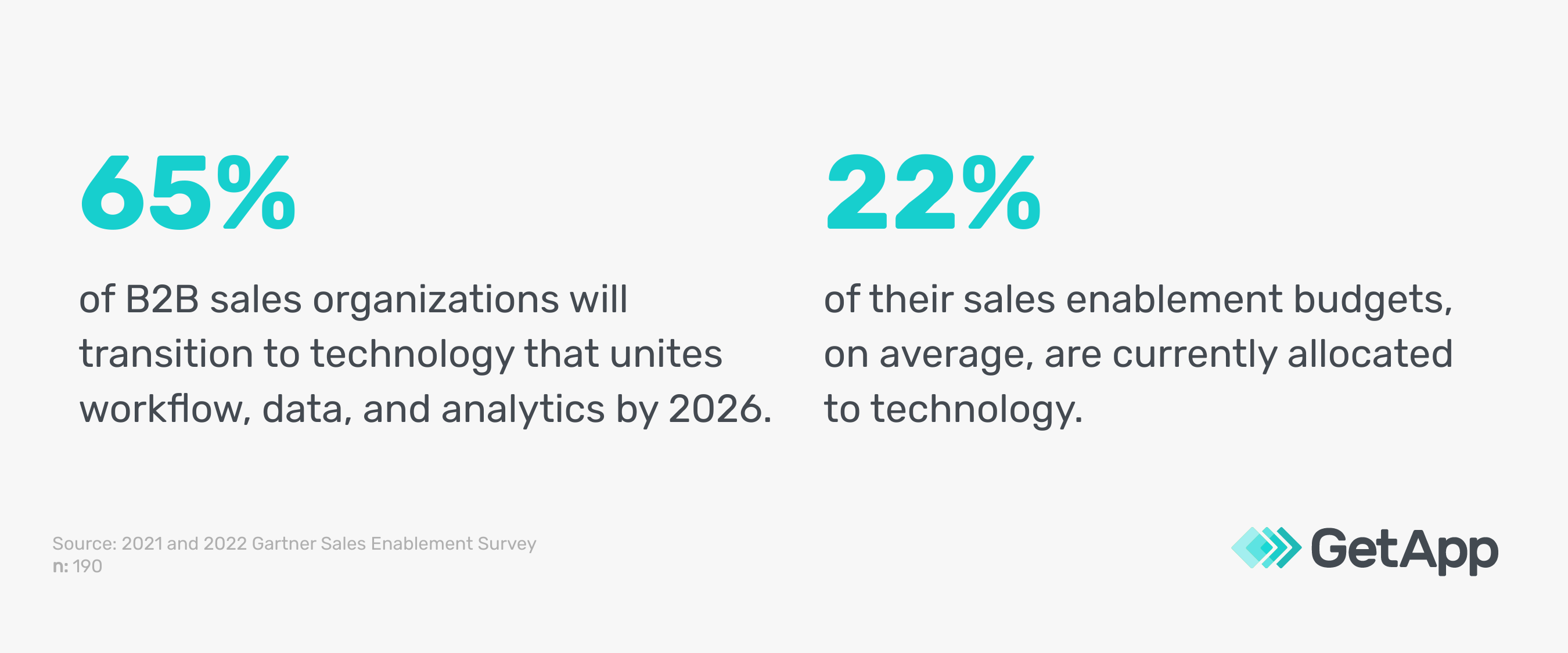
If you’re a sales enablement leader, you’ll likely play an important role in the adoption of technology tools. But to garner the support of decision-makers, you’ll have to be strategic. This Gartner research-based guide explains how to align specific tech tools with sales enablement tasks so you can build a case for investment as well as a more effective sales enablement strategy.
Tip #1: For onboarding and training, use conversational AI and digital adoption platforms
The sales enablement team is responsible for equipping new sales team hires with the skills they need to perform their jobs effectively. They also provide ongoing sales coaching and training to upskill reps with the necessary knowledge, skills, and behavior to improve sales performance.
Technology can help your team by offering innovative methods for designing and delivering sales training modules as well as measuring learning effectiveness. Two emerging technologies in particular are well suited for these tasks: conversational AI and digital adoption platforms.
Conversational AI
A conversational AI platform analyzes conversations between buyers and sales reps, using AI to deliver insights that improve interaction quality. This provides an important and previously unavailable feedback loop to train a new sales rep on the best way to respond to common questions and issues.
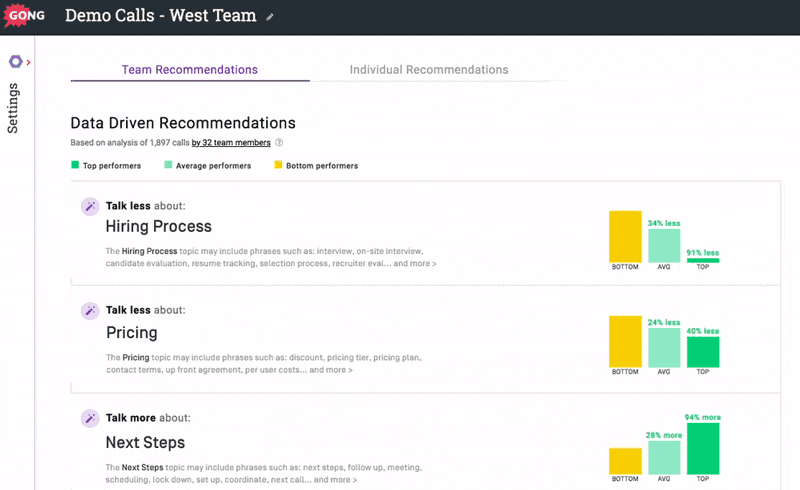
Conversational AI tool Gong.io gives recommendations to help sales reps improve tactics
In conversational AI platforms like the one shown above, call data can be integrated with sales coaching modules to ensure onboarding programs are harnessing customer insights. Sales engagement insights can also pair with survey software to get a quantitative and qualitative picture of sales rep performance, which can then be used to support further training and development.
Digital adoption
A digital adoption platform can replace traditional software training and speed up sales onboarding by guiding sales reps on how to use various sales applications within their daily workflows. These tools can increase the accuracy and compliance of tasks performed as well as engagement and adoption of new technology.
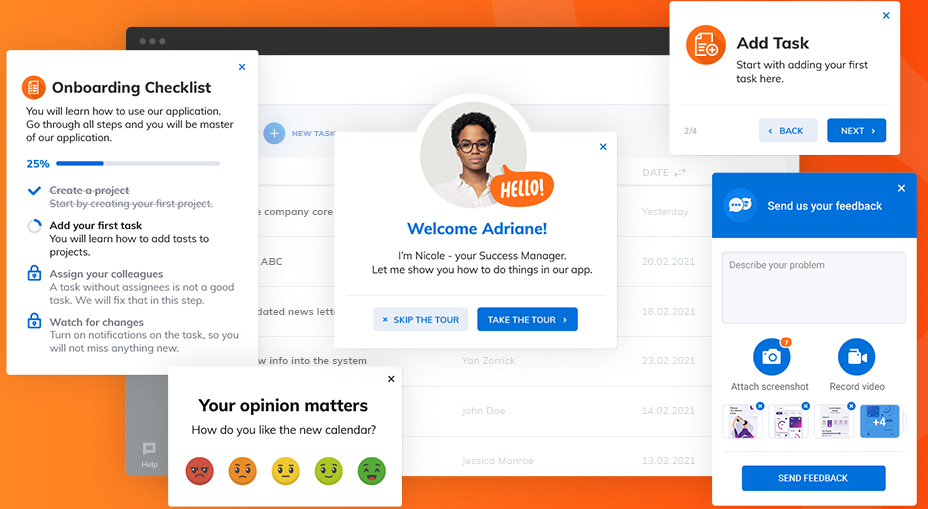
Digital adoption tool Product Fruits features a no-code user onboarding platform for quicker and easier onboarding
Digital adoption platforms, like the one shown above, integrate with all types of software tools to offer in-application guided learning to help sales reps learn how to navigate tech tools and perform their tasks quickly and effectively.
Tip #2: For content and communications, use LMS platforms and generative AI
To keep sales professionals on top of their game, sales enablement leaders and their teams need to create and distribute high-quality content in a timely and effective manner. Learning management system (LMS) platforms and generative AI are two technologies that can help your sales enablement team build content and distribute it across the organization.
LMS platforms
LMS software allows your sales enablement team to combine organizational expertise, knowledge, and experience to develop cohesive and insightful sales content. These platforms ensure the most up-to-date material is available to reps, is clearly coded to critical workflows, and is tagged to product lines, use cases, or competitive scenarios where sales training content works best.
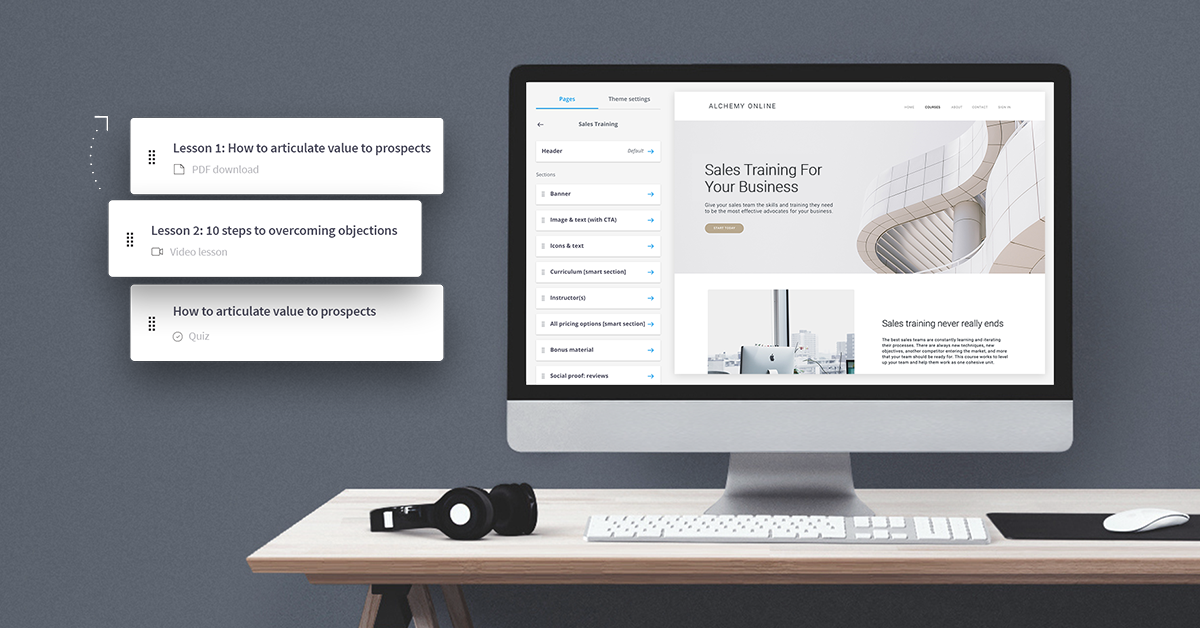
LMS platform Thinkific’s drag-and-drop course builder helps create engaging training content
Generative AI
Generative AI platforms use deep learning to generate brand-new, completely original content. For sales enablement teams, this means using AI to create content for training programs, such as instructional videos with content that aligns with the brand voice (e.g., tone, style).

Generative AI tool Writer ensures content aligns with brand guidelines
Tip #3: For sales productivity programs, use demo software and sales enablement tools
The key to increasing sales productivity is to automate and simplify sales activity through tech tools. Research shows that organizations that offer a high-quality user experience for their sales reps are more likely to exceed sales goals. [1] To directly impact your organization’s sales productivity, you’ll want to add demo and sales enablement tools to your tech stack.
Demo software
Clients often want to see a product or service in action, but it takes time to set a demo with the right subject matter expert who aligns the value message, ensures the correct technical fit, and builds client confidence. Additionally, typical demonstrations lack the personalization a potential customer needs to differentiate one solution over another.
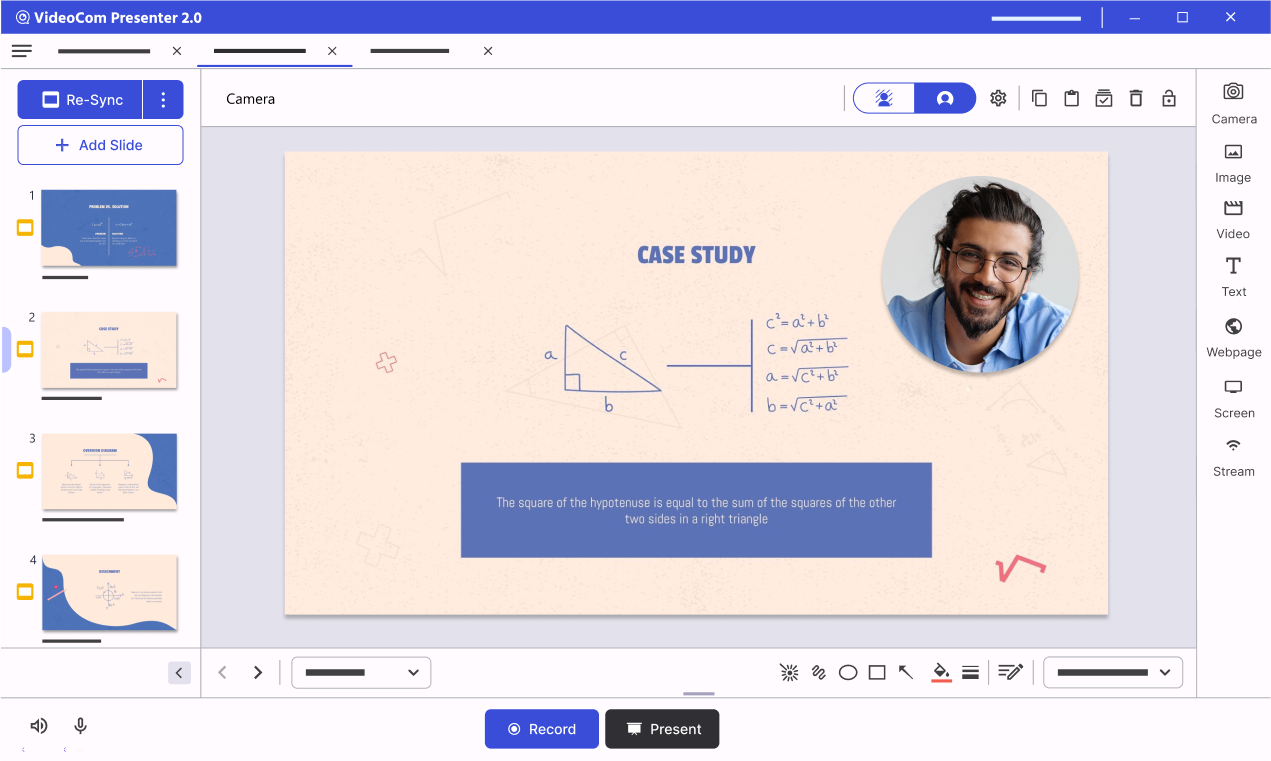
Demo tool VideoCom allows users to create personalized presentations and recordings
Demo tools allow your sales team to deliver personalized and shareable product or service demonstrations to customers whenever they want, reducing sales cycle length and improving productivity. They also provide valuable insight into buyer engagement with demos, allowing your team to identify ways to improve demo quality and measure enablement effectiveness.
Sales enablement tools
Sales enablement software covers content and communication tools that help your sales team show off product information to prospective customers, engage potential leads, and overall boost sales productivity. These tools provide sales-enablement best practices that inform your team of what particular message tends to work best at each particular point in the sales cycle.
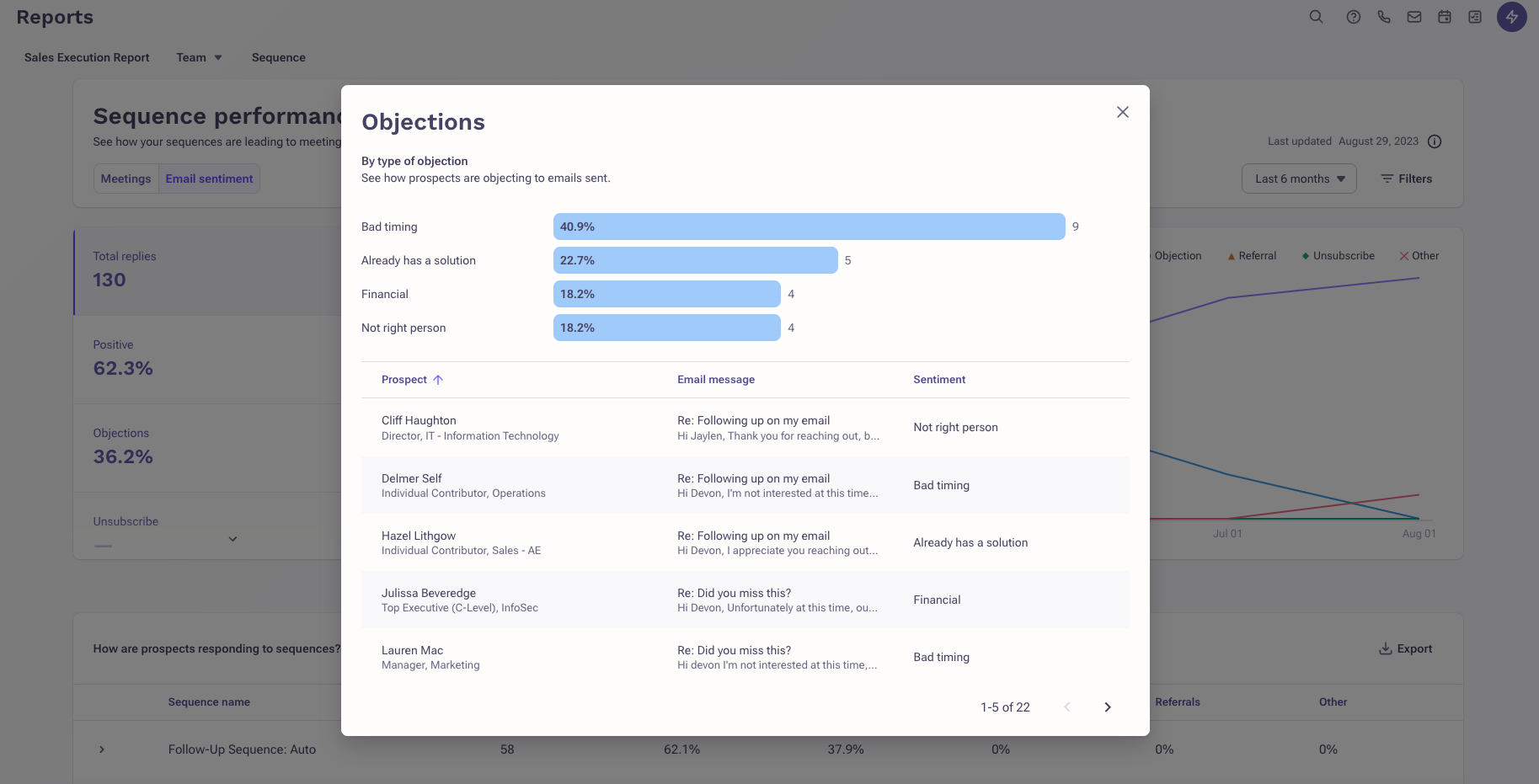
Sentiment analysis capability in sales enablement tool Outreach
In the above example of a sales enablement platform, sales professionals are given an overview of customer sentiment, specifically in the form of objections in email messages. Such capabilities can help train a sales representative on ways to respond that increase the likelihood of conversion.
Tip #4: For enablement analytics and insights, use data management and business intelligence tools
To understand the impact of your sales enablement program across your organization as well as customer buying groups, you and your team must leverage analytics and insights. Emerging technologies such as data management and business intelligence can give you the data and insights you need to connect enablement efforts to business results.
Data management
Data management platforms, like the one shown below, can collect, organize, and analyze sales data from various channels, such as software apps, customer databases, and social media, and present it in an easy-to-use format.
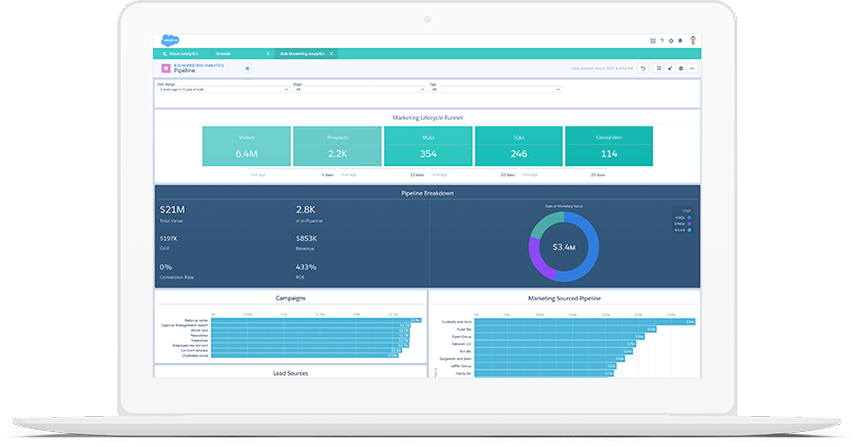
Data management solution Salesforce Marketing Cloud helps teams create and save custom views of their data to understand how prospects are engaging
Gartner expects data management systems to be essential for AI work in the future, especially for sales enablement leaders who want to elevate their insight across their entire tech stack. [1] One potential use case could be leveraging conversational AI to create on-demand sales role-plays based on transcripts of customer interactions.
Business intelligence
Business intelligence (BI) tools, like the one shown below, allow your sales enablement team to create dashboards where learning data insights can be aggregated. Pulling from multiple sources, your team can get real-time data throughout the training process.
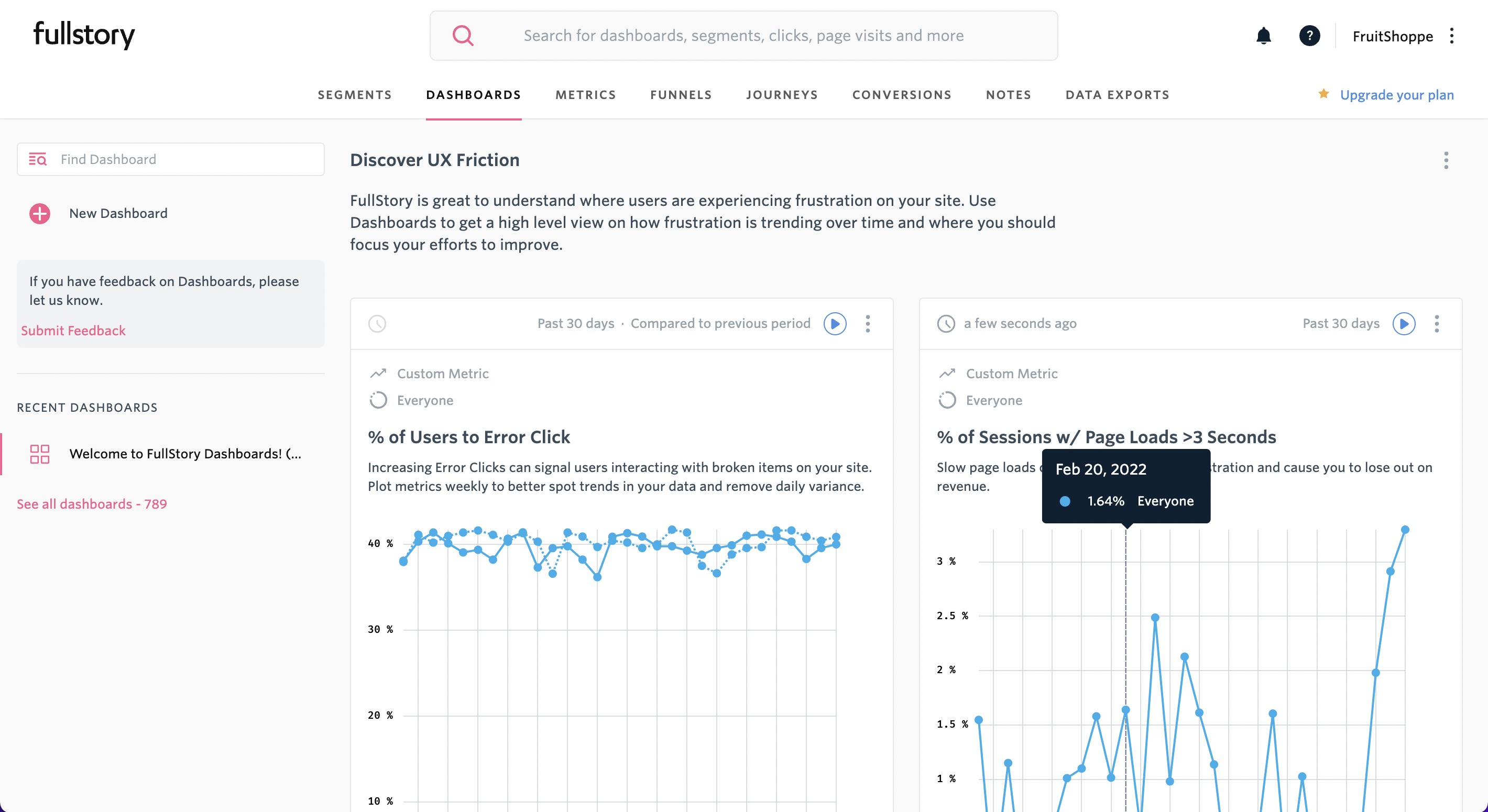
BI tool FullStory helps users visualize data through custom dashboards
BI tools do this by delivering insights in real time and preventing the time-intensive activity of producing reports, spreadsheets, or summaries to make decisions. This allows enablement to make changes to training in-flight, respond to learners within a course when they have questions, and produce robust reports to showcase training impact to senior leaders.
Choose the most effective sales enablement tools for your team
The recommendations in this article show how sales enablement tools can improve sales performance across your organization. Here are some resources to help you once you get the green light to invest in new software:
How To Use GetApp's Comparison Tool To Find Your Best Software Fit
Software Selection Criteria Template To Choose the Right Software
Get the Most Out of Software Demonstrations With This 5-Point Checklist
Sources
Note: The screenshots of applications included in this article are examples to show a feature in context and are not intended as endorsements or recommendations.
Lauren Spiller