GetApp offers objective, independent research and verified user reviews. We may earn a referral fee when you visit a vendor through our links.
Our commitment
Independent research methodology
Our researchers use a mix of verified reviews, independent research, and objective methodologies to bring you selection and ranking information you can trust. While we may earn a referral fee when you visit a provider through our links or speak to an advisor, this has no influence on our research or methodology.
Verified user reviews
GetApp maintains a proprietary database of millions of in-depth, verified user reviews across thousands of products in hundreds of software categories. Our data scientists apply advanced modeling techniques to identify key insights about products based on those reviews. We may also share aggregated ratings and select excerpts from those reviews throughout our site.
Our human moderators verify that reviewers are real people and that reviews are authentic. They use leading tech to analyze text quality and to detect plagiarism and generative AI.
How GetApp ensures transparency
GetApp lists all providers across its website—not just those that pay us—so that users can make informed purchase decisions. GetApp is free for users. Software providers pay us for sponsored profiles to receive web traffic and sales opportunities. Sponsored profiles include a link-out icon that takes users to the provider’s website.
3 Professionals Share Their Tips for Remote Employee Engagement
Employee engagement is a whole different ball game when you’re working with a remote team. Keep reading to pick up some tips from three professionals with experience engaging a remote workforce.


Last year, Gartner predicted that the amount of employees working remotely full-time after COVID-19 will nearly double pre-pandemic levels.
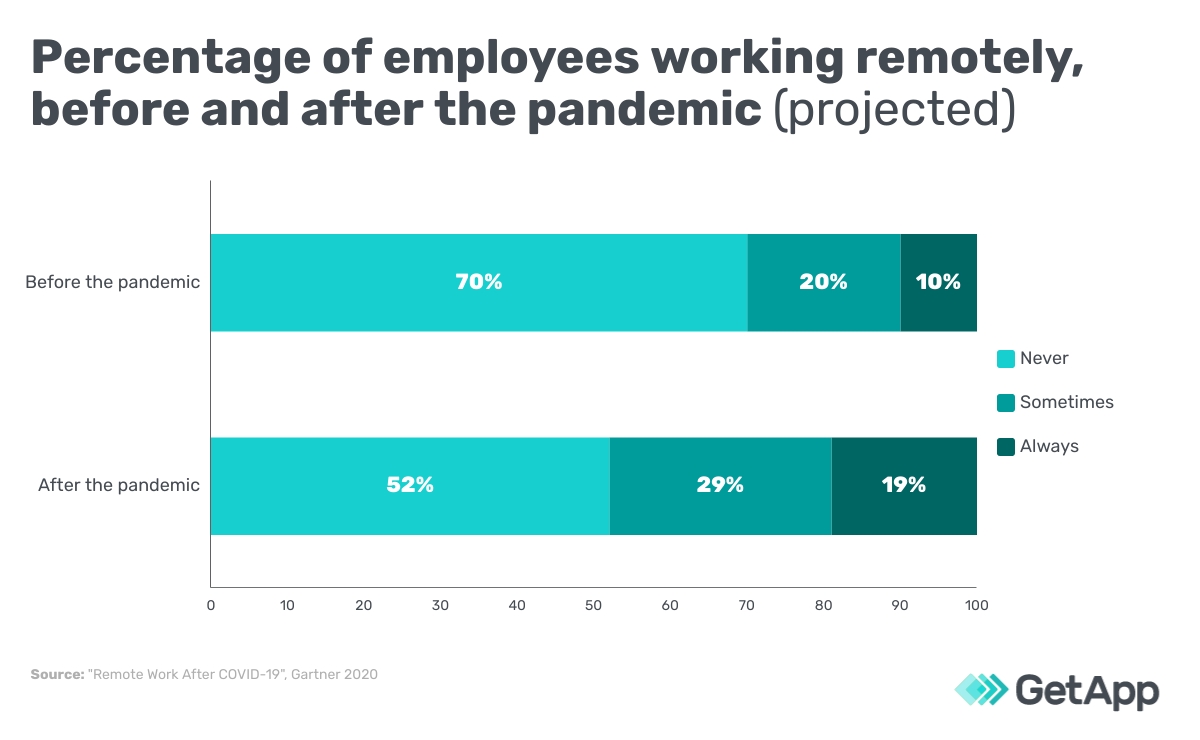
This shouldn’t be too surprising, as employees have made their preferences towards remote work clear. Earlier this year, GetApp ran a survey that found that 86% of employees currently working from home want to continue to work remotely at least part of the time. Learn more about our survey methodology at the end of this article.
But as more businesses embrace a hybrid or fully remote work environment, business leaders and HR professionals are asking the same question: How can we keep our remote workers engaged and connected?
As a remote-work employee myself, there are times when I feel isolated and disconnected from my team. In these moments, what helps most is reaching out to talk to someone who can relate—usually, my coworkers or peers in similar working situations. So, that’s exactly what I did.
To answer the above question, we interviewed three professionals who oversee a hybrid or fully remote workforce about the strategies they’re using to improve employee engagement. And their insights say it all: Businesses who embrace remote work culture and find meaningful ways to engage employees will see performance improvement and more. We’ve put together three tips for keeping your remote workforce engaged.
3 tips for remote employee engagement
Tip #1: Allow employees to choose their own schedule (within reason)

Dimitris Tsapis, head of HR at Coara, noticed that employee productivity was dropping at his organization after they made the switch to remote work. Tsapis and the leadership team at Coara suspected this was in part due to the fact that their workers were compensated based on the hours they worked.
In order to improve productivity and engagement, they decided to pivot away from hourly-based employment. And while they still calculate the time they believe a project will need to be completed, their team members now manage their own schedule and are paid according to their accomplished results—not the hours they put in. Tsapis says:
“So far we have seen great results and gotten positive feedback from the teams that this schedule was implemented into.”
One of the most notable benefits of remote work is the flexibility it offers. Expecting your team to be online from 8 a.m. to 5 p.m. five days a week negates this benefit and puts you at risk of presenteeism.
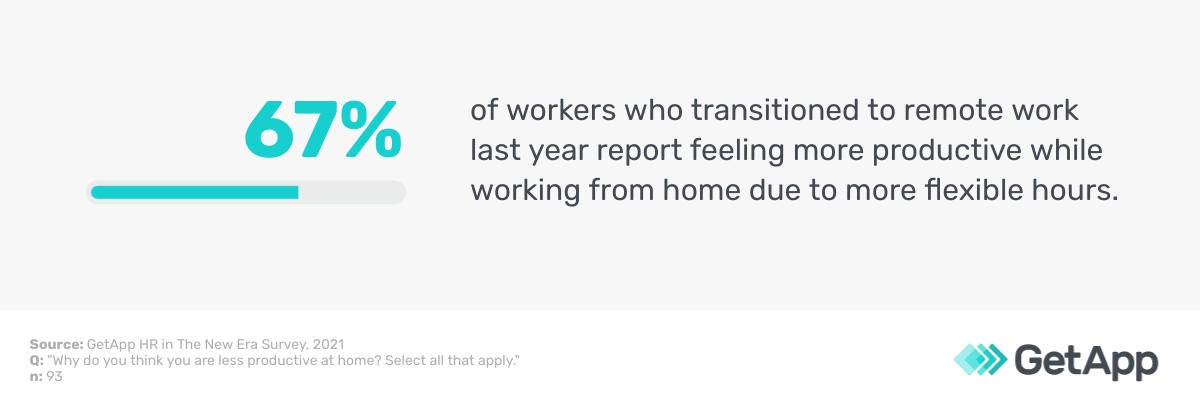
Remote work is at its most effective when your employees are empowered to be productive in the way that makes the most sense for them. Instead of worrying about how they’re spending their time, focus on the results your employees are producing. Your employees will appreciate the trust that’s been extended to them and produce better work because of it. That was certainly the case for Tsapis:
“Some team members have said that this approach lets them do better work, as previously their work-life balance was blurry due to the pivot of working remotely while dealing with the pandemic lockdowns.”
Tip #2: Be deliberate when it comes to your company culture

Jeffrey Zhou, CEO of Fig Loans, made the point that while project management, meetings and actual work can all be done remotely quite easily, creating an engaging corporate culture takes deliberate effort.
Zhou says:
“You need to create a space to share jokes, for employees to DM each other (yes, complaining and venting is vital for bonding!), and not just limit communication to business chat.”
In a traditional office, coworkers can bond in the breakroom and be reminded of company values through displays on the walls. When you’re remote, these opportunities don’t exist as naturally.
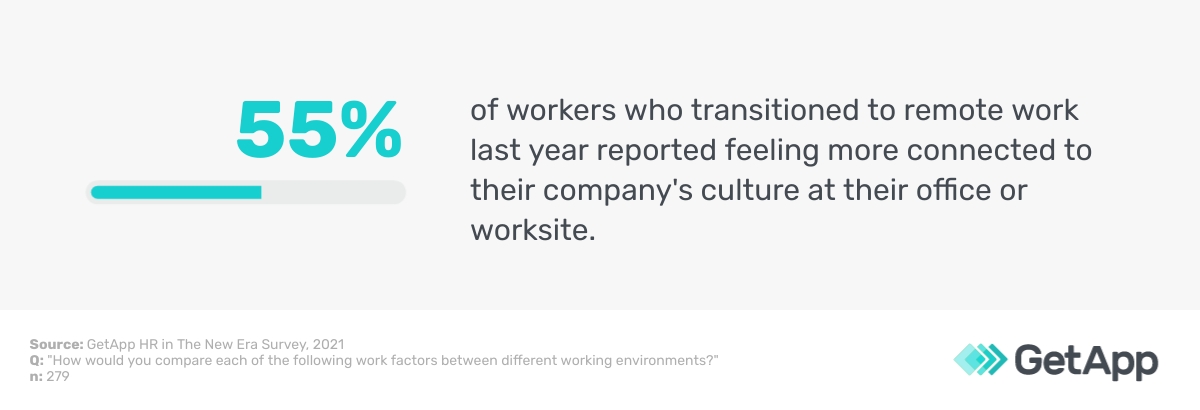
Zhou suggests encouraging employees to connect with one another through online platforms like Slack or Facebook.
“It's like having an online breakroom, only instead of grabbing a weak coffee you share memes.”
He says that enabling his team to engage with one another on a personal level in this way has led to higher engagement overall.
Creating space for these interactions within your communication platform is a relatively easy way to boost engagement and retain your company culture in a remote environment.
Here are some other ways you can keep company culture alive while working remotely:
Schedule virtual team building activities like happy hours or coffee breaks
Invest in an employee recognition platform
Send gifts or cards for your team members’ work anniversaries or birthdays
Offer perks like themed snack boxes or stipends for lunch
Tip #3: Invest in a digital workspace

A digital workspace is a framework made up of a set of integrated digital tools. Digital workspaces are a necessary substitute for a traditional office space, as they allow employees to communicate and collaborate in real time on any device, from any location.
The tools and technology you choose to build your digital workspace depend on the size and industry of your business, but there are certain software tools that are necessary across all kinds of organizations. For instance, collaboration software is a must-have tool for most remote teams because of its robust communication features.
Nathan Liao, founder of CMA Exam Academy, replaced his remote team’s email communications with Slack. He says that the app’s instant messaging feature improved the speed of his organization’s internal communication and helped lower email fatigue and overload:
“It has dramatically lowered the amount of emails my staff had to deal with on a daily basis.”
Liao’s remote team also uses a project management tool called Trello to stay on top of their tasks. He appreciates the software’s ability to organize goals for each day, week, month, and quarter. Liao says:
“I always know what's in the pipeline and who is responsible for each step of the process. This keeps us motivated and accountable."
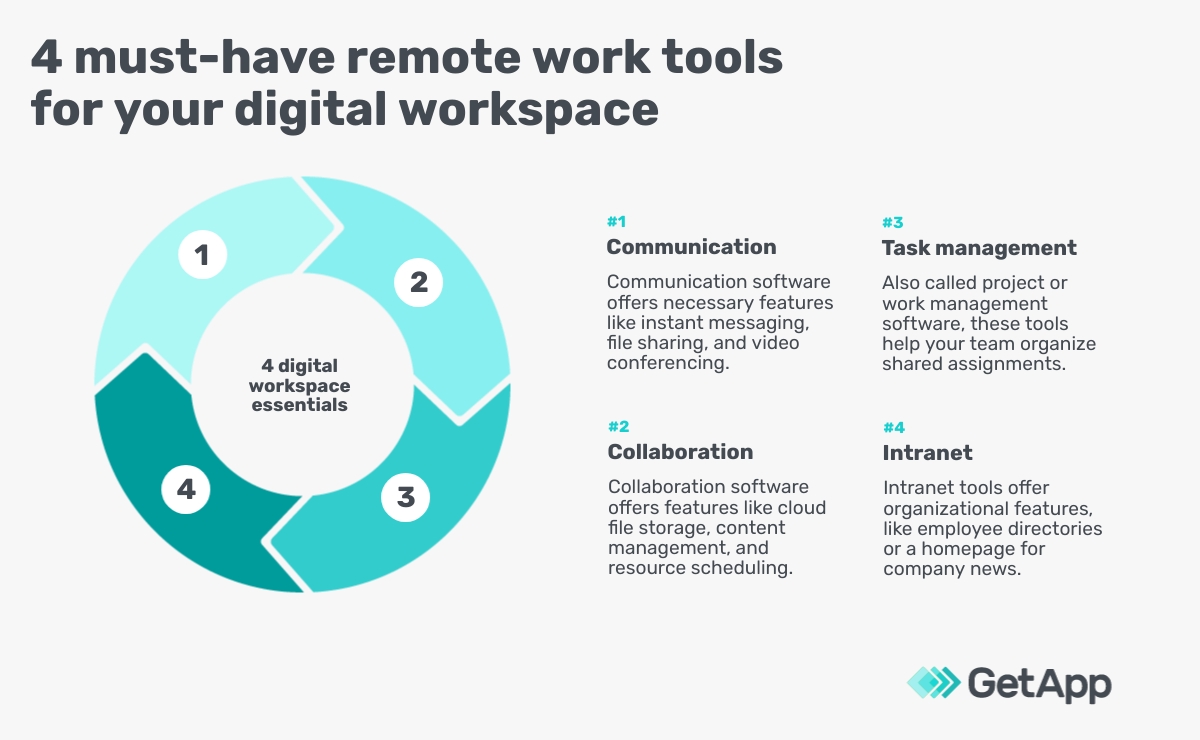
In addition to the tools Liao mentioned, there are a few more essentials you should add to your remote work tech stack. We’ve created a graphic that breaks down four tools you need in your digital workspace:
Want to improve your remote work strategy? Check out these additional resources.
From policies to perks, there is a lot to consider when it comes to making remote work...work. Luckily, we’ve got you covered. Our remote work software directory includes almost 300 software options that can help your team connect, engage, and work efficiently while apart.
There’s also more to read about remote work on our resources page, including these four articles:
A Remote Work Policy Is Crucial—Here's What You Need to Know
Project Management How to Manage Remote Teams Effectively for Better Project Performance
The Future of Work: Preparing for the change and challenges of tomorrow
Survey methodology
The GetApp HR in the New Era Survey 2021 was conducted in January 2021. We surveyed 922 workers at U.S. small businesses with two to 500 employees. The responses are a representative sample (by age and gender) of the U.S. population. We worded the questions to ensure that each respondent fully understood the meaning and the topic at hand.


More on Human Resources

Jul 09, 2024
Jan 17, 2024