

GetApp offers objective, independent research and verified user reviews. We may earn a referral fee when you visit a vendor through our links.
Our commitment
Independent research methodology
Our researchers use a mix of verified reviews, independent research, and objective methodologies to bring you selection and ranking information you can trust. While we may earn a referral fee when you visit a provider through our links or speak to an advisor, this has no influence on our research or methodology.
Verified user reviews
GetApp maintains a proprietary database of millions of in-depth, verified user reviews across thousands of products in hundreds of software categories. Our data scientists apply advanced modeling techniques to identify key insights about products based on those reviews. We may also share aggregated ratings and select excerpts from those reviews throughout our site.
Our human moderators verify that reviewers are real people and that reviews are authentic. They use leading tech to analyze text quality and to detect plagiarism and generative AI.
How GetApp ensures transparency
GetApp lists all providers across its website—not just those that pay us—so that users can make informed purchase decisions. GetApp is free for users. Software providers pay us for sponsored profiles to receive web traffic and sales opportunities. Sponsored profiles include a link-out icon that takes users to the provider’s website.
4 Examples of Predictive Analytics That Help Your Business Predict the Future
Make smart forecasts and give your business a competitive edge with these four predictive analytics examples.


The rapid evolution of technology has given business leaders some powerful tools. Chief among them is data analytics, which offers precise business insights for improved decision-making. And while descriptive, diagnostic, and prescriptive analytics all have their place, only one form of data analysis can predict the future.
Predictive analytics provides a glimpse into upcoming market trends, future customer behaviors, and more to help you guide your business. It’s become one of the most important technology tools of our time, and it’s relatively easy to get started.
Curious about what this tool can do for your business? Understand the power of predictive analytics using real-world examples.
What is predictive analytics?
Predictive analytics is the practice of interpreting historical data to help predict future events and trends. It's typically accomplished with software as part of a business suite or a dedicated app. The software uses tools like big data, machine learning, and regression analysis—which examines the relationships between historical data points—to improve the accuracy of the predictions.
Unlike other forms of data analytics that help you understand past events, predictive analytics uses available information to forecast future events. With these insights, you can shape business strategies, make intelligent decisions, and gain an advantage over your competitors.
What are the most common examples of predictive analytics in different industries?
One of the best ways to understand predictive analytics is to see how it's used in various industries.
For instance, maintenance teams in the manufacturing industry use predictive analytics to determine when production equipment will likely break down. Armed with this information, they shut down equipment for preventive maintenance and avoid a costly work stoppage.
In the finance industry, predictive analytics helps measure risk. Analytical tools predict which customers or businesses are likely credit risks. They also augment loss protection tools, such as when a credit card transaction is flagged for potential fraud.
Similarly, the insurance industry employs predictive analytics to identify risky customers, helping agents set appropriate rates. Insurance companies also use analytics tools to help determine the likelihood of fraudulent claims.
What are the benefits of using predictive analytics for businesses and individuals?
When combined with customer segmentation, predictive analytics help businesses better understand their customers and their markets. Some of the ways this can benefit your business include:
Improved product strategies: You can use predictive analytics to better understand customer preferences, and shape product strategies around what you learned.
Competitive edge: Predictive analysis reveals market trends hidden in your sales and customer data. Acting on these insights can give you an advantage over your competitors.
Reduced risk: Risk reduction teams now regularly use predictive analytics tools, particularly in the finance and insurance sector. In any industry, you can better forecast shifting markets and avoid risky scenarios.
Fraud detection: When combined with artificial intelligence and machine learning, predictive analytics sifts through data to detect potentially fraudulent activities in real-time. This helps neutralize insider threats.
Better sales and marketing: Analytics tools are great for identifying customers’ purchasing patterns, based on demographics and preferences. You can craft better sales and marketing plans, based on this data.
A Gartner case study on HDFC Bank's targeted marketing revealed a 20% reduction in the number of product offer recommendations made to customers, but with an 8% increase in product purchases and a 140% increase in profits in the same period. [1] This speaks to the accuracy of predictive analytics and how it can help ensure businesses properly allocate marketing resources.
Predictive analytics examples from real-world scenarios
Gartner found that although 69% of quality leaders are actively using or piloting predictive analytics, only 17% are confident about effectively implementing the technology. [2] To make sure your business doesn’t fall behind in applying this tech, here are four predictive analysis examples taken from real-world scenarios:
1. Predictive analytics in customer service
What if a company could predict issues customers will face before they happen and preemptively work on solutions to prepare customer service representatives to assist?
For example, an energy supplier might use predictive analytics to determine that customers will consume more power during the winter, so they can expect more complaints from those customers about rising bills. The company could then provide its customer service reps with clear explanations of charges, information on payment relief options, and strategies for reducing consumption (and bills) during the winter.
Challenge: Predicting the issues your customers will have before they happen.
Solution: Use customer service software that leverages machine learning to gather and process customer analytics data—such as call volume, resolution success rate, and customer satisfaction—while your customer service team works to help forecast future issues and ultimately reduce customer churn.
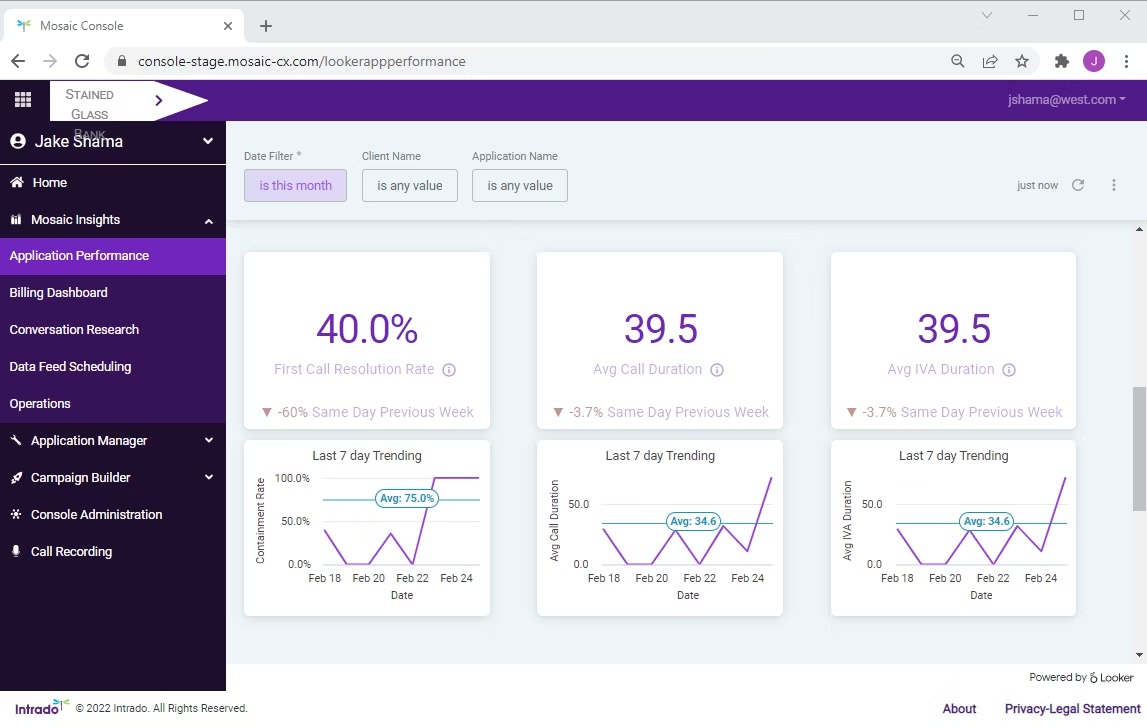
An example of application performance tab showing customer insights in real time (Source)
2. Predictive analytics in marketing
For all of its advances over the past several decades, marketing technology sometimes does a better job of helping buyers. Anyone who has searched online for new shoes only to have their computer relentlessly hammer them over the head with ads for new sneakers for the next several months can attest to this.
However, predictive analytics is helping marketers get better at anticipating customer behavior so that they can tailor a marketing campaign for the right audience at the right time and on the proper channels.
Challenge: Predicting trends in customer behavior so that marketing campaigns are targeted strategically.
Solution: Use marketing automation software with advanced analytics features to help your marketing teams track buyer behavior through every step of their customer journey. This gives them insight into which actions buyers are most likely to take next.
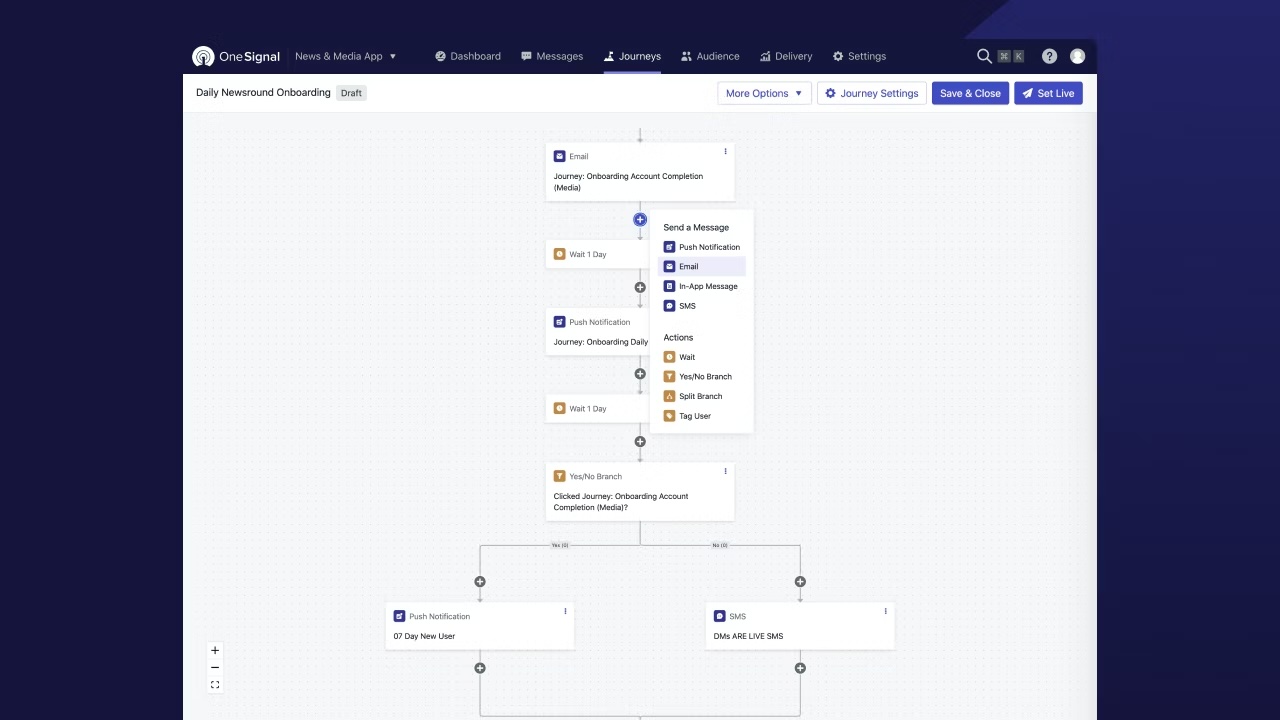
An example of the customer journey to gather key insights (Source)
3. Predictive analytics in retail
Staying ahead of the seemingly unpredictable trends in fashion and retail seems impossible. As we've seen over the past several years, a sudden spike in customer demand for a specific product can be devastating for retailers trying to keep shelves stocked with the right items. While no one has predicted the combination of factors that led to the excellent toilet paper shortage of 2020, better data analytics models can anticipate a similar situation.
Challenge: Predict which items will be in demand in the months and years ahead to supply adequate inventory to meet customer demand.
Solution: Use modern inventory management software that includes forecasting features. This helps anticipate supply needs, not only to ensure that you'll have enough inventory to meet customer demand but also to avoid over-investing in certain products. The last thing you'll want are products that take up valuable shelf and warehouse space without selling.
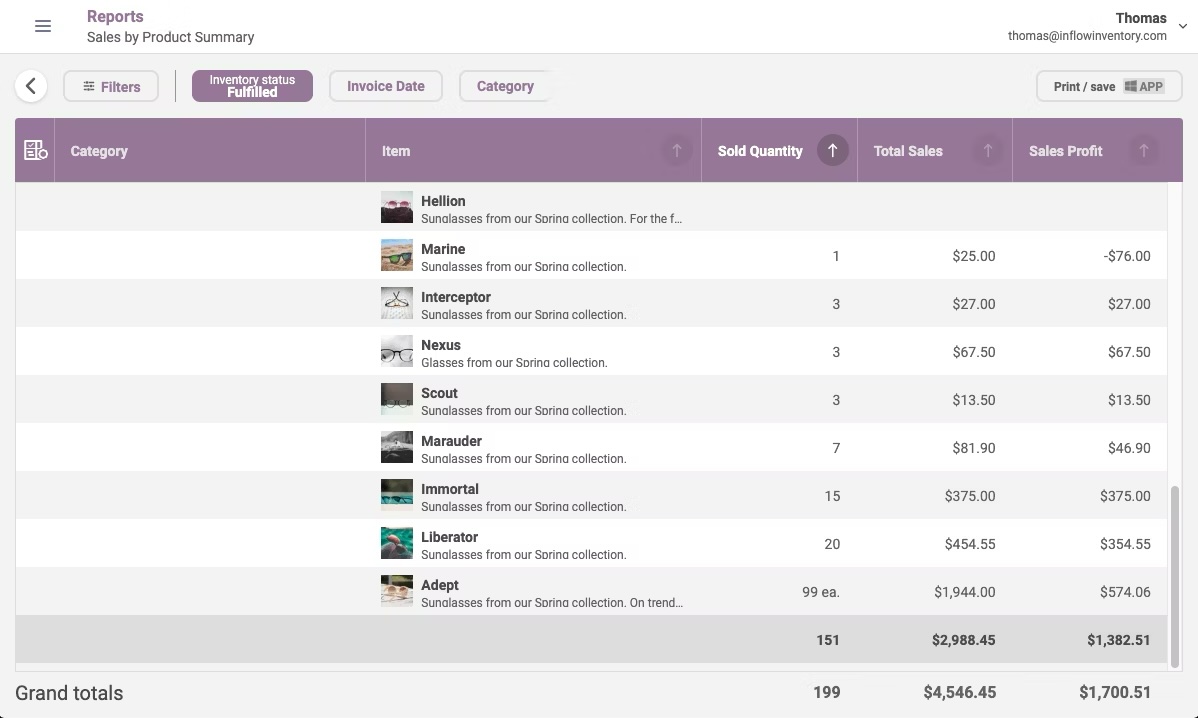
An example of inventory report management (Source)
4. Predictive analytics in recruiting and hiring
Wouldn't it be great if you could predict which candidates are most likely to succeed in your organization, how long they are likely to stay, and when an employee will likely leave for a new opportunity?
Recruiters and hiring departments process lots of personal data from current and previous employees that can be used to help predict future outcomes. As businesses endure the Great Resignation, predictive analytics can help hiring managers narrow down candidate lists and gauge the impact of staff turnover before it happens.
Challenge: Narrow down the best candidates from a virtual stack of resumes and predict the impact of employee turnover before it becomes a significant problem.
Solution: Use recruiting software with advanced analytics features like performance and attrition forecasting to hire the best candidates and set aside time and resources to make new hires ahead of time.
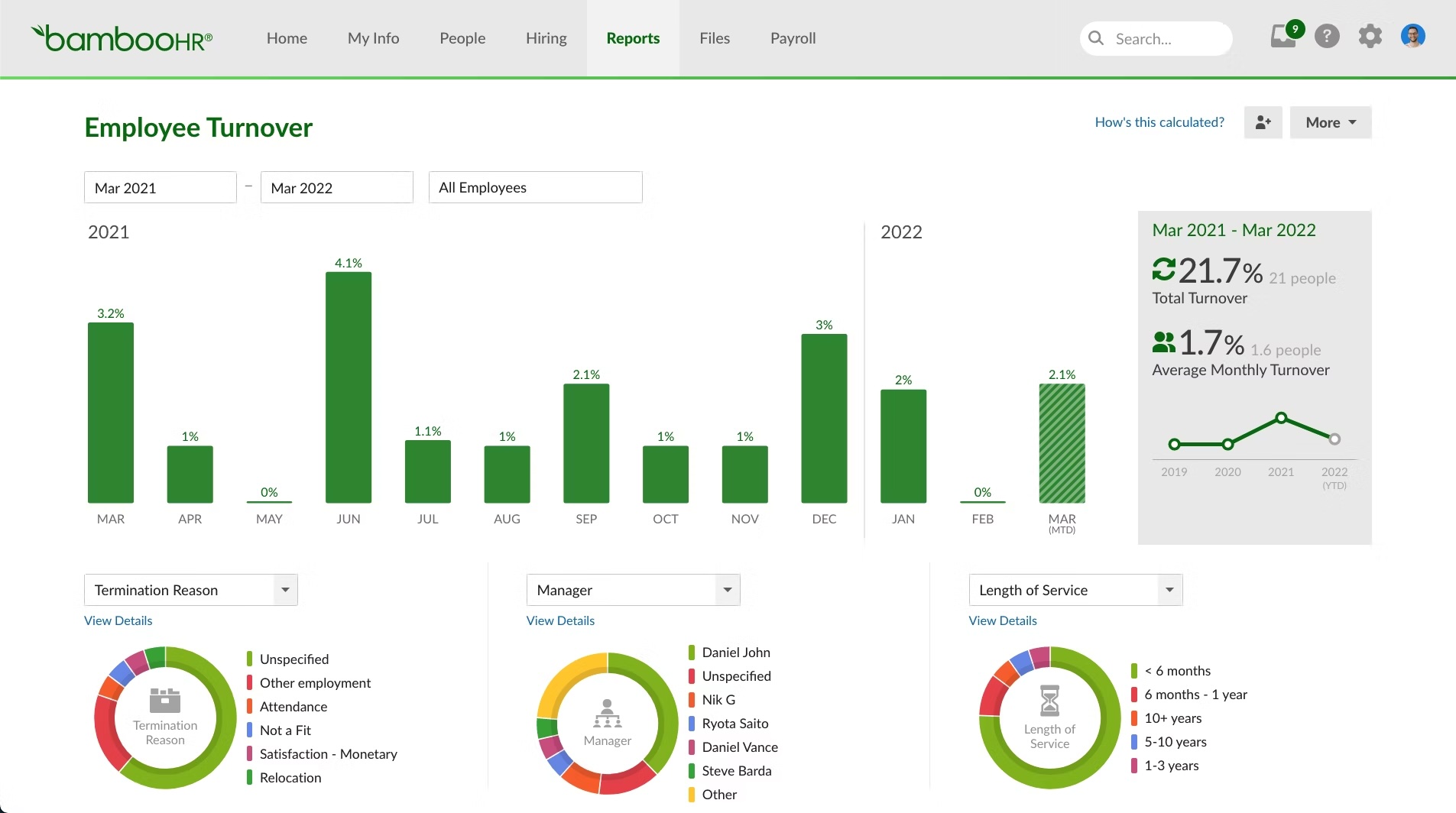
An example of employee turnover insights report (Source)
How can companies get started with implementing predictive analytics?
The four examples of predictive analytics discussed above show that, in many cases, software your business already uses may have predictive capabilities. However, these functions might not bring value to your company.
Before getting started with implementing predictive analytics, analyze your current situation:
Identify which insights your business needs. Define the business questions that need answers. This could help you understand customer preferences or forecast market trends.
Inventory your data sources. More data makes predictive analytics more accurate. Make a list of the data sources that are relevant to your needs, such as customer insights or historical sales data.
Create an action plan. Predictions are useless unless there is a plan to act on them. Meet with stakeholders to determine how your company will respond to predictive insights.
Select the right software. Evaluate if your existing business intelligence software has sufficient predictive analytics features. If they don't have what you need, investigate dedicated data analytics systems.
What are the ethical considerations and potential challenges of using predictive analytics?
Vast amounts of data, otherwise known as "Big Data," often provide the source for predictive business analytics applications. Since such large data sets can potentially contain personal or identifying information, there are privacy concerns around any Big Data initiative, including predictive analytics.
Many predictive analytics apps use machine learning algorithms. This means there are the same ethical concerns as with any artificial intelligence applications—potential bias and the use of unauthorized data, among other issues.
To overcome these challenges, your business should create a data governance and access policy. These guidelines will provide transparency and accountability to your employees, along with a framework for ethical data use.
Leverage technology to grow your business with predictive analytics
Predictive analytics has a wide range of valuable applications, no matter which industry you're in. However, to use predictive analysis successfully, you must leverage the right technology.
Start by exploring your current software stack for predictive analytics capabilities.
Talk to your software vendor if you have trouble finding predictive analytics capabilities in your software stack.
Consider investing in a dedicated business intelligence software for a more targeted approach to business analytics.
To help you research the best predictive analytics solutions for your business, check out these GetApp resources:
Sources
Leaman Crews
More on Business Intelligence


May 03, 2024


Dec 22, 2023


Nov 09, 2023