GetApp offers objective, independent research and verified user reviews. We may earn a referral fee when you visit a vendor through our links.
Our commitment
Independent research methodology
Our researchers use a mix of verified reviews, independent research, and objective methodologies to bring you selection and ranking information you can trust. While we may earn a referral fee when you visit a provider through our links or speak to an advisor, this has no influence on our research or methodology.
Verified user reviews
GetApp maintains a proprietary database of millions of in-depth, verified user reviews across thousands of products in hundreds of software categories. Our data scientists apply advanced modeling techniques to identify key insights about products based on those reviews. We may also share aggregated ratings and select excerpts from those reviews throughout our site.
Our human moderators verify that reviewers are real people and that reviews are authentic. They use leading tech to analyze text quality and to detect plagiarism and generative AI.
How GetApp ensures transparency
GetApp lists all providers across its website—not just those that pay us—so that users can make informed purchase decisions. GetApp is free for users. Software providers pay us for sponsored profiles to receive web traffic and sales opportunities. Sponsored profiles include a link-out icon that takes users to the provider’s website.
Project management features report: Is 2019 the year to replace your current solution?
Find out about the must-have features, the most popular project management solutions, and other important considerations before investing in new technology.


Update 04/17/2019: This article was originally published in 2017 based on previous survey results. In February 2019, we conducted a new survey of 187 projects managers in the United States and have updated this article with the latest survey results.
Having project management (PM) software doesn’t ensure project success or better project performance. What’s more important is having the right set of features in your project management solution so that your team can be more productive.
A Gartner survey, conducted online from July to September 2018 among 715 respondents in the United States (the companies screened had an employee size of 2-249 and annual revenue of less than $100 million), aimed to understand small business challenges and their approach to technology investments. It found that “every 1 in 2 companies find ‘identifying the right technology’ as one of the top challenges when planning investment in new technologies.”
Keeping this in mind, project managers must match their vital business needs to specific software features before purchasing a PM tool. Failing to identify and invest in the right PM capabilities means you could lose 9.9% of every dollar you invest as a result of poor project performance.
In March 2019, GetApp surveyed project managers in the United States to understand their PM tools usage, preferred PM features, budget, and more.* Using insights from the survey, we’ve created this report to make small businesses aware of SMB project management technology practices and preferences.
This report intends to prevent you from making bad software investments. We also give you tips on upgrading your PM technology so that you aren’t outcompeted in the market.
Key findings of the GetApp survey
Ninety-seven percent of project managers use more than one tool regularly.
Respondents said task management (34 percent) and collaboration management (28%) are the most common features missing from their current PM tool.
More than half of project managers (58%) are open to switching their project management software by 2020.
Ninety-five percent of project managers are willing to spend more for project management software, including for the missing features they need.
Understanding your tool kit: How much is too much?
The use of PM software is becoming increasingly popular. Our survey found that nearly half of respondents use it every single day.
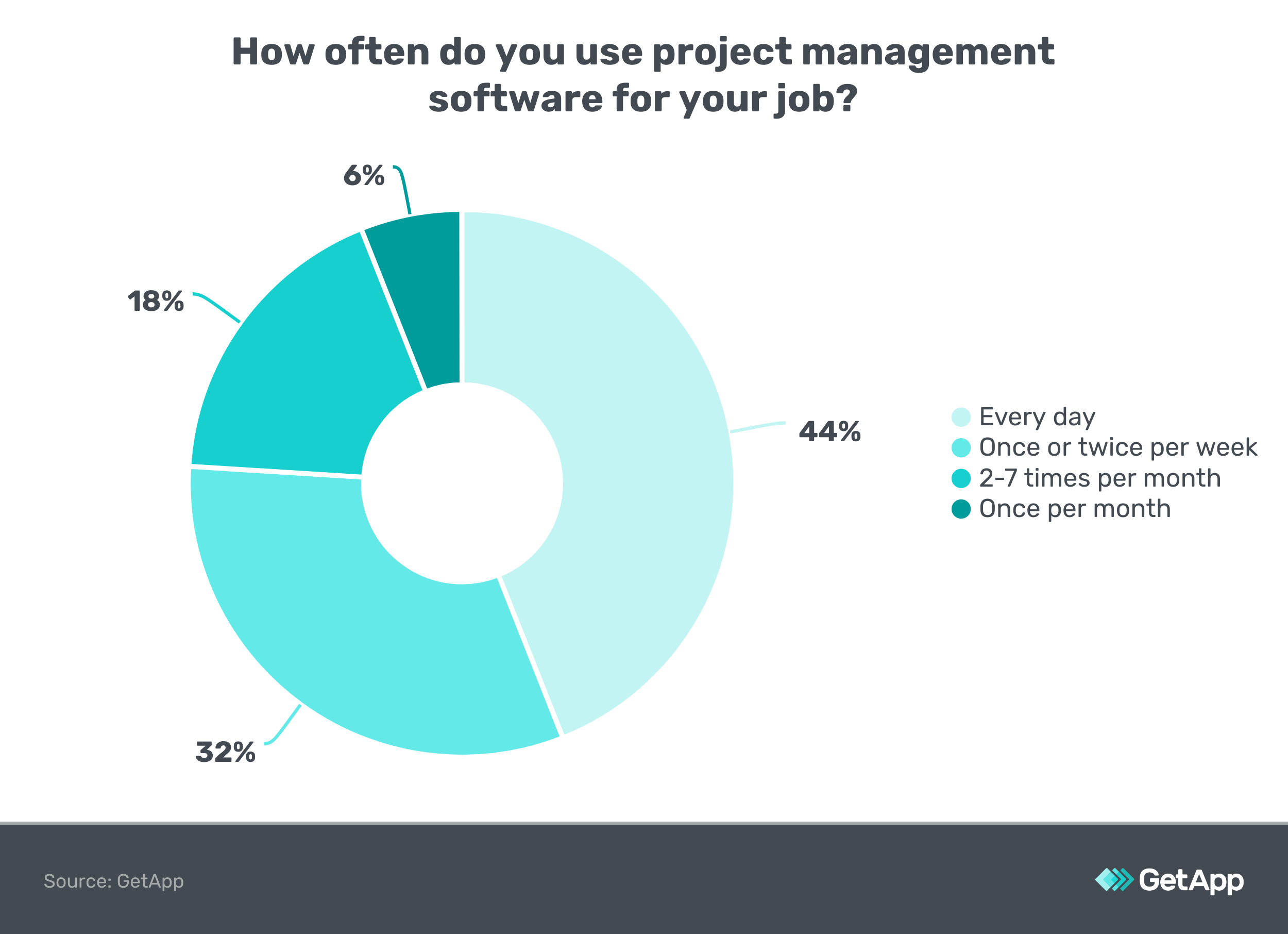
Survey results: How often do you use project management tools?
Key finding: 44% of respondents use project management software every day.
But project management isn’t about using just one tool. A vast majority of project managers use two or more tools to manage projects. About 68% of our respondents use Microsoft Project. Others use Basecamp, JIRA, Trello, Asana, and Wrike.
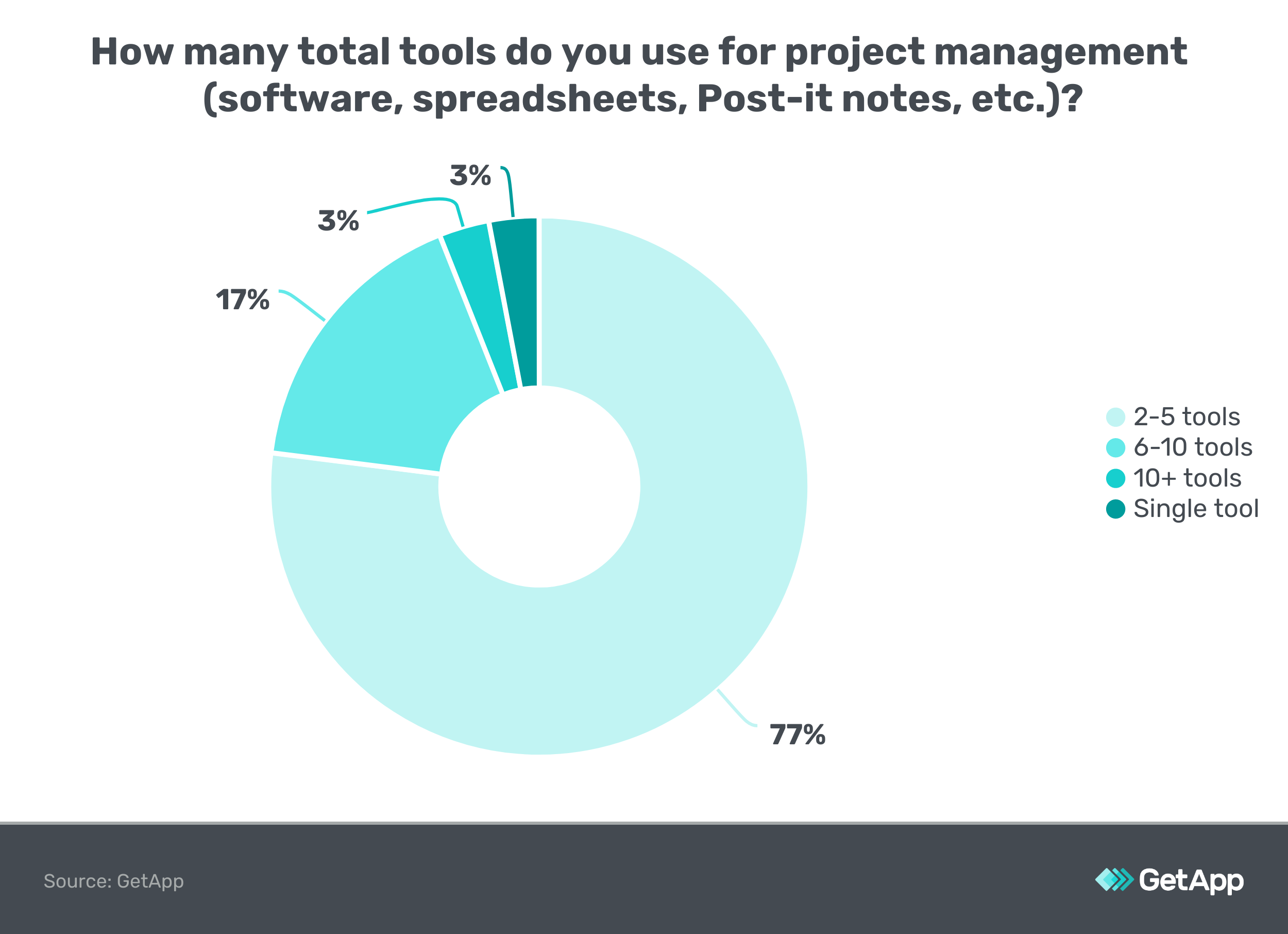
How many project management tools do you use? Survey results in donut chart.
Key finding: 97% of project managers use two or more tools to manage projects.
However, we found that 52% of respondents aren’t very satisfied with their project management tool(s). They feel that the tool(s) only somewhat impact their team’s productivity. Twenty percent feel that team productivity is unchanged by the tools they use, while 4% feel that their productivity has gone down because of the tools.
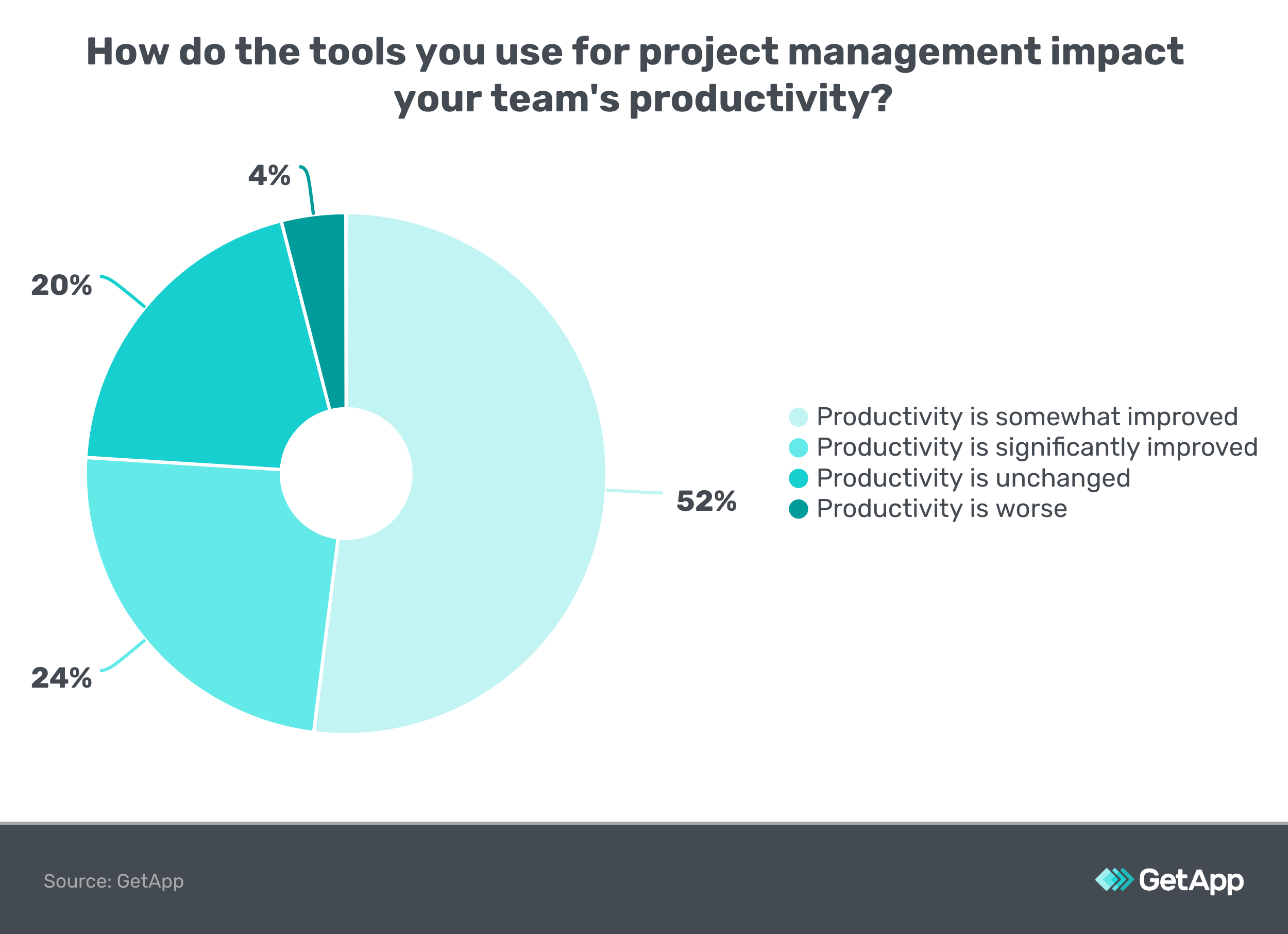
Pie chart: How do the tools you use impact productivity?
Key finding: 70% said that their work would become easier if their project management software had the feature they needed.
Our survey probed further about the features that project managers feel are missing in their software. We found that task management is the most popular “must-have” missing feature, followed by collaboration features such as @mentions, commenting, tagging, and file sharing.
Other features that got almost equal number of responses are budget management (26%), requirements management (26%), and idea management (25%).
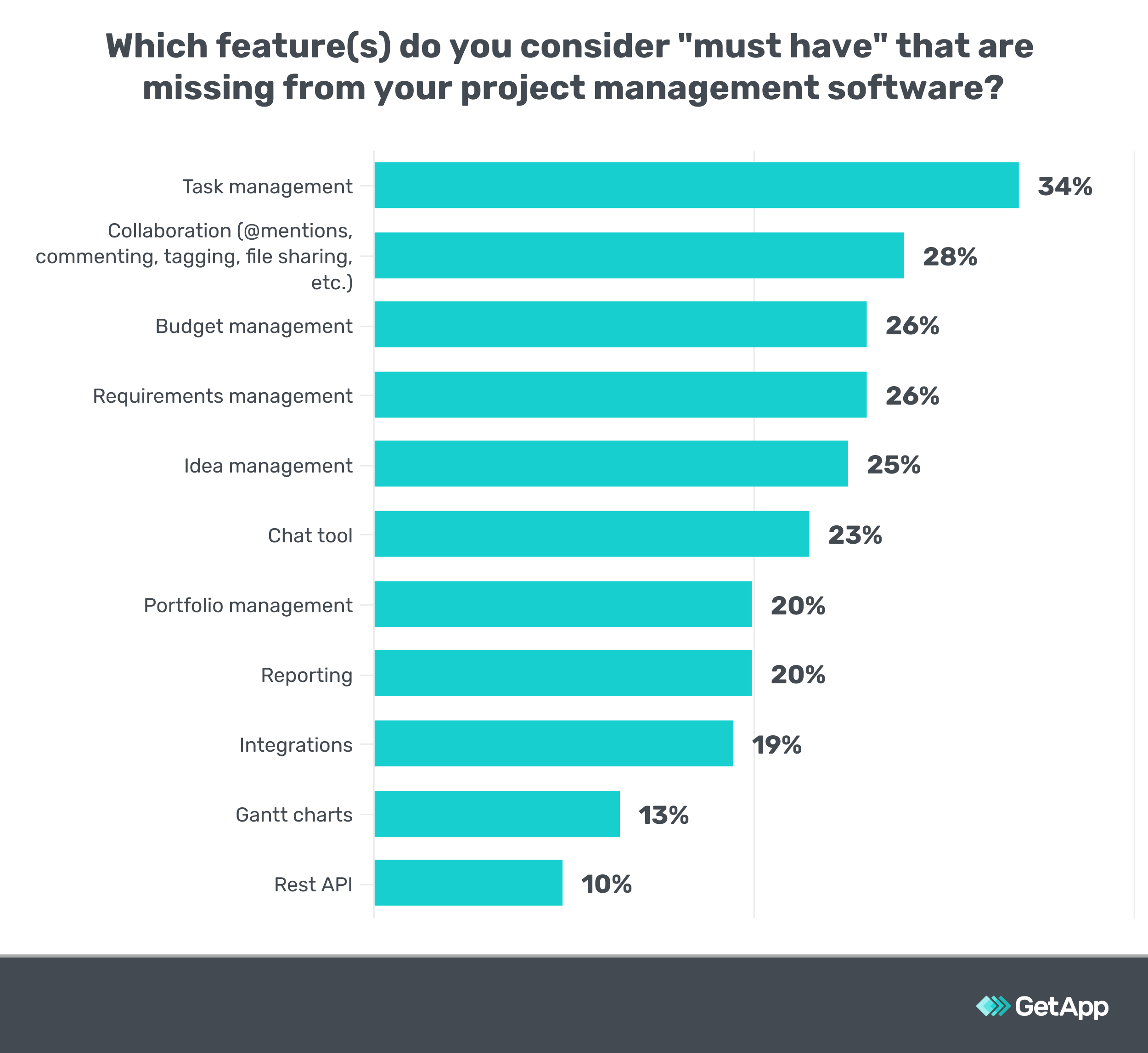
Must-have missing PM features graphic
Key finding: More than one-third (34%) of project managers feel task management is the “must-have” feature that’s missing from their current project management solution.
Task management is essential and highly beneficial because it automates recurring tasks, saving time and helping projects scale up effortlessly. However, in our survey, only a quarter of project managers said that their solution is very helpful in automating recurring tasks. This means that most businesses are failing at task management.
In addition to “must-have” features, project managers should consider other aspects before investing in a new project management solution. For instance, the desire to innovate (among other factors) has led to an increase in organizational agility (71%) for businesses in the past five years.
Therefore, you need to ask: How important is your project management tool in helping teams become more agile?
Gartner’s predictions regarding project management in 2019 (full report available to only Gartner clients) note that agile will overtake the waterfall approach. It says:
"By 2023, agile program and product management will replace project management as the dominant approach for effective enterprise change and outcomes."
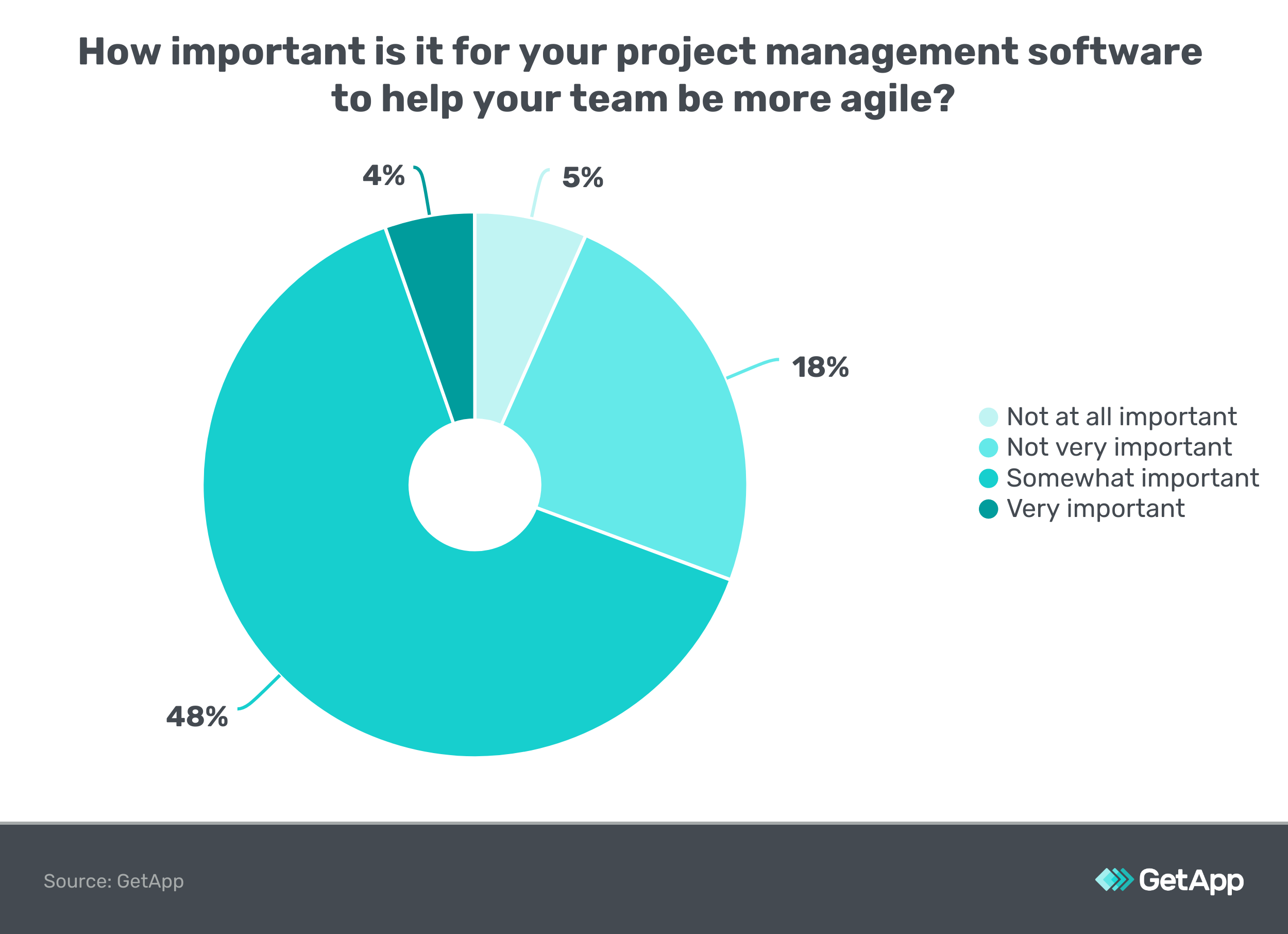
How important is it for your tool to add to agility
Key finding: Only 23% of respondents think their software isn’t as important in helping their teams be more agile. Others said that it was somewhat or very important to have software that aids agility with the help of features such as task management and collaboration.
Gartner’s “How to Cultivate Effective ‘Remote Work’ Programs” report (content available to only Gartner clients) says that the number of remote worker are increasing. It predicts:
"By 2021, the increase in the number of employees who prefer to work remotely will allow organizations to support 40% more workers in the same amount of space as they use today."
So, we asked our respondents whether their project management software is helping them manage their remote team workers.
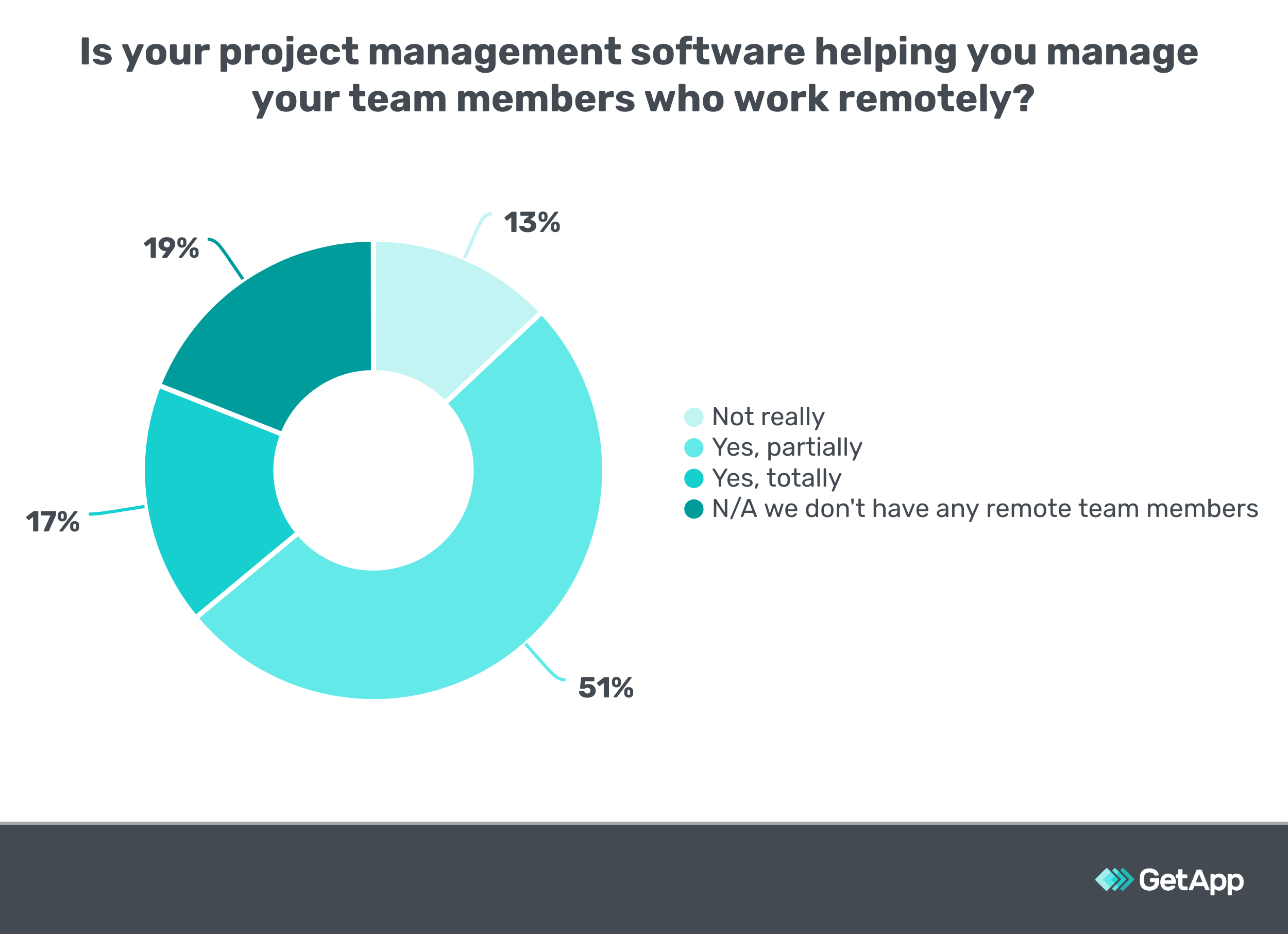
Is your pm software helping remote employees
Key finding: Only 17% of project managers are able to fully manage their remote team members.
The result should coax project management software vendors to offer this functionality so that businesses are able to retain their current staff and attract new ones.
Vendors must also offer timely feature upgrades to ensure customer retention. We found that about 33% of vendors offer quarterly upgrades and 15% offer monthly upgrades. With constant technological advancements these days, vendors should focus on increasing the frequency of upgrades to keep their customers satisfied.
If they fail to provide the “must-have” features and adequate support for effective project management, they will quickly lose customers to their competition. Let’s look at some figures that confirm this assumption in the next section.
All about your project management technology budget
Our survey showed that 87% of respondents have a designated budget for project management software.
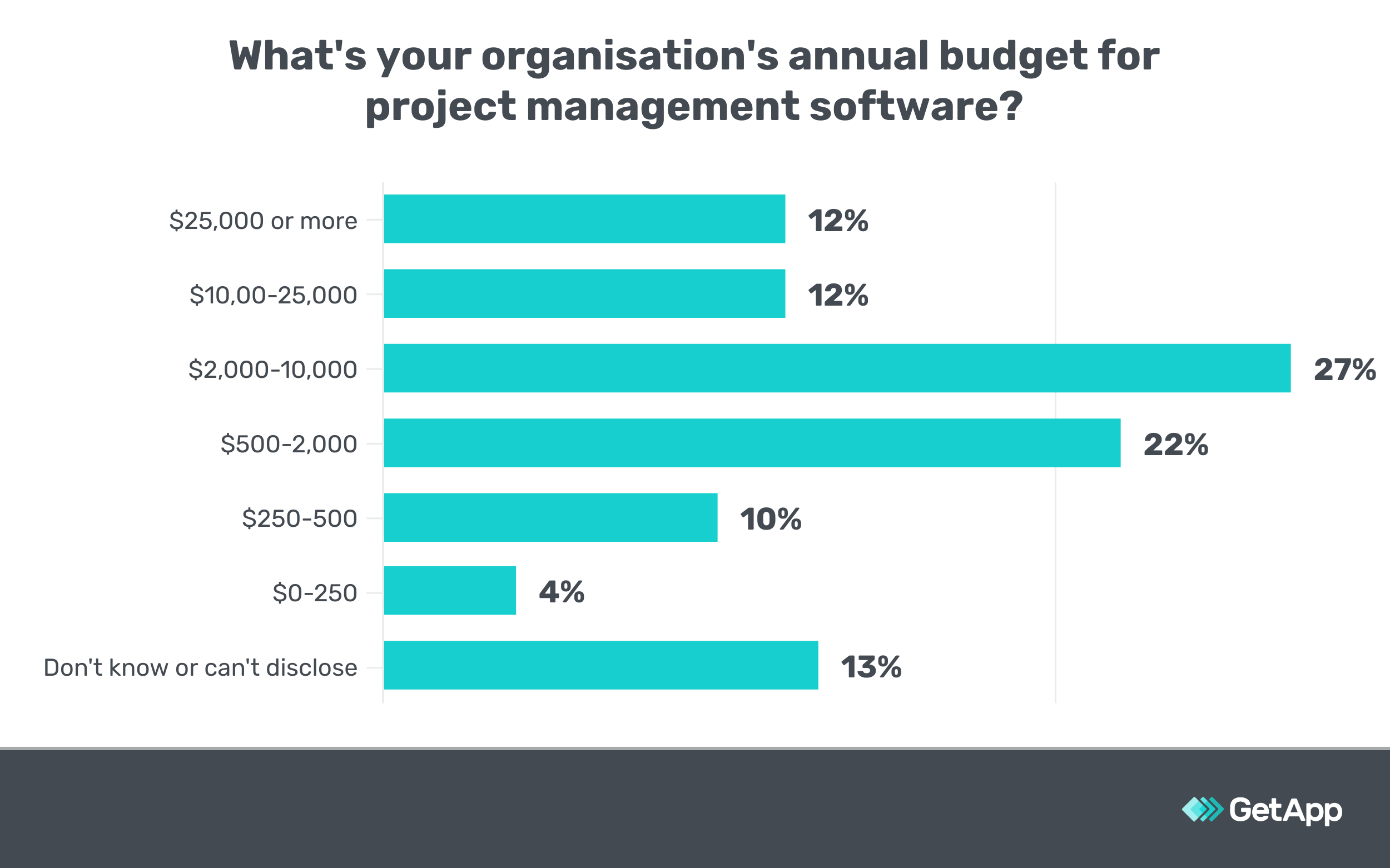
Annual budget for PM software graph
Key finding: 51% of our respondents work at organizations with annual budgets of $2,000 or more for project management software.
We also found that businesses are willing to invest more in project management software to get the feature(s) that their teams need.
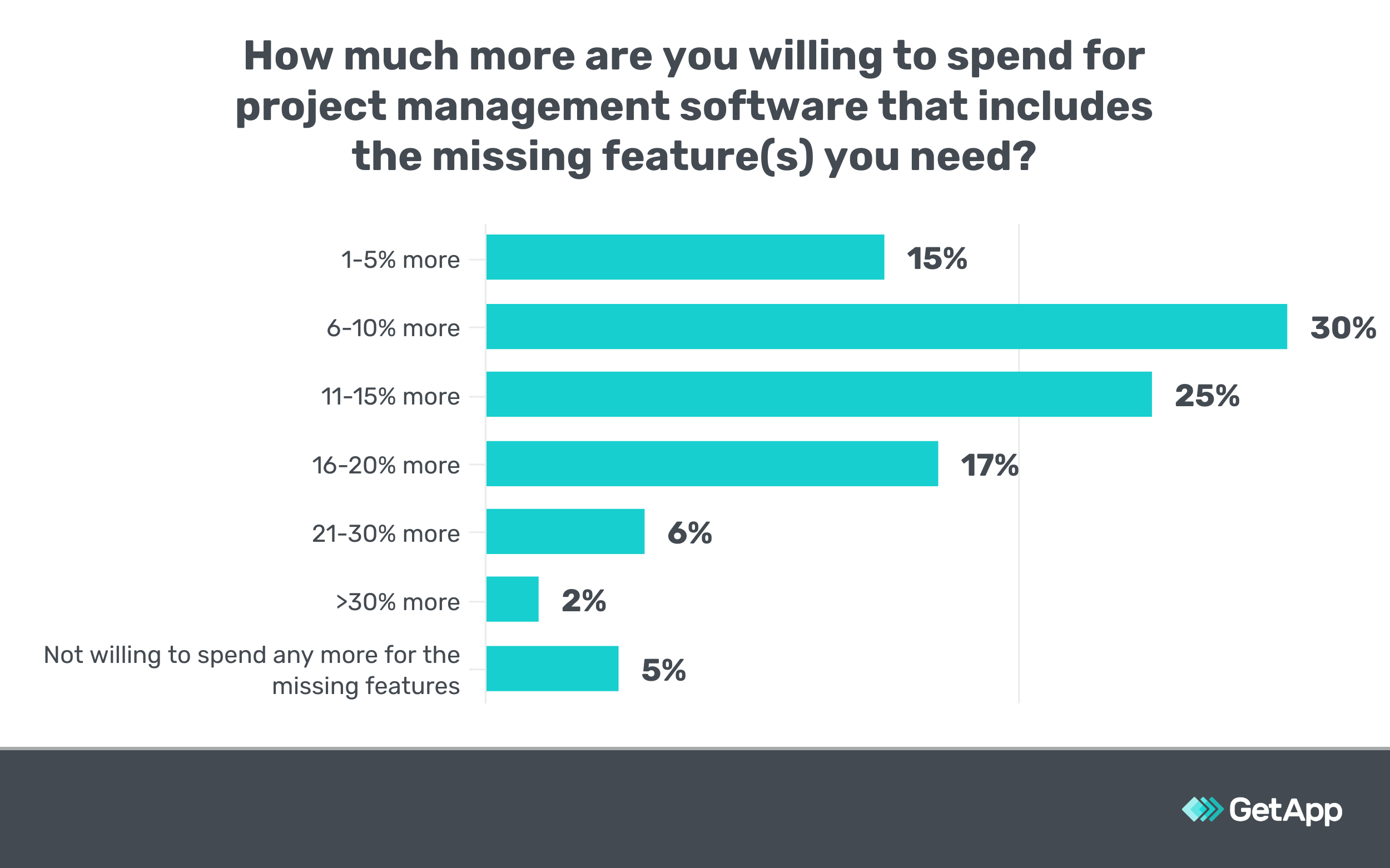
Willingness to spend on PM software graph
Key finding: 95% of project managers are willing to spend more for software that includes the missing feature(s) they need.
And last, the majority of project managers are willing to switch their project management software by 2020.
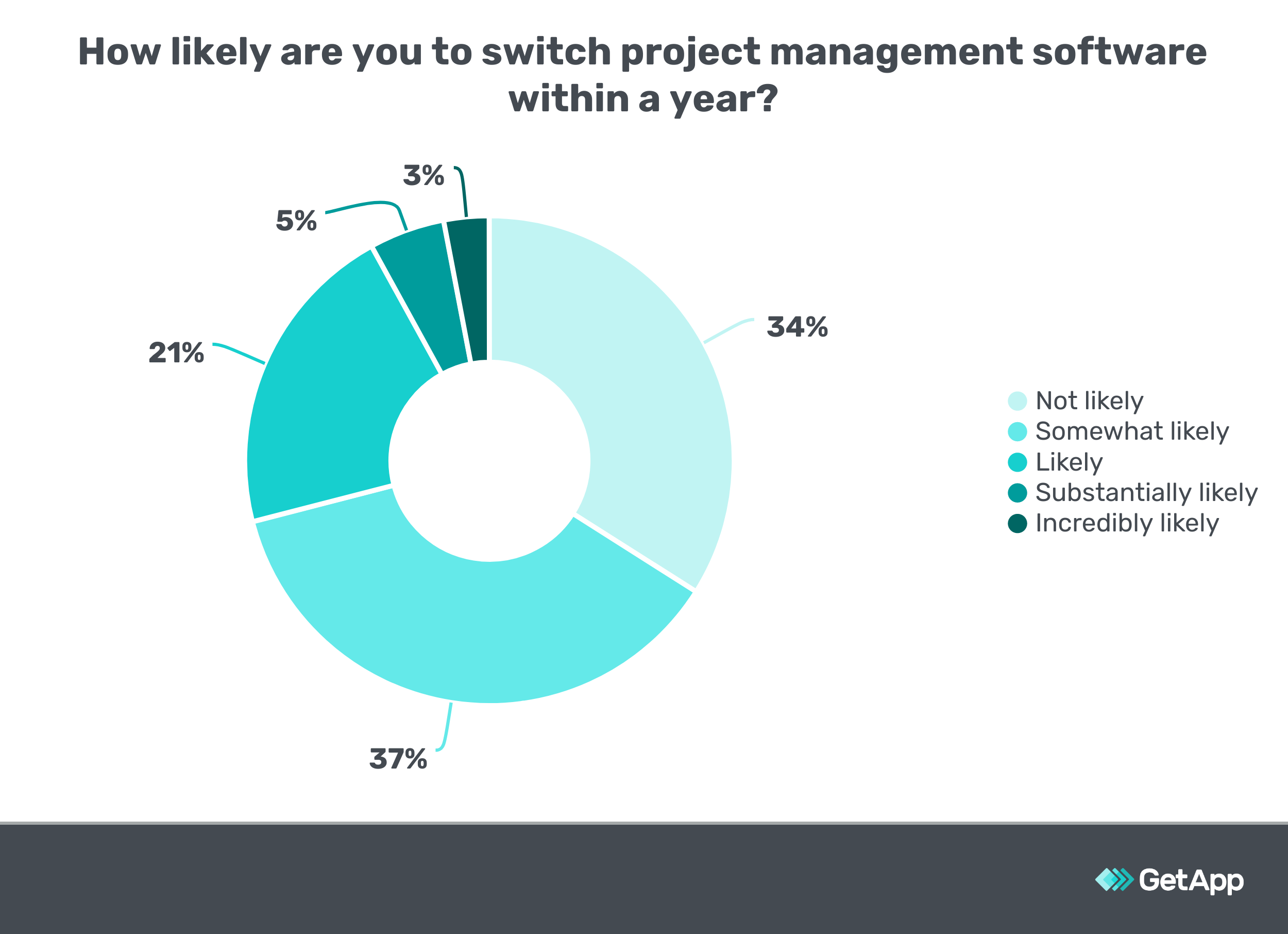
Likelihood to switch PM software graph
Key finding: 29% of project managers are quite likely, while 37% are somewhat likely, to switch their project management software by the next year.
What next?
As a project manager, your task is to ensure that your small business makes the right investment and chooses the right PM technology. You can do that by following these steps:
Survey your team to understand their unique needs so that the software you purchase offers the "must have" feature(s).
Preview our list of popular PM solutions and filter the solutions based on the capabilities that you are looking for.
Read product reviews on GetApp to understand the user experience for each solution. Explore our buyer's guide for an in-depth understanding of the features.
Compare the shortlisted solutions to understand the strengths and weaknesses before finalizing one for your team.
Check out the project management trends for 2019 to ensure that you're investing in technology that will support your small business.
Methodology
GetApp collected the data in this report through an online survey of project managers who work in the U.S. and use project management software to manage their work. This survey received just over 187 qualified responses, which provide the data in this report.
Here are the details of the demographics:
1. Which title best describes your current role?
Associate Project Manager – 26%
Project Manager – 39%
Senior Project Manager – 9%
Project Director – 6%
Project Lead – 16%
Other – 4%
2. Which industry do you work in?
IT – 33%
Finance – 17%
Manufacturing – 9%
Healthcare – 9%
Digital – 7%
Construction – 7%
Non-profit – 7%
Other – 10%
Ankita Singh
More on Project Management


May 30, 2024

Jun 11, 2024

May 28, 2024