GetApp offers objective, independent research and verified user reviews. We may earn a referral fee when you visit a vendor through our links.
Our commitment
Independent research methodology
Our researchers use a mix of verified reviews, independent research, and objective methodologies to bring you selection and ranking information you can trust. While we may earn a referral fee when you visit a provider through our links or speak to an advisor, this has no influence on our research or methodology.
Verified user reviews
GetApp maintains a proprietary database of millions of in-depth, verified user reviews across thousands of products in hundreds of software categories. Our data scientists apply advanced modeling techniques to identify key insights about products based on those reviews. We may also share aggregated ratings and select excerpts from those reviews throughout our site.
Our human moderators verify that reviewers are real people and that reviews are authentic. They use leading tech to analyze text quality and to detect plagiarism and generative AI.
How GetApp ensures transparency
GetApp lists all providers across its website—not just those that pay us—so that users can make informed purchase decisions. GetApp is free for users. Software providers pay us for sponsored profiles to receive web traffic and sales opportunities. Sponsored profiles include a link-out icon that takes users to the provider’s website.
The Power of Mobile Marketing for Small Businesses
Widespread smartphone use and new features mean more people are shopping on phones than ever before.


What’s your screen time like this week?
If you’re a typical American, you’ve probably checked your phone on average 144 times a day. And if you’re especially plugged in, you’re part of the three quarters of consumers who check their notifications within 5 minutes of receipt. [1]
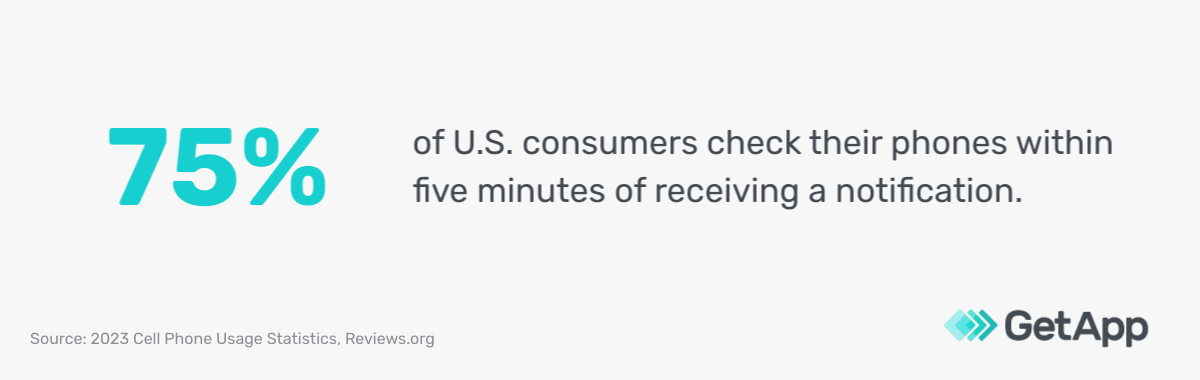
Whether it’s for business or pleasure, the fact is people are on their phones a lot. With growing mobile marketing trends (e.g., mobile wallets, SMS marketing, and loyalty programs) and such widespread phone usage, it’s more important than ever for small businesses to be involved so they can reach customers on their preferred channel with relevant info in a timely manner.
What is mobile marketing?
Mobile marketing is a marketing tactic that involves targeting consumers directly on their mobile devices. This type of marketing initiative can come in the form of short message service (SMS) texts, email, mobile websites, short-form video, and mobile-first social media experiences such as TikTok and Instagram.
Examples of mobile marketing
Promotional texts: One of the most basic (and effective) ways to utilize SMS is sending out promotional messages to your customers. In the example below, men’s clothing brand Rhone capitalizes on the winter season by sending shop links for cold-weather gear.
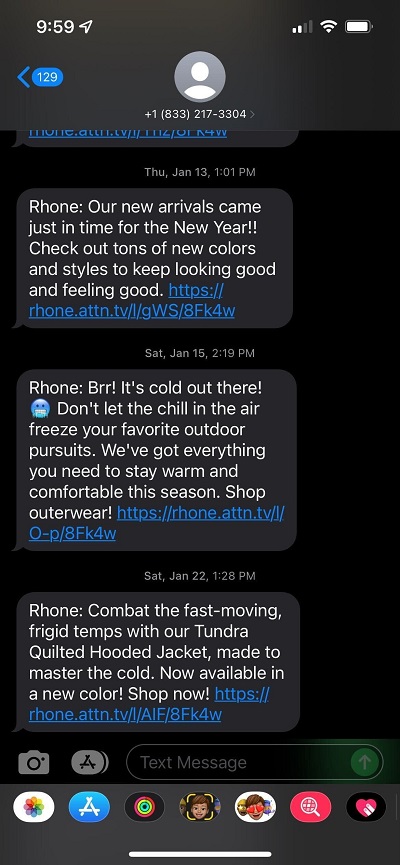
Promotional SMS messages sharing shop links from Rhone [4]
Appointment reminder texts: For businesses like medical practices, auto shops, and other industries who schedule their clients, appointment reminders are an excellent use of SMS. The average open rate of a text message is a staggering 99% [2], so sending the important appointment information via text virtually guarantees it will be seen. Establishing a convenient line of communication with customers can be the difference between a subpar customer service experience and an excellent one.
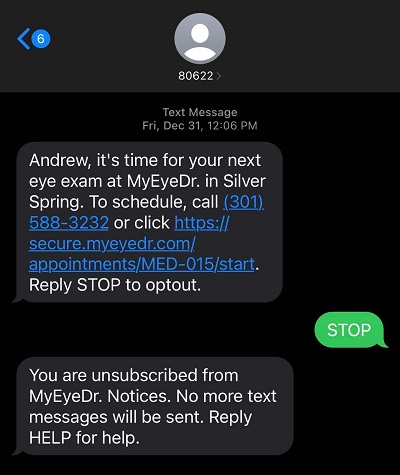
An example of an appointment reminder text from MyEyeDr [5]
Information and update texts: Another good use for SMS is to immediately connect with new customers to share relevant updates, purchase receipts, and/or welcome them into your community. Here, Mother Culture does all three, utilizing this tactic to both provide timely info and welcome a new customer.
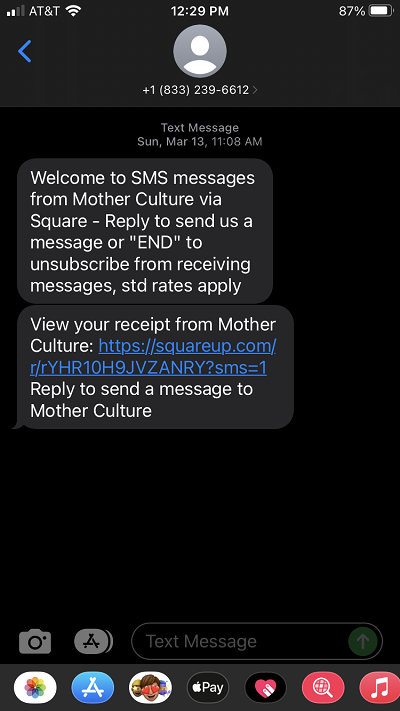
An example of a welcome text that also provides order info from Mother Culture [6]
QR codes: QR codes provide an easy way for businesses to share information with customers—whether it’s menus, promotions, sign-up links, etc. Mobile marketing tools with QR code functionality offer a wealth of features to help businesses create and manage QRs, including API integration, bulk creation, and A/B testing.
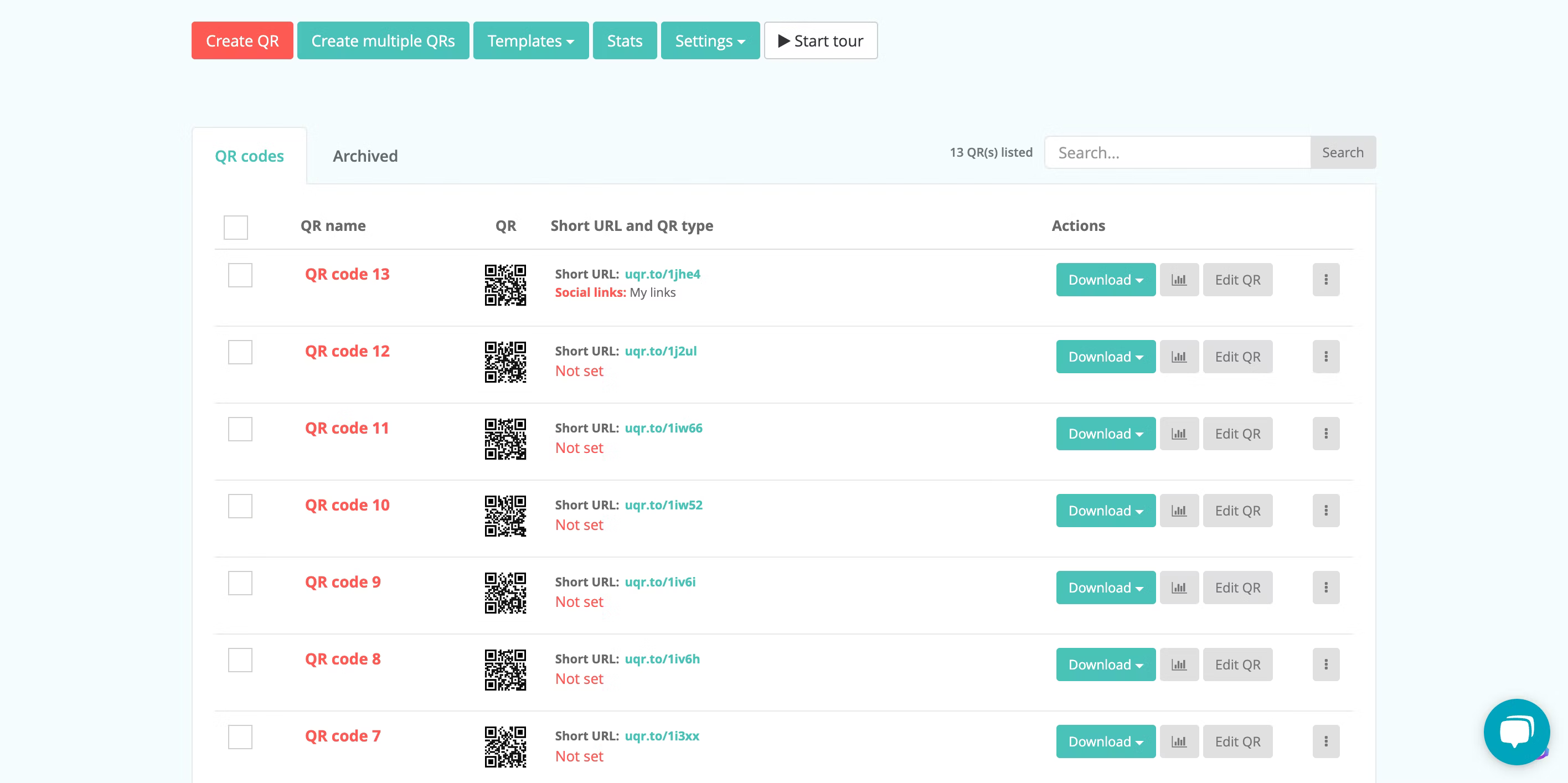
An example of QR code creation within uQR.me (Source)
Real-time customer service: Mobile marketing platforms also offer the ability to interface with customers more easily than ever before. These tools collect customer and message information in readily available dashboards to help businesses stay organized, respond in a timely manner, and communicate with customers on their preferred channel.
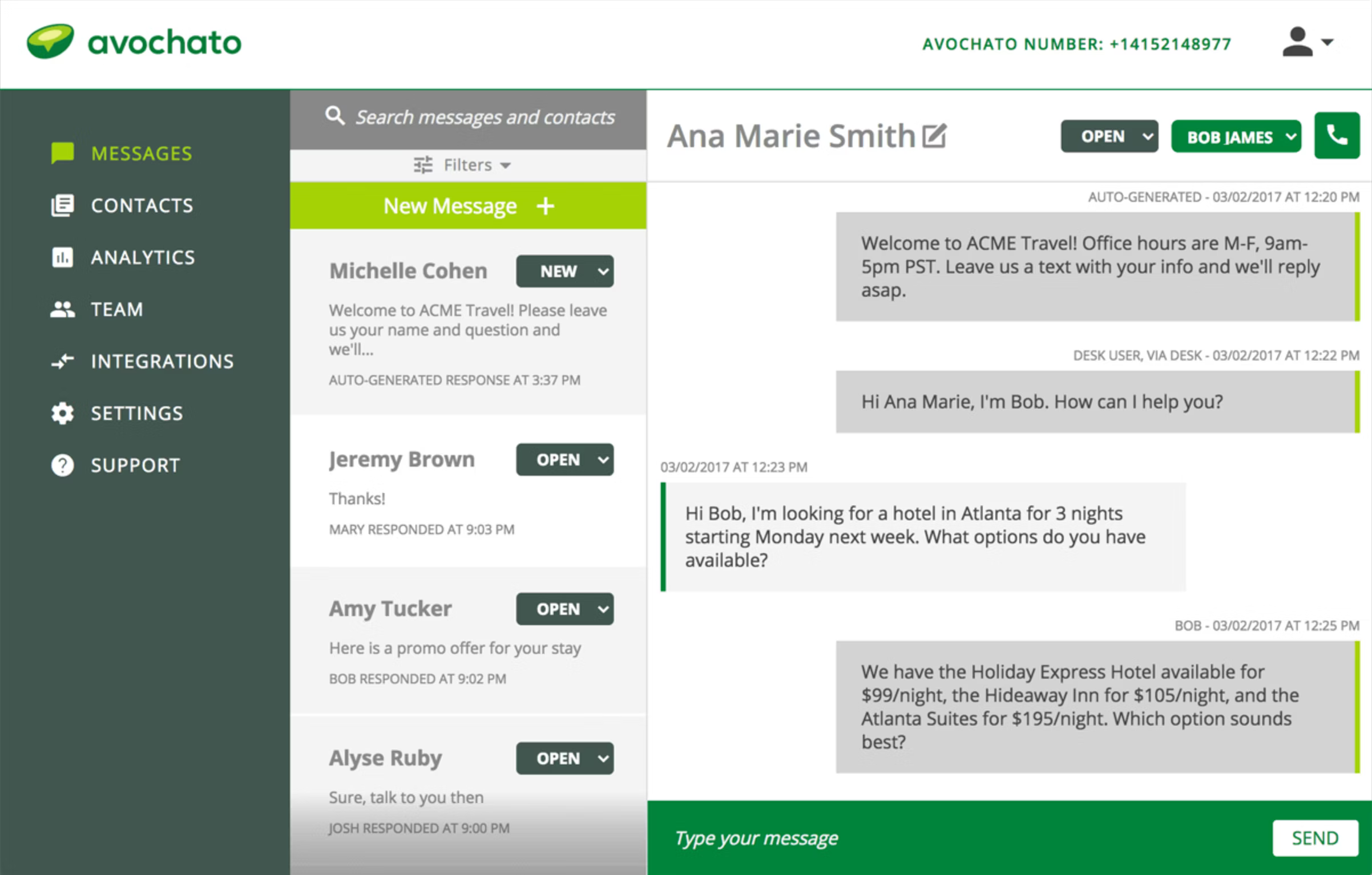
An example of mobile-friendly chat functionality from Avochato (Source)
Mobile marketing vs. traditional marketing
Mobile marketing offers some distinct advantages over more traditional channels, including the ability to better understand and contextualize the customer journey. The power that comes from meeting consumers where they are—both literally and figuratively i.e., their preferred communication channel and their physical location—cannot be overstated.
Location-based targeting: Geographic targeting can be accomplished without mobile marketing, but the addition of mobile allows for targeting to be much more granular and adds the ability to leverage proximity. For businesses with physical locations, this is an excellent way to engage with customers in your area who have already shown an interest in or actually visited your business.
Widespread use of smartphones: 84% of U.S. consumers use a smartphone, and 79% of those with a smartphone use it while shopping in-store. [2] It’s clear that whether you’re reaching customers via SMS or they’re already in your store, it’s likely that a smartphone played a part in the journey. In the world of marketing this is pure gold since businesses are able to reach consumers on a channel the majority of them use daily, one that they’re prone to check quickly, and one that offers functionality that makes it easier than ever to convert e.g., mobile wallets, gift cards, and loyalty programs. [3]
Advantages and disadvantages of mobile marketing
Advantages
Easy to access as a business: As mobile marketing becomes more widespread, the tools and technology that enable it do, as well. Many eCommerce platforms offer mobile functionality, including automated promotional texts, chatbots, and loyalty programs.
Cost effective: There are a variety of options available when it comes to mobile marketing, making it simple for businesses at any growth stage or budget to participate. This is especially true when the channel is being folded into an existing social or email marketing program.
Real-time results: For the most part, people always have their phones. Whether they’re receiving a promotional text, a nudge that they have a reward available, or—even better—they’re near your business, mobile marketing gives consumers more ways to engage with and purchase from you (on their terms).
Integration with other marketing platforms: Mobile marketing platforms play well with a variety of other tools that are likely in your stack. Some examples include customer relationship management (CRM) tools, customer data platforms (CDP), social media marketing tools, marketing automation tools—and the list goes on. Put simply: A proper integrated marketing strategy that includes mobile leads to increased results with less time and energy spent.
Increased ability to reach your audience: The average open rate for a text message is 99%, and the average clickthrough rate exceeds 30%. [2]The numbers speak for themselves here, and it’s clear to see how crafting content designed to reach your target audience on mobile can be so effective in increasing engagement and creating more conversion opportunities.
Disadvantages
Privacy concerns: Data privacy has always been a concern for consumers—even more so in an increasingly digital world. In fact, 4 out of 5 consumers have stopped doing business with a company because of their data privacy practices. Learning how to navigate this issue by being transparent with customers about where and how you’ll use their data is critical to mobile marketing success.
Related reading
Want to learn more about data privacy and how it impacts your business’ marketing efforts? Check out our article on the subject here: 4 Major Data Privacy Disconnects Between Marketers and Consumers—and How to Bridge the Divide
Mobile marketing needs to be highly personalized: If a business uses mobile as “just another marketing channel,” blasting out ads and pinging their customers with less-than-relevant content, they won’t see great results. In fact, they may risk losing a loyal customer who opts out of messages due to this practice. Ensure that your mobile marketing content is highly personalized, relevant, and timely to avoid this pitfall.
Should I adopt mobile marketing for my own business? Considerations and resources needed
If you’re in retail, have a brick-and-mortar location, or operate in an industry where updates need to be as accessible as possible, mobile marketing is highly recommended:
The barrier to entry is low
Users are more likely to respond to it
It offers baked-in targeting enhancements
It integrates well with other marketing tactics and platforms
Add to this the fact that we’re in an era when nearly everyone not only has a smartphone but also uses it to guide decisions and complete purchases, and the benefits become undeniable.
If you don’t yet have a dedicated mobile marketing platform, look first to the existing tools in your stack to see what mobile features or integrations they offer. Take advantage of any opportunities before looking to purchase.
As for expertise, seek to parlay the insights you have from your existing marketing channels to get a head start on succeeding with mobile. You likely have access to a wealth of customer data and have some sort of ideal persona in mind. Use this to your advantage and apply what’s been successful thus far to your mobile efforts.
Ready to learn more about all things data, including marketing effectively across channels? Keep an eye on the GetApp blog and start with these helpful resources:
What Is Omnichannel Marketing? A Primer For Small Businesses
Data-Driven Marketing: A Definitive Guide for Small Business
Sources
2023 Cell Phone Usage Statistics: Mornings Are for Notifications, Reviews.org
Homepage, Rhone
Homepage, MyEyeDr.
Homepage, Mother Culture