GetApp offers objective, independent research and verified user reviews. We may earn a referral fee when you visit a vendor through our links.
Our commitment
Independent research methodology
Our researchers use a mix of verified reviews, independent research, and objective methodologies to bring you selection and ranking information you can trust. While we may earn a referral fee when you visit a provider through our links or speak to an advisor, this has no influence on our research or methodology.
Verified user reviews
GetApp maintains a proprietary database of millions of in-depth, verified user reviews across thousands of products in hundreds of software categories. Our data scientists apply advanced modeling techniques to identify key insights about products based on those reviews. We may also share aggregated ratings and select excerpts from those reviews throughout our site.
Our human moderators verify that reviewers are real people and that reviews are authentic. They use leading tech to analyze text quality and to detect plagiarism and generative AI.
How GetApp ensures transparency
GetApp lists all providers across its website—not just those that pay us—so that users can make informed purchase decisions. GetApp is free for users. Software providers pay us for sponsored profiles to receive web traffic and sales opportunities. Sponsored profiles include a link-out icon that takes users to the provider’s website.
Data-Driven Marketing: A Definitive Guide for Small Business
Read this guide to learn about the technology of data-driven marketing, uncover its benefits, and avoid its challenges.


According to GetApp’s 2022 Data Visualization in Marketing Survey*, 42% of marketers find it very or extremely challenging to share marketing data at their organization.
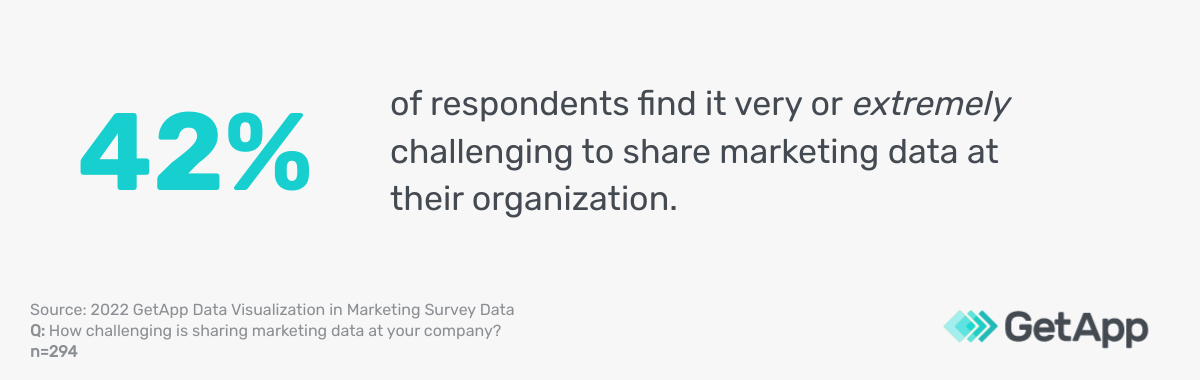
Data may not be well-represented, it may be hard to collect, or there may be too much of it—and these are just a few of the reasons that a data-centric approach can be challenging.
With accurate data being integral to overall marketing success, organizations would do well to adopt a data-driven approach that helps them dispel these challenges and gain more advanced insights, ultimately creating an easier path to better marketing decisions.
What is data-driven marketing?
Data-driven marketing is the use of data acquired through customer interactions and third parties to gain insight on customer motivations, preferences, and behaviors. Data-driven insights enable organizations to enhance and personalize the customer experience and make smarter decisions with the goal of improving marketing performance and ROI [1].
This is in contract with data literacy, which is the proficiency in reading, interpreting, and communicating data findings and insights in context, with an understanding of where the data came from, how it was processed and analyzed, and the tools and techniques used to do so.
For more on data literacy, visit our article here:
Data-driven marketing benefits
Benefit #1: Reach your target audience
One of the main benefits of a data-driven marketing strategy is the ability to better get to know your target audience. Using customer data from your CRM and other sources to craft specific customer profiles (or buyer personas) will help you go beyond surface level information.
You’ll have access to info on age and sex but also uncover details like your target customers’ preferred social media channels, interests, buying habits, etc. Traditional marketing relies solely on past behavior for this type of analysis, but data-driven marketing technology allows you to make better predictions about future behavior using more advanced data as well.
Benefit #2: Create more relevant marketing content
The ultimate goal of marketing is to reach the right person with the right message at the right time. Data-driven marketing helps you do that by identifying what styles of content your target audience responds well to, what types of visuals resonate with them, and even what types of formatting options will increase engagement in the case of written content.
Getting more specific using data-driven insights not only produces more relevant content, but it can produce more personalized content as well. Personalized content yields a better customer experience which leads to more positive perceptions of your brand from newcomers and increased loyalty from existing customers.
Benefit #3: Identify the best marketing channels for your business
In line with reaching your target audience with relevant content, data-driven marketing can also help you determine which marketing channels are most effective for your business. Using data from your CRM or other customer data management solution, you’re able to track both potential and existing customers’ interactions with your marketing content.
This applies to your website, social content, email marketing, SMS (as well as other types of digital marketing), meaning you can identify where people are spending most of their time with your business, how they are engaging with your content, and where they may fall short of converting.
Data-driven marketing challenges
Challenge #1: Data may not be well-represented in reports
According to GetApp’s 2022 Data Visualization in Marketing Survey*, 80% of marketers agree they see too much data to implement it effectively or even determine what’s important.
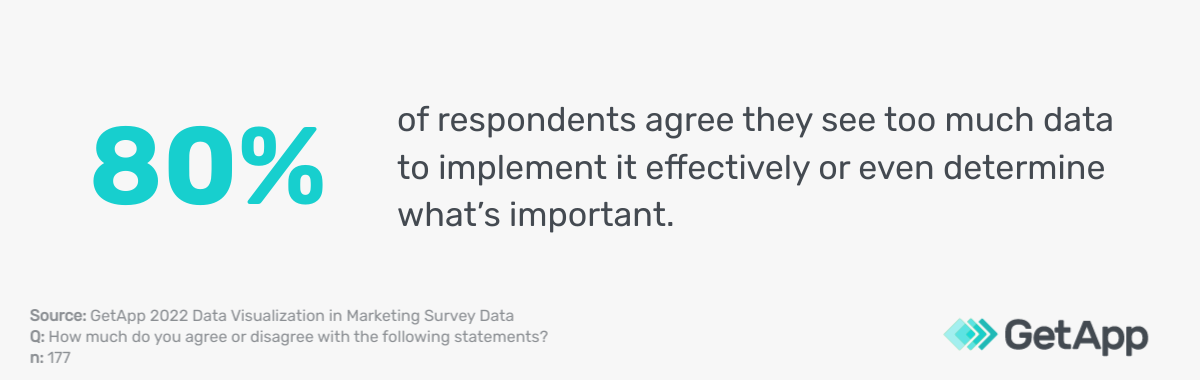
We’re able to collect more data than ever, but we’re unable to interpret it in an easy-to-understand way. Where lies the disconnect? Ultimately, it comes down to how the data is being presented.
In fact, a full 92% of that same group report they could make better decisions if they had well-designed presentations of their marketing data.
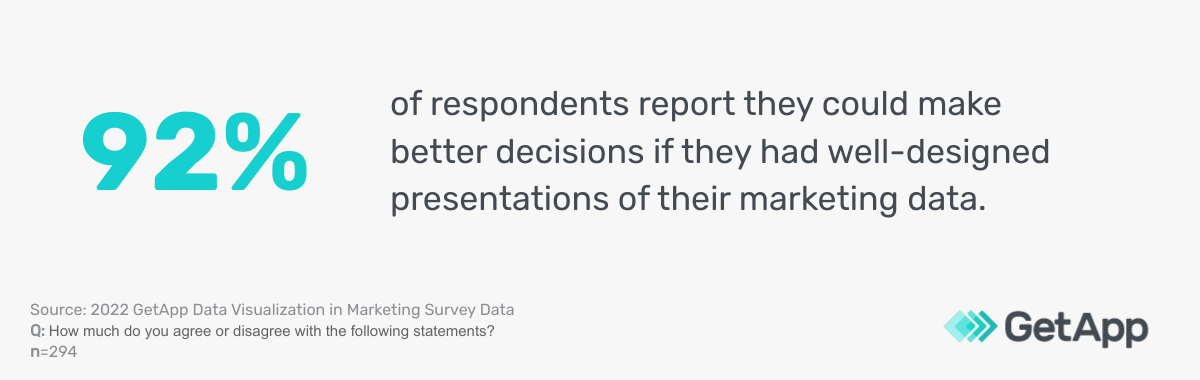
Proper utilization of data visualization software—or even the reporting functionality in other martech tools—can be the difference between a gaggle of unintelligible numbers and an insightful, straightforward presentation of your data.
Challenge #2: Data can be difficult to access and collect
Another challenge of a data-driven approach is the difficulty of accessing and collecting the data itself. Tied with security or privacy concerns and tool or technology problems, 29% of marketers surveyed cite data accessibility challenges as a top challenge for properly using data visualization software for their marketing purposes.
Furthermore, marketing data sources continue to grow and the line between marketing and “big data” [2] is getting blurrier. This heightens the challenge marketers face of linking business outcomes to their marketing data and chosen KPIs, which in turn impacts their ability to deliver meaningful reports on marketing performance [3].
Challenge #3: Too much data makes prioritization and implementation difficult
Aside from the difficulty of representing data in an easy-to-understand way, let alone collecting it in the first place, having access to as much data as modern organizations do makes it challenging to prioritize key data or to use it effectively.
In fact, 80% of marketing decision-makers in GetApp’s Data Visualization in Marketing Survey agree with the statement, “I see too much marketing data to decide what is important or implement efficiently.”
This means it’s crucial to create processes and use technology that helps you sift through as much data as possible automatically. Many types of marketing analytics software include reporting functionality that, with some initial setup, can yield automated reports following parameters you choose.
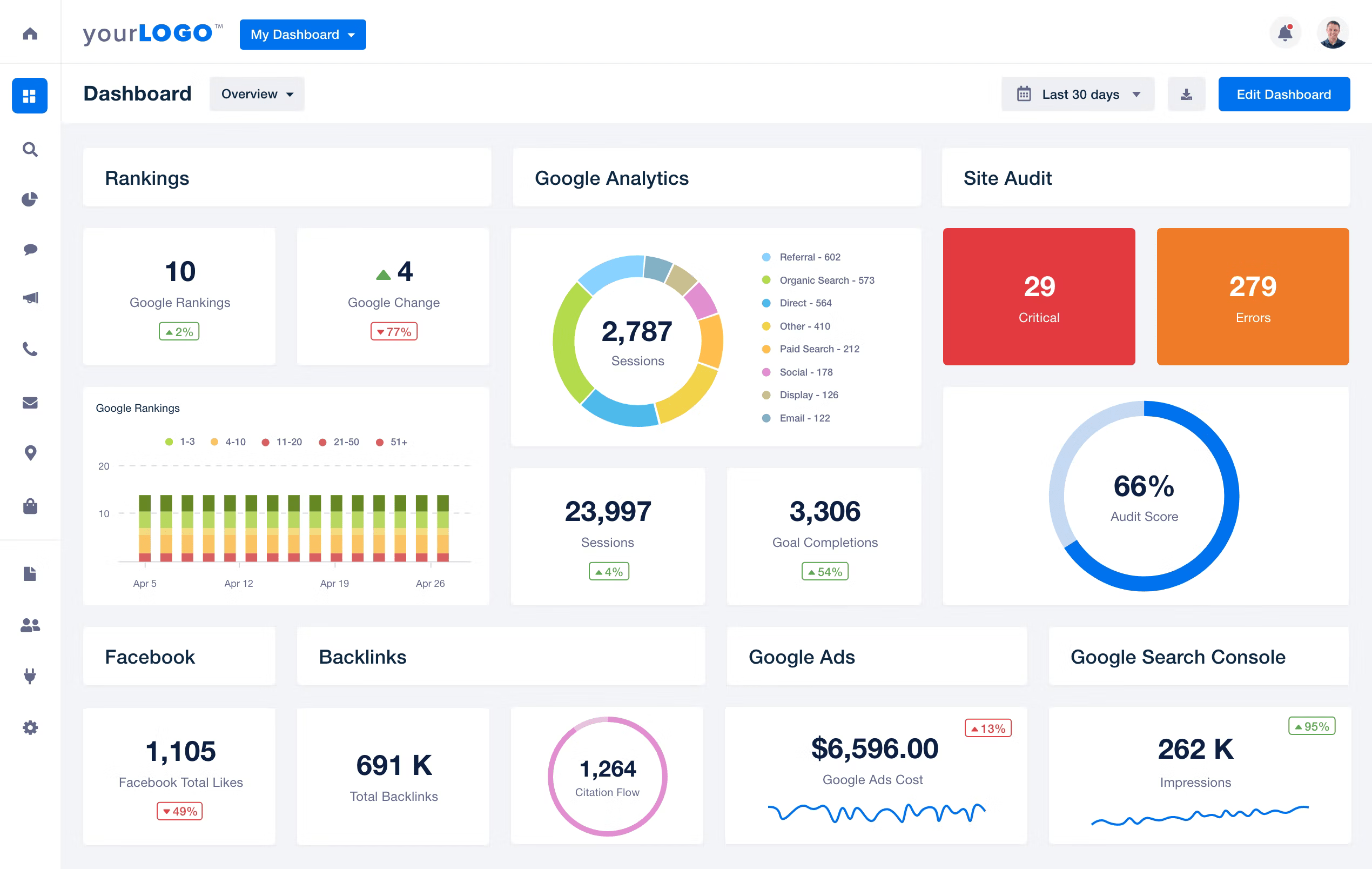
An example of a customizable marketing metrics dashboard from AgencyAnalytics (Source)
Types of data tracked in data-driven marketing programs
Customer data
Customer data is the lifeblood of any B2C marketing program as it gives businesses insight into who their ideal customer is, what they want, and how they are finding it online. With customer data, businesses can better understand their target audience on both a superficial and a deeper level.
This type of data includes basic information like demographic data (age, household income, marital status, etc.) as well as more advanced behavioral data related to website activity, search intent, email clicks, and purchase history.
As a small business, the importance of collecting as much first-party customer data cannot be overstated. The best way to do this is to adopt a customer relationship management (CRM) or customer data management (CDP) platform to collect, store, and analyze your customer data.

An example of a contact profile from CRM platform Capsule (Source)
Financial data
Data found within financial reporting software helps organizations measure the bottom line and operate more efficiently from an economic perspective. This type of data includes sales and marketing statistics, the costs of technology, employees, and business operations, and the overall margins the organization is seeing.
Tracking return on investment (ROI) for marketing activities falls directly into this category as well, and it serves as a north star for making decisions that will improve marketing performance, attract and retain customers, and (ultimately) lead to more revenue.
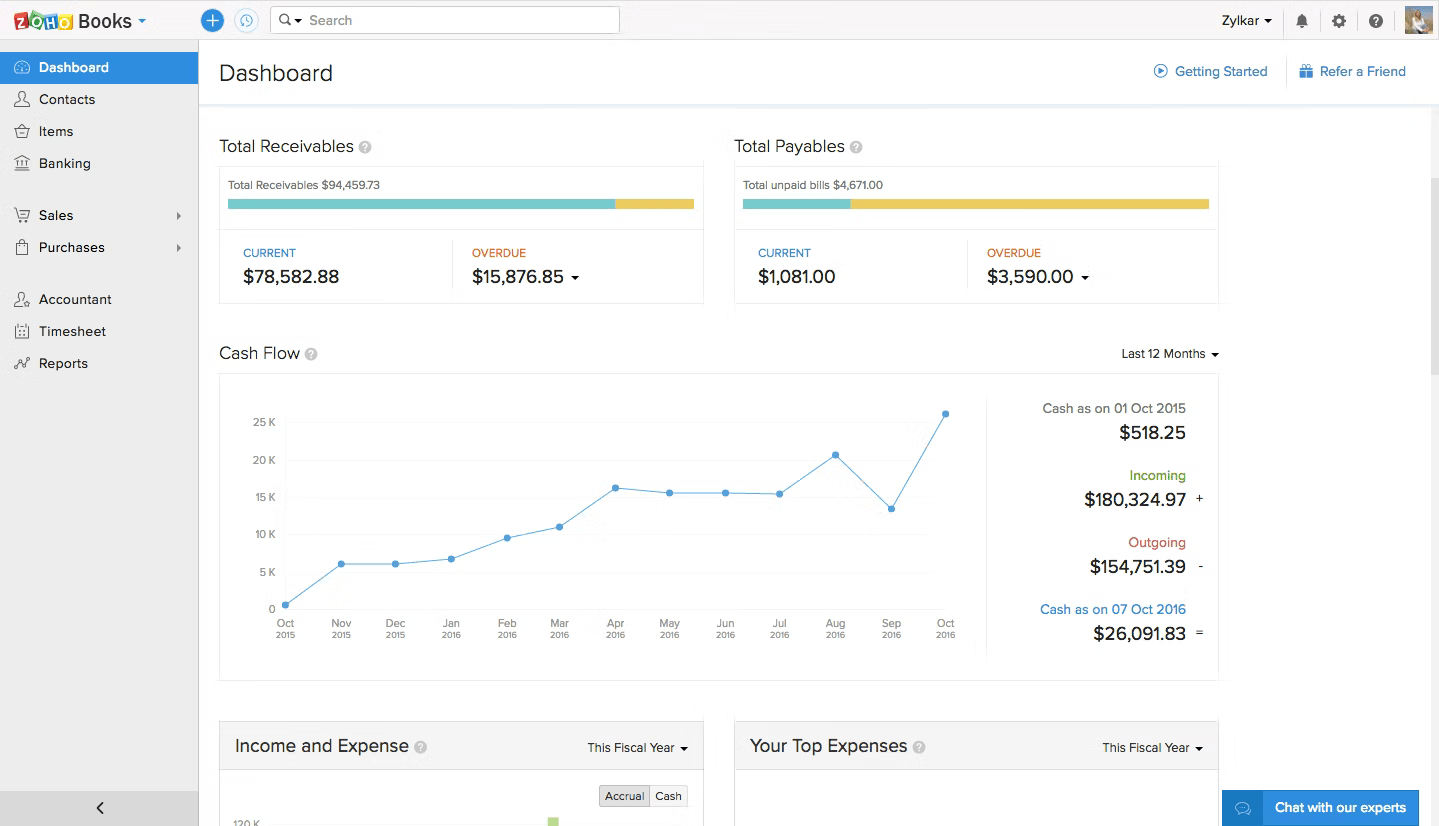
An example of an accounting dashboard from Zoho Books (Source)
Operational data
Operational data deals with business processes—everything from project planning, market research, and performance analysis to CRM, advertising, and the monitoring of community sentiment.
While operational data does have aspects that cross over into both the financial and customer sides of things, it is less of a measure of how much things cost and more of a look at the time and resources it takes to operate effectively.
As part of an overall data-driven approach to marketing, measuring operational data from a variety of sources, including business intelligence (BI) software, can help you determine when processes are lagging, identify areas for improvement, or analyze specific elements of your program (e.g. reporting) in an effort to make them more efficient and user friendly for you and your team.
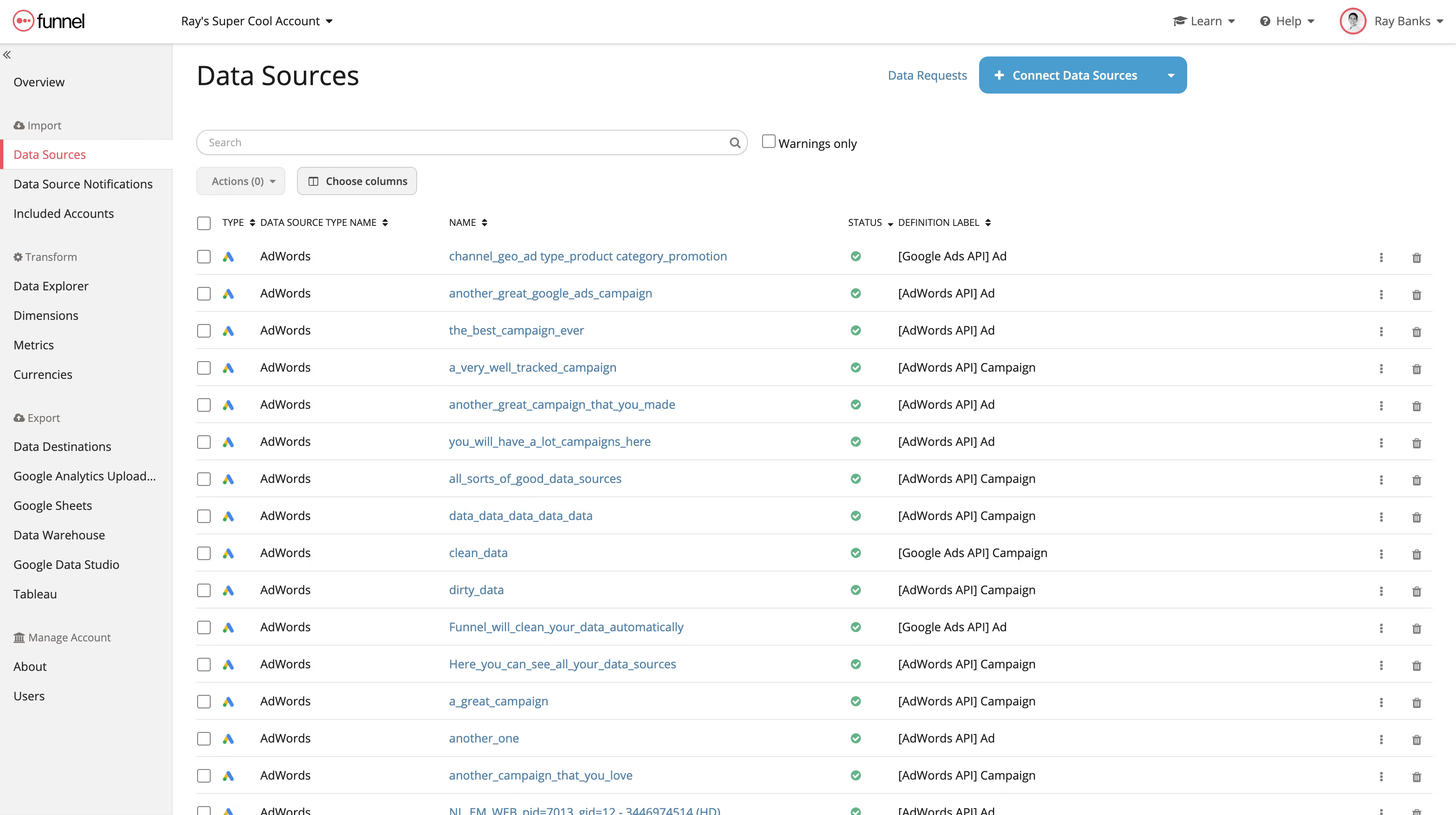
An example of a data source repository from business intelligence platform Funnel (Source)
Tactical vs. strategic data
As you can see, there are several forms of data that are worth paying attention to. What you prioritize first largely depends on your marketing program’s state of maturity and goals. It’s also worth noting that a one-size-fits-all approach is far from optimal. Decisions at different levels within an organization require different insights.
The metrics that form decisions at the owner or CMO level are not the same metrics that form decisions at the individual contributor level. For instance, metrics at the tactical level may have a high level of granularity and are collected daily whereas metrics at the business strategy level have a low level of granularity and are only collected monthly.
Tactical-level metrics help form decisions around campaign and content optimization while more-strategic decisions at the leadership level have an impact on overall business outcomes, performance, and long-term strategy.
Examples of tactical metrics:
Events completed by audience (visits, likes, opens, offer redemptions, etc.)
Campaign performance (clickthrough rate, cost per click, etc.)
Content performance (views, shares, and engagements, etc.)
Examples of strategic metrics:
Sales (to target customer segment, geography and business unit)
Market share versus competition
Profitability
Brand health
ROI/return on marketing investment
Other resources to help you succeed with data-driven marketing
In addition to the technology laid out above, there are several other resource considerations that, if tended to appropriately, will help you achieve greater success with your data-driven marketing approach.
Employee time and bandwidth
Ensuring that whoever is responsible for collecting, analyzing, and reporting on data has the necessary time and bandwidth is the first major consideration. Your process will become more streamlined as time goes on thus requiring less time and energy, but at first it will take significant management.
As you discover best practices, hone your reporting process, and better understand your data needs, the load will be lightened. Work with individual contributors to block time out weekly to address reporting needs, have regular standup meetings with those involved in parsing your marketing data, and set realistic goals for ramping up your data efforts.
Data literacy knowledge
Without a foundational understanding of data literacy, your business will be severely limited in how it benefits from the insights you collect. Setting up a data literacy framework at your organization is key to ensuring that you and your employees are well versed in the knowledge necessary to run a successful data-driven marketing program.
What is a data literacy framework?
A data literacy framework, also referred to as a data literacy program, is a carefully planned and structured system for educating people about data and analytics. The purpose of a data literacy framework is to improve organizational data literacy and help individuals make more informed, data-driven decisions.
For more on data literacy frameworks and how to set up your own, visit our article on the subject here:
The first steps in adopting a data-driven mindset for your small business
While merely having access to marketing data doesn’t tell a compelling story for your business, adopting a data-driven approach that provides essential context will help you gain true insight and make smarter decisions.
This applies to your business operations, your finances, and—most importantly—your customers.
Start small by assessing your data literacy, establishing a basic framework if necessary to help you and your marketing colleagues understand what’s important to your business both today and in the future.
You can follow this by gradually ramping up your program with further employee education on reporting and analytics, increasing your use of martech to bolster your data efforts, and undergoing an overall perspective shift of viewing your activities through a data-centric lens.
For more info on data-driven marketing and digital marketing in general, keep your eyes on the GetApp blog, starting here:
Sources
Data-Driven Marketing Definition, Gartner
Big Data Definition, Gartner
Increase Marketing Data Utilization With Marketing Measurement Frameworks, Gartner
Use Gartner’s Hierarchy of Marketing Metrics to Link Execution to Goals, Gartner
Methodology
* GetApp’s 2022 Data Visualization in Marketing Survey was conducted in October 2022 among 294 U.S. marketing professionals to learn about how data visualization tools or software impacts stakeholder decision-making. Respondents were screened to have marketing, advertising, communications, or public relations job functions or have some level of involvement in marketing-related activities. All respondents use or produce marketing data to inform decisions.