GetApp offers objective, independent research and verified user reviews. We may earn a referral fee when you visit a vendor through our links.
Our commitment
Independent research methodology
Our researchers use a mix of verified reviews, independent research, and objective methodologies to bring you selection and ranking information you can trust. While we may earn a referral fee when you visit a provider through our links or speak to an advisor, this has no influence on our research or methodology.
Verified user reviews
GetApp maintains a proprietary database of millions of in-depth, verified user reviews across thousands of products in hundreds of software categories. Our data scientists apply advanced modeling techniques to identify key insights about products based on those reviews. We may also share aggregated ratings and select excerpts from those reviews throughout our site.
Our human moderators verify that reviewers are real people and that reviews are authentic. They use leading tech to analyze text quality and to detect plagiarism and generative AI.
How GetApp ensures transparency
GetApp lists all providers across its website—not just those that pay us—so that users can make informed purchase decisions. GetApp is free for users. Software providers pay us for sponsored profiles to receive web traffic and sales opportunities. Sponsored profiles include a link-out icon that takes users to the provider’s website.
Reach Your Audience With These 6 Types of Targeted Advertising
Embrace these six types of targeted advertising to better understand your customers and reach the right people with the right message at the right time.


These days we can recognize marketing from a mile away, but sometimes ads hit a particular note that makes us say, "Oh, that's for me."
Although 84% of consumers do one or more things to avoid ads, a majority of those same respondents also indicated that an ad could be relevant in different scenarios, such as when it features something they want to try or is from a brand they like. [1]
In this way, engaging in effective targeted advertising is the difference between earning a new customer or getting blocked. It helps businesses reach the right people with the right message which means more high-value sales prospects and more sales growth.
What is targeted advertising?
Targeted advertising [2] is advertising designed to target a specific group of consumers. There are various types of targeted advertising techniques such as contextual advertising, location-based advertising, and even device advertising. Other forms of targeted advertising include social media targeting (targeting users based on their behavior on social media platforms) and retargeting (targeting individuals based on web browsing behavior).
This type of advertising differs from traditional advertising in that it focuses on the "who" rather than the "what" of a marketing message. Instead of creating a message with broad appeal in mind, targeted ads seek to be as specific as possible with who they are speaking to in order to personalize the message.
Types of targeted advertising
There are several types of commonly used targeted advertising. While some are more specialized than others, they all serve the same purpose of reaching a specific subset of a target audience based on aspects shared amongst the group.
Technology spotlight
For more info on the types of tech you can use to help manage your ads, visit our article on the subject here: What is PPC Management? A Beginner's Guide to Pay-Per-Click.
1. Contextual
Contextual advertising refers to ads that are placed on a page based on the content of the page (e.g., an espresso machine being advertised on a blog for coffee lovers). This is accomplished through contextual targeting features on an ad network: A user visits a page, that page's content information is sent to the ad server, then an appropriate ad is served based on the page's keywords.
A more advanced form of contextual targeting is semantic targeting which involves using machine learning to understand the true meaning of a page vs. just scraping keywords. While semantic targeting requires more advanced technology to employ, contextual advertising is well within reach for most any business.
Is contextual advertising right for my business?
If your business sells a specific product or service online, then yes you can stand to benefit from contextual advertising. Seeking ad placements on sites that relate to your subject matter is relatively simple in that all you need is a list of relevant keywords to get started.
2. Behavioral
Behavioral targeting refers to ads that are served based on a user's online (and sometimes even offline) behavior. This includes search history, purchase history, social media engagements, links clicked, and more. Grouping consumers based on these types of behaviors allows advertisers to create defined audience segments that can then be targeted with specific, relevant ads.
Due to changes in how platforms deal with consumer data and data privacy in recent years, collecting first party data from customers is more important than ever. This means the data you’re able to collect natively from social media, website, and email streams is incredibly valuable—not only for learning more about your customers wants and needs but also for fueling your targeting efforts. Essentially, the more data you can collect, the more personalized and relevant your ads can become.
Is behavioral advertising right for my business?
If you're collecting and managing customer data (and you should be), behavioral advertising is an excellent tactic to consider. Many ecommerce platforms offer behavioral targeting and retargeting capabilities, including email flows that remind a customer of abandoned items in their cart, let users know of new products and services that might interest them, etc.
3. Demographic
Demographic targeting refers to ads that are served based on characteristics such as age, sex, and occupation. Depending on the platform it’s employed on, demographic targeting can also use aspects such as relationship status, education level, household composition, and even life events like getting married or having children.
Another benefit of demographic targeting is how easy it is to conduct A/B testing. Businesses can select subsets of the same larger target group and run campaigns based on minute differences. Those learnings can then be used to increase the success of future campaigns.
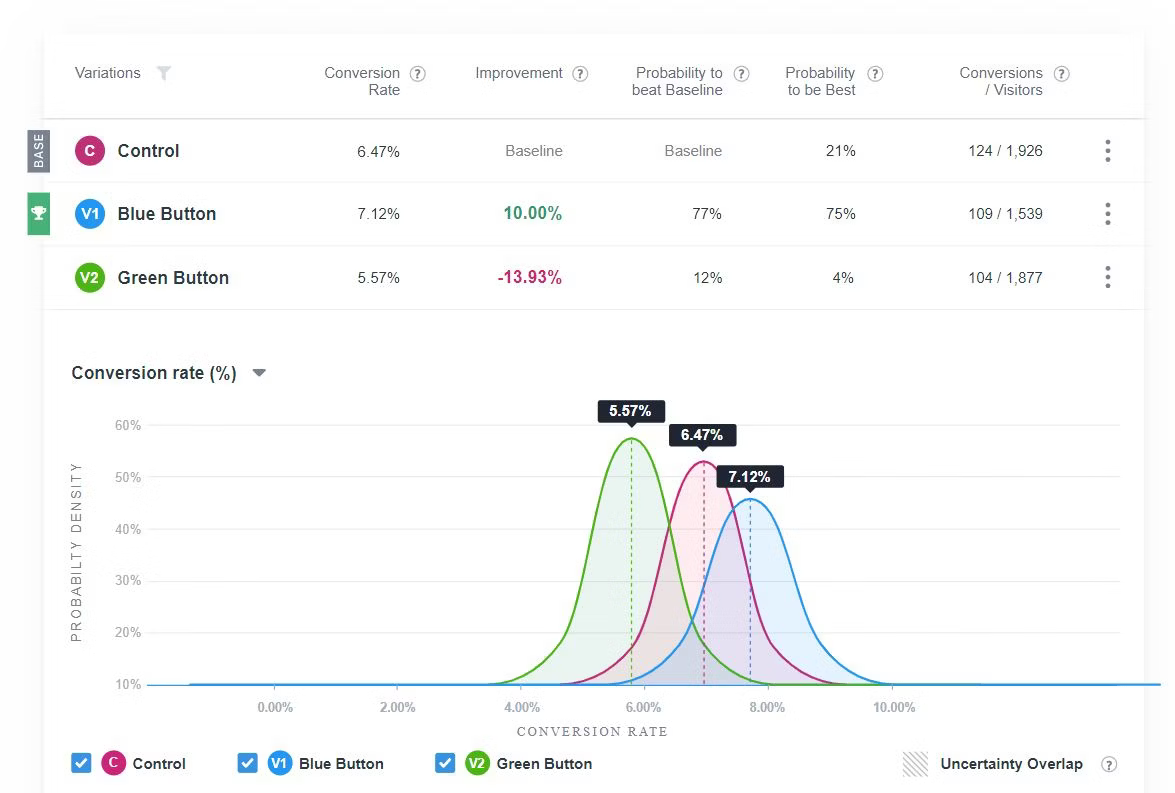
An example of an A/B testing dashboard from VWO Testing (Source)
A/B testing can be used for other types of targeting as well, but demographics are particularly primed for it based on their specific nature (e.g., targeting 18-25 year olds vs. 26-33 year olds).
Is demographic targeting right for my business?
If your business is engaging in paid ads, demographics should be one of the first places you stop since it’s one of the most basic and recognizable forms of targeted advertising. Depending on the industry, businesses may lean more heavily on demographic targeting in general (e.g., products directed at seniors, new parents, or homeowners).
4. Geographic
Geographic targeting focuses on where a consumer is located geographically. This type of targeting can be as broad as a country or region or as narrow as a postal code or even a specific neighborhood. This type of data is both easy to collect and helpful in building a more complete profile of your ideal customer.
Businesses that have a brick and mortar location, those that are seasonal in nature, or ones that provide an in-person service especially stand to benefit from geographic targeting. It allows businesses to target only people in that specific area which means the ads will be more relevant to the consumers that do see them and fewer resources will be spent on non-local placements.
Is geographic targeting right for my business?
If you run a local business with a brick and mortar location or you provide a local service, geographic targeting is an especially good option. It can also be useful for businesses who sell seasonal products (e.g., swim attire, gear for winter sports, etc.).
5. Social media targeting
Social media targeting refers to behavioral targeting that's conducted only on social media. With the widespread nature of social media marketing, there's a wealth of information available for businesses and advertisers to leverage while targeting their messages.
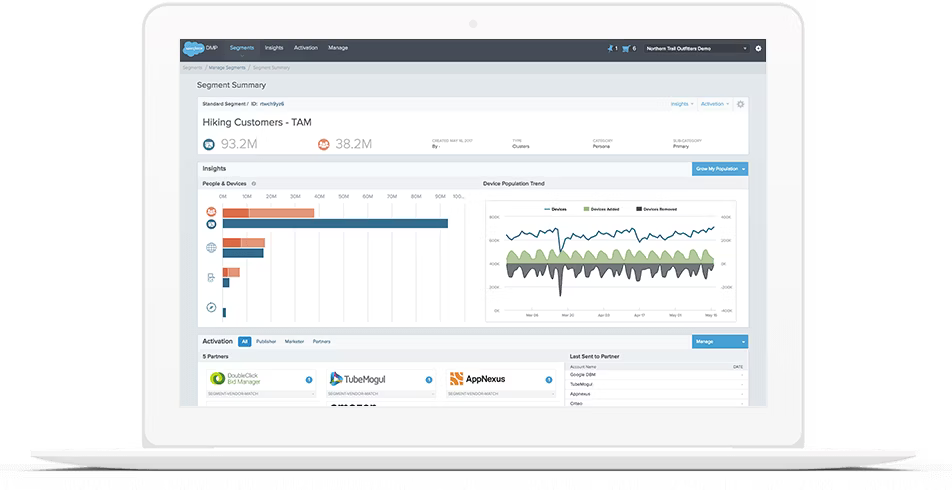
An example of audience segmentation data from Salesforce Marketing Cloud (Source)
Ranging from past search behavior and content consumers have engaged with to network connections and their interests, there are many connections to be made that can then be further focused through testing and retargeting (more on that below).
Is social media targeting right for my business?
If your business has a presence on social media or participates in an industry that has an online community formed around it, you should absolutely consider social targeting. The average consumer spends a lot of time on social media, and there are widely available tools and data from the platforms themselves to take advantage of.
6. Retargeting
While retargeting does represent a type of targeted advertising on its own, it can also be employed in conjunction with any of the other types. Essentially, retargeting is the process of reaching back out to consumers who have already visited a business’ website (or other marketing channel).
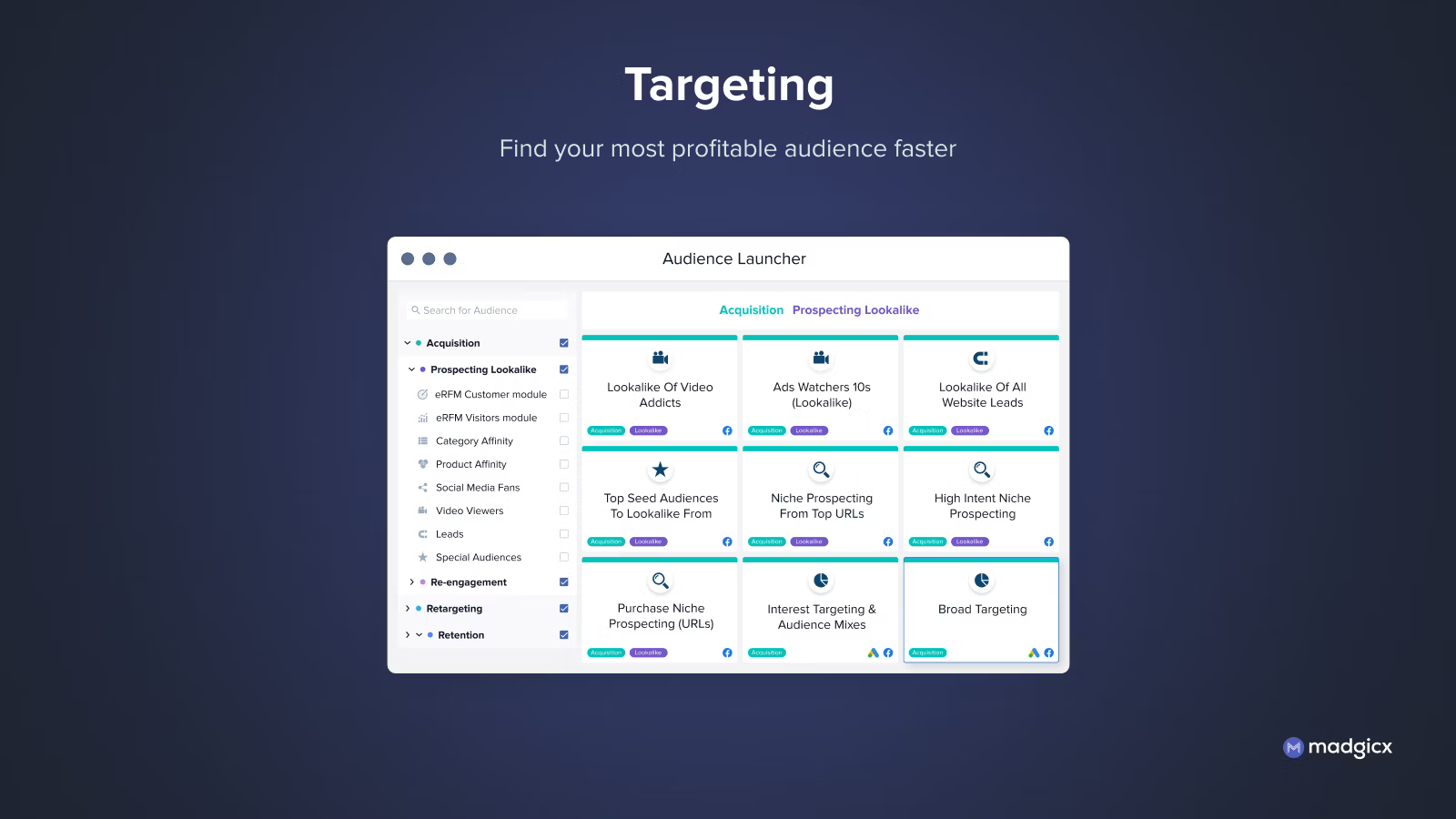
An example of a retargeting functionality from Madgicx (Source)
The magic of retargeting lies in its specificity (i.e., more narrow audience segments) and the ability to reach people who have already demonstrated an interest in your business. One example of this is cart abandonment emails. If a user finds your website, adds a product to their shopping cart, then leaves, retargeting allows you to automatically send an email that will invite them back to complete the purchase.
Technology spotlight
Marketing attribution platforms can help your business hone in specific points of the customer journey to strengthen retargeting efforts, track return on investment (ROI), and determine crucial metrics such as lifetime customer value (LTV).
This is incredibly powerful in a variety of ways:
If you have an email marketing platform, the process is automatic, meaning you save time and resources by not having to respond manually.
The lead is already warm. The consumer has expressed interest in your product (and even started the process of converting).
It's an opportunity to learn more about your ideal customer. Collecting data based on retargeting opportunities allows you to further segment your audience and potentially reach lookalike consumers with first-touch marketing tactics in the future.
Is retargeting right for my business?
If your business conducts paid advertising, yes you should take every opportunity you can to retarget. Whether you use a marketing attribution tool, customer data platform (CDP), or a customer relationship management (CRM) system, you should have access to the data and features that will allow you to retarget. These capabilities can also be found within other marketing platforms such as email and social media.
Benefits and drawbacks of targeted advertising
Targeted advertising has distinct advantages and drawbacks. To be the most prepared for tackling these as you explore targeted marketing for your own business, we’ve outlined some of the most common ones below.
Benefits
Higher levels of personalization
As consumers adopt increasingly ad avoidant behavior [1], it becomes more important for marketers to increase ad relevance through personalization. In fact, nearly three quarters (72%) of consumers say they now only engage with ads that are tailored to them. [3]
This is where targeted advertising comes in. By collecting customer data, retargeting, and mapping out the customer journey with buyer personas [4], marketers can cut down on ad avoidance while delivering a richer experience to consumers at all stages of the experience.
Continues to build brand affinity amongst target audience
Through proper balancing of personalization with social proof as well as the use of customer-directed engagement models [5], businesses can continue building trust and brand affinity with their customers.
This involves taking a critical approach to how you manage and protect customer data where the first priority is ensuring customers feel comfortable and willing to share their data. Focusing on this type of trust helps marketers deliver more relevant content, improve the customer experience, and garner more brand affinity from consumers.
Streamlined marketing efforts and reduced resource cost
While the cost of targeted advertising varies depending on a variety of factors, engaging in the tactic over time (and improving as you go) can save time and money in the long run. This is accomplished by focusing advertising resources on the most-rewarding groups while avoiding throwing budgets at more generic audience segments.
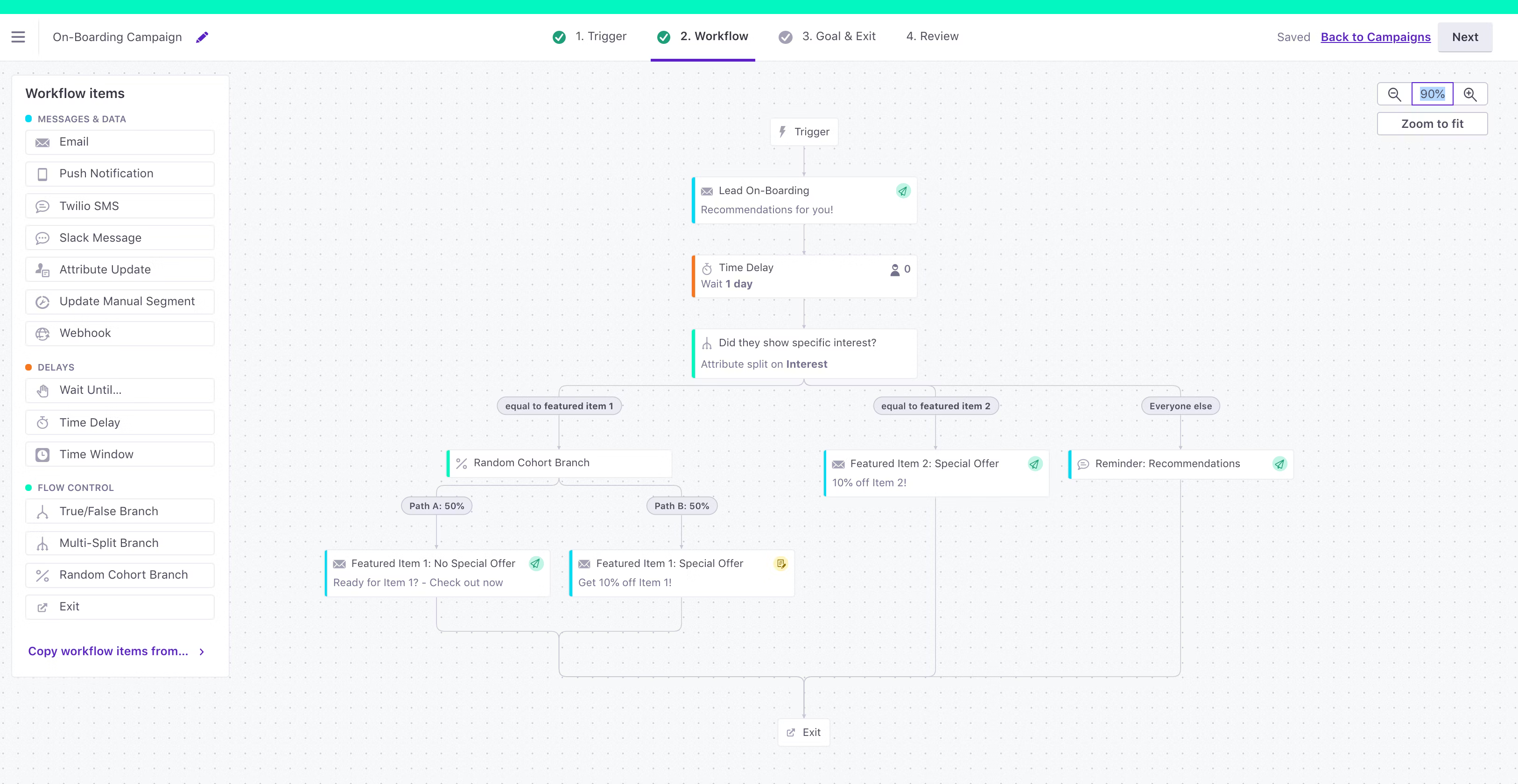
An example of a marketing automation workflow from Customer.io (Source)
With basic marketing automation as a complement a lot of the legwork is removed, providing higher quality audience segments with less manual work for individual contributors.
Increased return on investment (ROI) for marketing efforts
As a natural follow-on to streamlining marketing efforts, increased ROI is sure to follow. Targeting higher quality audience segments, automating processes, and appropriate retargeting mean you'll be reaching the right people with less effort.
Drawbacks
Expenses can vary
If you don't already have a customer data solution (such as a CRM or CDP) in place, it may be costly to collect the necessary data to successfully engage in targeted marketing. In these cases, businesses often conduct or buy primary research to fuel their efforts. If you decide to embark on targeted marketing, make sure to assess your tech stack and your customer data collection strategy before continuing.
Targeted advertising can be time consuming (at first)
While targeted advertising can save time and money in the long run, it takes significant legwork to get a program up and running from scratch. The process includes constructing buyer personas, conducting market research (as noted above), and potentially investing in technology if you don't yet have customer data and/or marketing automation solutions in place.
Danger to omit potentially valuable customers
Being more specific with who you're targeting is a good thing, but you also stand to miss out on consumers that don't fit your profile if you solely target based on strict personas. To combat this, strive to strike a balance between targeted efforts aimed at your primary audience while also experimenting with less-obvious segments.
Ethical concerns may be raised
Depending on the product or service you offer, you may encounter audience segments that have been identified for potentially unethical reasons. For example, if you sell a financial product and identify that it may be beneficial to advertise to less-educated or poorer audiences, it's important to consider possible ramifications before proceeding.
Is it predatory to target these individuals? Do they genuinely stand to benefit from the offering? Is there an ethical way to modify your product or service to target these individuals without being unethical?
Resources needed to get started with targeted advertising
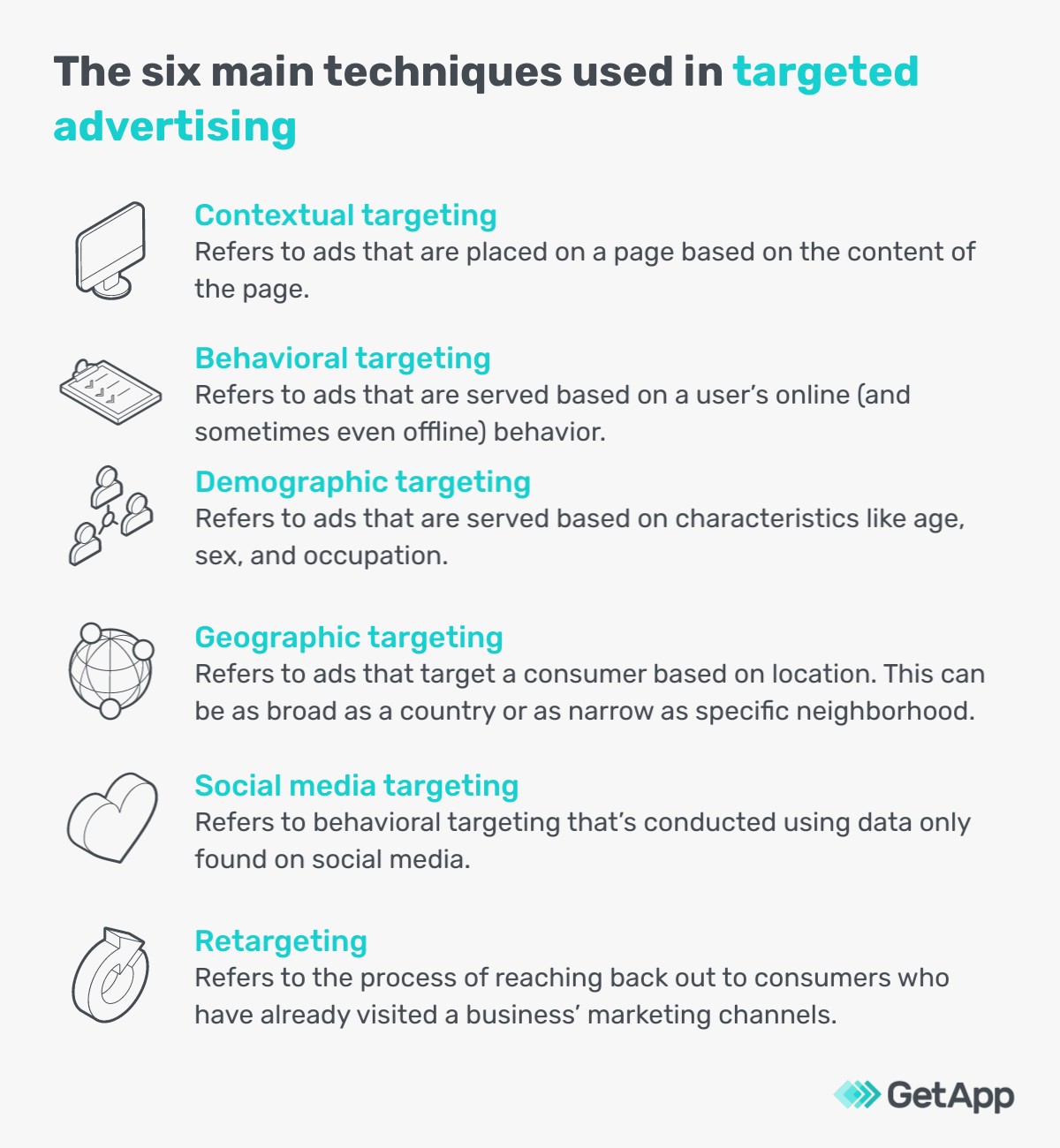
A recap of the six main types of targeted advertising
The effectiveness of successful targeted advertising is clear, but is it the right move for your business? The short answer is yes. Every business that needs to reach a target audience stands to benefit from targeted advertising.
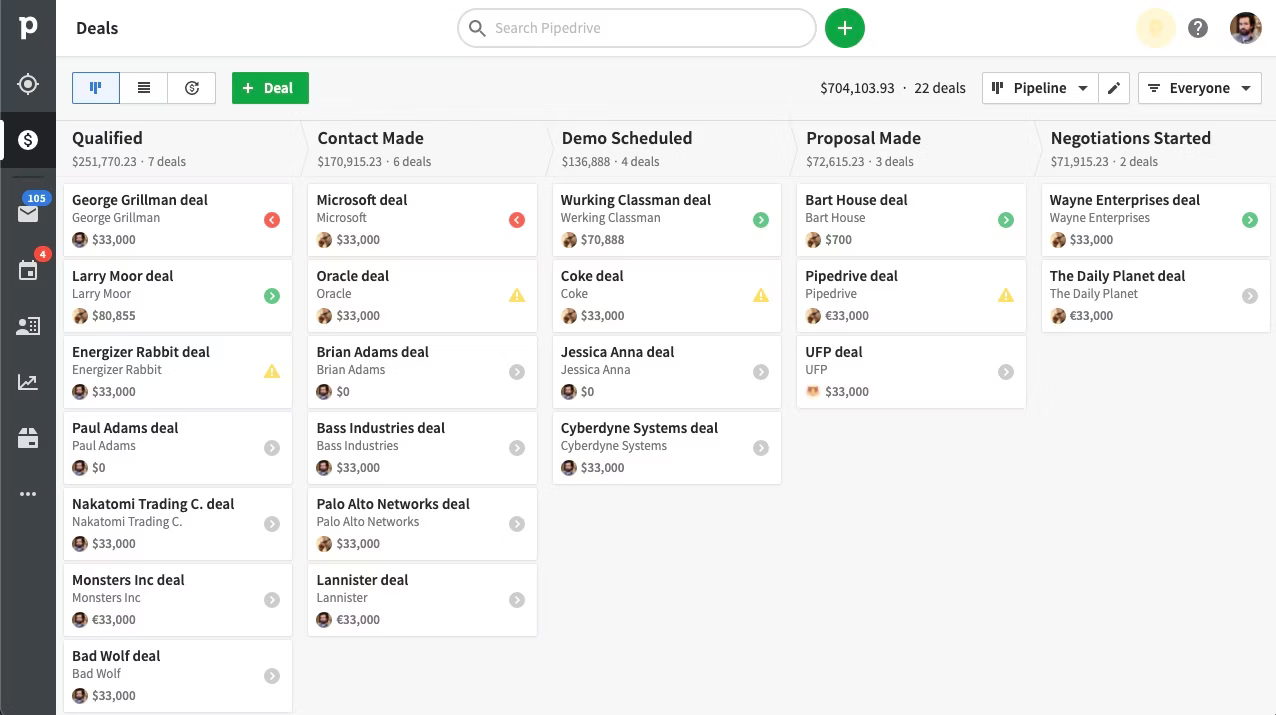
An example of a leads management and customer data dashboard within Pipedrive (Source)
Oftentimes, the only tool you need to get started is a CRM or CDP where customer data is collected and stored. Even if that’s not available, there are platform-specific tools on many marketing channels to bridge the gap, giving you access to the necessary data to begin segmenting your audience (e.g., demographic data from native social media analytics).
As a first step, revisit your buyer personas or—if you don’t have any—it's time to develop some! Understanding your primary audience on a specific and personal level is the first step to crafting targeted messages that truly resonate.
If you're eager to learn more, keep an eye on the GetApp blog and start with these helpful resources:
Enhance Your Multichannel Marketing Performance With These Data-Driven Marketing Strategies
Data-Driven Marketing: A Definitive Guide for Small Business
How To Reach More Customers With a Winning Digital Marketing Strategy